
Kwame Zaire is a distinguished voice in the manufacturing sector, known for his deep technical expertise in production management and predictive maintenance. With a career dedicated to the intersection of electronics and heavy industrial equipment, Zaire provides a unique perspective on the evolving landscape of metal additive manufacturing. In this conversation, we explore a breakthrough from Shandong University involving Avimetal’s ring beam technology, which promises to redefine the limitations of support-free geometry. Our discussion covers the shift from Gaussian to ring-shaped energy distributions, the metallurgical nuances of IN718 superalloys, and the industrial implications of reducing thermal deformation in complex aeroengine components.
How does the transition from traditional Gaussian beams to ring-shaped laser technology fundamentally change the way we approach low-angle overhangs in metal 3D printing?
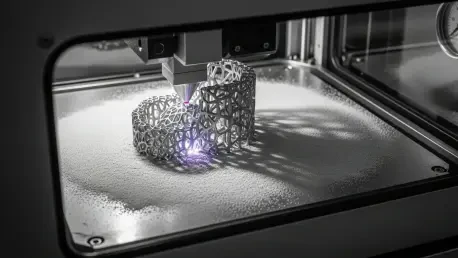
The move toward ring-shaped energy distribution represents a massive leap over the constraints of the traditional “45-degree rule” that has haunted Laser Beam Powder Bed Fusion for years. In a conventional Gaussian process, attempting to print angles below 45 degrees without support structures usually leads to a thermal disaster where the material simply cannot dissipate heat quickly enough. When the researchers at Shandong University pushed laser power to 400 W and above using standard beams, they witnessed severe material vaporization and a “charred black” surface that signaled total failure. However, by using the MT280 ring beam technology, they were able to achieve a stable 25-degree overhang that remains entirely support-free. This isn’t just a minor improvement; it’s a radical shift that allows us to dream of printing complex turbine blades and aeroengine combustion chambers without the nightmare of removing internal supports later.
When examining the metallurgical results of the IN718 alloy, what specific microscopic changes did the ring beam induce that contributed to such high density and structural integrity?
The ring beam technology doesn’t just change the shape of the part; it fundamentally alters the microstructure of the IN718 nickel-based superalloy. The study revealed that parts fabricated with the ring-shaped energy distribution exhibited elongated grains with a significantly higher texture index compared to their Gaussian counterparts. We are looking at a material foundation that achieved over 99% density, which is critical for high-stress aerospace applications where even a tiny void can lead to catastrophic failure. The powder itself was meticulously controlled, featuring D10, D50, and D90 values of 19.38, 32.44, and 52.59 μm respectively, ensuring a uniform composition. Because the energy is spread in a 167 μm diameter ring rather than a concentrated point, the cooling rates and grain growth are much more predictable, resulting in a uniform microstructure that holds up under extreme heat.
The study highlights a significant reduction in surface deformation to just 0.18mm; could you walk us through the practical challenges of managing thermal stress during this fabrication process?
Managing thermal stress is essentially a battle against warping and angular deviation, and the numbers here tell a very compelling story. In the tests conducted by the State Key Laboratory, Gaussian beam samples failed miserably as power increased, with some exhibiting angular deviations as high as 8 degrees. In contrast, the ring beam samples maintained incredible forming accuracy, showing a top-surface deformation of only 0.18mm even at high energy densities. This stability is achieved because the ring beam provides a more balanced heat input, preventing the localized overheating that causes the “warpage” often seen in low-angle builds. When you can keep deformation to less than a fifth of a millimeter on a 25-degree overhang, you are essentially eliminating the need for the post-processing and manual support removal that typically inflates production costs.
How does the ability to dynamically switch between Gaussian, ring, and point-ring modes on a machine like the MT280 impact the broader landscape of industrial production management?
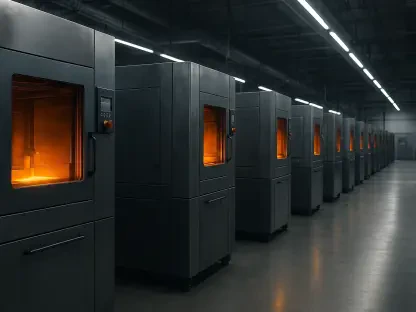
From a production management standpoint, the adaptive point-ring beam energy control system is a total game-changer for batch production and integrated manufacturing. The MT280 machine, with its 265 x 265 x 400 mm build volume and 500 W dual-laser system, allows an operator to tailor the energy profile to the specific geometry of the part in real-time. You might use a Gaussian mode for fine detail in one area and then switch seamlessly to a ring mode for a critical low-angle overhang, maximizing both speed and quality. This flexibility reduces the risk of part failure mid-build, which is a major concern when working with expensive superalloys like IN718. By deepening the integration between industry and research, companies like Avimetal are providing the tools necessary to move metal additive manufacturing from a prototyping niche into a reliable, large-scale industrial reality.
What is your forecast for the future of support-free additive manufacturing in high-stress aerospace applications?
I believe we are entering an era where “design for manufacturability” will no longer be synonymous with “designing with supports,” particularly as we master the thermal management of nickel-based superalloys. As ring-beam technology becomes the industry standard, we will see a dramatic reduction in the “buy-to-fly” ratio, as we will no longer waste expensive materials on supports that are destined for the scrap bin. In the next five years, I expect to see fully integrated, support-free production of internal cooling channels and complex aeroengine geometries that were previously considered impossible. The success of this 25-degree overhang study is just the tip of the iceberg, and as density levels consistently hit that 99% mark with minimal deformation, the aerospace sector will fully embrace these machines for end-use, mission-critical components.