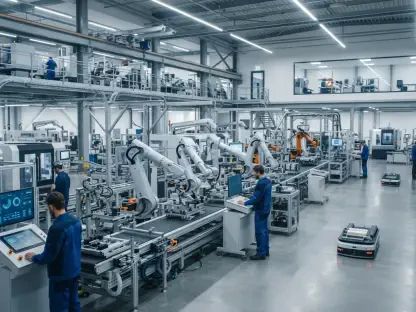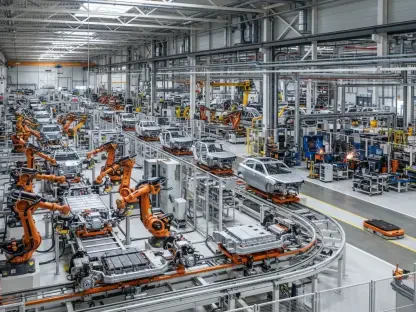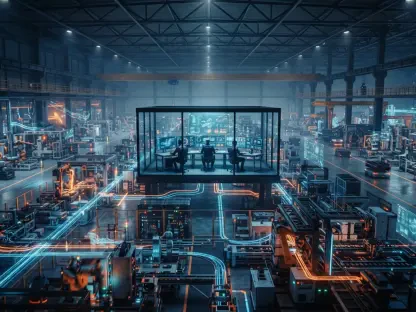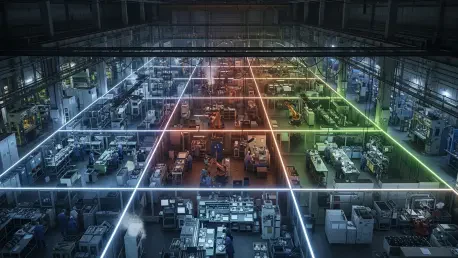

Modern industrial facilities often resemble a complex mosaic of disconnected digital tools that fail to communicate effectively with one another, resulting in significant operational inefficiencies. While many organizations have aggressively digitized specific production lines or administrative tasks, the persistent issue of fragmented control continues to plague decision-makers who find themselves drowning in data but starving for actionable intelligence. This structural disconnect occurs when manufacturing execution systems, enterprise resource planning tools, and quality management protocols exist in isolated silos, requiring manual reconciliation that introduces human error and delay. To address these challenges, manufacturers are increasingly turning toward unified cloud-based platforms that integrate these disparate functions into a single, continuous digital environment. This shift represents a fundamental evolution in how factories are managed, moving away from a collection of standalone software packages toward a holistic ecosystem that synchronizes the shop floor with the back office in real time.
Transitioning From Reactive To Proactive Operations
The traditional manufacturing model has historically functioned on a reactive basis, where performance metrics are reviewed at the end of a shift or a fiscal week, leaving little room for mid-process adjustments. This lag in information creates a visibility gap that allows minor equipment deviations or material inconsistencies to escalate into costly production delays or significant scrap rates before anyone notices the trend. By implementing a unified platform like Rockwell Automation’s Plex, facilities can transition toward a state of constant, live visibility that captures every data point as it happens. When high-variability industries utilize these real-time tools, they gain the ability to monitor yield fluctuations and material usage with extreme precision, ensuring that the smallest margin erosion is addressed immediately. This immediate feedback loop transforms the management style from one that merely documents historical failures to one that actively prevents them through continuous optimization.
Building on the foundation of real-time visibility, the integration of manufacturing execution systems directly into a centralized cloud platform allows for a more sophisticated approach to predictive maintenance and resource allocation. Instead of following a rigid, calendar-based maintenance schedule that might overlook a failing component or replace a perfectly functional part, operators can rely on live performance data to dictate necessary interventions. This granular level of control ensures that production uptime is maximized while reducing the overhead costs associated with unnecessary downtime. Moreover, the ability to correlate energy consumption patterns with specific production cycles enables manufacturers to refine their operations for greater sustainability and cost-effectiveness. In an era where global competition is fierce and margins are perpetually under pressure, the capacity to pivot operations based on instantaneous data is no longer a luxury but a fundamental requirement for remaining competitive in a rapidly changing market.
Dissolving Silos Through Data Democratization
Functional silos within a manufacturing organization often act as barriers to innovation, as departments like quality control, production, and supply chain management work from different datasets. When these departments use separate, incompatible software systems, the resulting lack of coordination leads to bottlenecks and misaligned priorities that ultimately hurt the bottom line. A unified execution platform serves as a single source of truth, ensuring that an engineer in the quality lab and a supervisor on the production floor are looking at the exact same information simultaneously. This democratization of data removes the friction of inter-departmental communication, allowing teams to solve problems collaboratively rather than passing blame between isolated units. By fostering a shared digital environment, organizations can empower their workforce to take ownership of performance improvements, shifting the responsibility of operational excellence from a few executives to the entire staff.
This cultural and technical shift toward transparency naturally leads to more agile supply chain responses and improved customer satisfaction. When quality management is baked into the production process rather than treated as a separate final inspection, defects are caught at the source, which drastically reduces the cost of poor quality. Furthermore, the alignment of enterprise resource planning with actual shop-floor capacity allows sales and logistics teams to provide more accurate lead times and delivery schedules to clients. As employees at all levels gain access to relevant insights, they become more proactive in identifying potential process bottlenecks before they impact the final output. The resulting increase in organizational agility allows companies to respond to sudden market shifts or supply chain disruptions with a level of speed that was previously impossible. Ultimately, breaking down these silos creates a more cohesive business model where every action is backed by a comprehensive understanding of the entire production ecosystem.
Engineering Scalability And Operational Integrity
As manufacturing companies look to expand their footprint across multiple geographic locations or diversify their product lines, the limitations of localized, on-premise systems become painfully evident. Scaling a business with fragmented control systems often requires a massive reinvestment in infrastructure and a lengthy period of training for every new site, which can stifle growth and introduce inconsistency. In contrast, cloud-based architectures provide a scalable foundation that allows for the rapid deployment of standardized processes across an entire enterprise regardless of location. This ensures that a facility in North America operates with the same level of digital maturity and procedural rigor as a plant in Asia or Europe. By centralizing the management of manufacturing logic, organizations can maintain strict control over their intellectual property and operational standards while still allowing for the flexibility needed to adapt to local market demands or specific regional regulations.
In highly regulated sectors such as the life sciences, automotive, and food and beverage industries, maintaining a detailed audit trail is a constant and often burdensome administrative challenge. Unified platforms simplify this requirement by building end-to-end traceability directly into the production workflow, linking raw materials to finished goods with digital precision. Instead of relying on manual logs or fragmented spreadsheets, manufacturers can generate comprehensive genealogy reports with a few clicks, ensuring total compliance with safety standards and regulatory mandates. This level of operational integrity not only protects the brand from the devastating impact of product recalls but also builds trust with consumers who increasingly demand transparency. For any forward-thinking organization, the transition to an integrated platform served as the critical next step in future-proofing their operations. Moving forward, leaders should prioritize the consolidation of redundant software and invest in cross-functional training to fully leverage the benefits of a unified digital thread across their global production networks.