
The Hook
A single campus rising on Chengdu’s industrial edge promised to compress plasmid-to-IND timelines, scale from 15 L to 15,000 L without a tech dead end, and finish products on a dual‑chamber lyophilization line co‑established with a commercial partner—an audacious bet that turned heads across the microbial world. That promise set a high bar: deliver on speed, quality, and integration while rivals fortified their own microbial arsenals and sponsors demanded end‑to‑end certainty from strain to sterile fill.
The site came online with a clear credibility marker in sight: first commercial lots and timely GMP release. Those milestones mattered because they signaled not just capacity, but capability—evidence that a single location could stitch drug substance and drug product into one seamless path to market.
Why This Story Mattered
Recombinant proteins surged as sponsors pursued antibody fragments, cytokines, enzymes, nanobodies, polypeptides, and plasmid DNA to feed modalities from ADC payloads to cancer vaccines. Microbial systems won on yield, speed, batch consistency, and cost per gram, aligning with accelerated CMC playbooks that prioritized clinical entry without sacrificing comparability.
Competition tightened. Lonza expanded stainless and single‑use assets, Samsung Biologics added microbial depth to complement mammalian scale, Thermo Fisher built flexible suites for phase transitions, and Fujifilm rolled out ShunzymeX to simplify downstream purification with protease‑enabled tag strategies. In this crowd, leadership required more than tanks; it required process ingenuity, digital rigor, and reliable tech transfer at pace.
Inside the Chengdu Bet
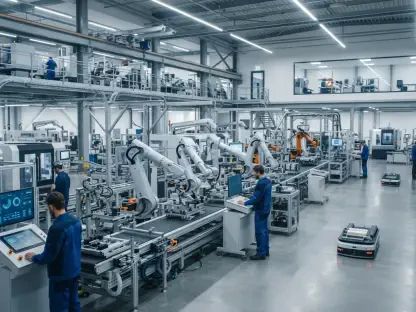
Chengdu’s 95,000‑square‑meter footprint reached structural completion and took delivery of key equipment, uniting drug substance and drug product under one roof. An initial 15,000 L fermenter anchored throughput, with a pathway to 60,000 L and a design spec of roughly 110 drug substance batches annually—enough to support a portfolio rather than a single hero asset.
The drug product block aimed beyond 10 million vials each year and introduced what WuXi described as China’s first commercial dual‑chamber lyophilization line, co‑established with VISEN Pharmaceuticals. The collaboration aligned incentives around launch readiness for lonapegsomatropin, the long‑acting growth hormone for pediatric GHD, and established a template for complex formulations that reduce cold‑chain friction and simplify preparation at the bedside.
Under the hood, the EffiX microbial expression platform targeted non‑mAb proteins with reported titers up to 15 g/L, while plasmid DNA runs surpassed 1 g/L, paired with CMC packages that supported plasmid‑to‑IND in about six months. Automation, data integrity systems, and batch genealogy tools reinforced GMP control, and sustainability touches—from sponge city design to photovoltaic modules—signaled long‑term operating discipline.
The Market, the Metrics, and the Voices
Analysts tracking recombinant growth pegged microbial demand as outpacing mammalian in several niches, particularly for smaller scaffolds and components feeding cell therapy and vaccine pipelines. Sponsors also reported meaningful cost deltas when microbial routes avoided perfusion or extended mammalian development, shaving months off timelines and tightening COGS.
Operational leaders framed Chengdu as a node, not an island, linked to R&D and clinical manufacturing in Shanghai and Hangzhou. “The goal was continuity—strain development, 15 L screening, 200–500 L optimization, and a straight line to 15,000 L with the same analytics,” one executive said. From the partner side, a VISEN manager emphasized the dual‑chamber line: “It unlocked a practical path to stabilize complex products and scale commercial supply without re‑platforming.”
Competitors did not stand still. Experts pointed to ShunzymeX as a marker for downstream simplification that could cut chromatography steps and resin costs, tightening the gap on COGS. Yet they also noted a trade‑off: extreme standardization risks constraining product classes. “Real advantage came from marrying scale and flexibility,” one consultant argued, “where tech transfers from 15 L to 15,000 L protect quality attributes while hitting release clocks.”
The Playbook Sponsors Used
Program leaders assessed fit first: product class, expression system, impurity and endotoxin profile, and whether dual‑chamber lyophilization or conventional vials best served stability, usability, and market access. They mapped a scale path—from Phase 1 lots through pivotal and commercial—selecting batch sizes and hold times that preserved product quality and avoided future rework.
A fast‑track CMC approach aligned to EffiX emphasized early analytics, reference standards, and validated assays, with predefined kill‑switch criteria for titer vs. quality trade‑offs. Successful tech transfers traveled with digital data packages, raw materials traceability, and comparability protocols tuned for 15 L to 15,000 L—then staged for the 60,000 L expansion. Contracts tied incentives to cycle times, deviation closures, right‑first‑time rates, and lot release speed, while capacity reservations protected launch windows.
Final Take: How Leadership Was Proven
Leadership hinged on evidence, not aspiration: on‑time GMP release, clean tech transfers, and commercial lots beyond a single anchor program established credibility. A diversified mix across enzymes, fragments, nanobodies, and plasmid DNA demonstrated modality breadth, while KPIs—strain‑to‑IND cycle time, batch success rates, and cost per gram trends—validated the model. For sponsors eyeing the next wave of non‑mAb biologics, the most practical next steps had been clear: vet dual‑chamber needs early, lock a scale plan that avoids re‑platforming, and contract for shared risk tied to release metrics. In the end, the Chengdu hub stood as a test case for whether integration, speed, and smart process design could reset the microbial playbook—and the results had spoken through lots released, products shipped, and timelines met.