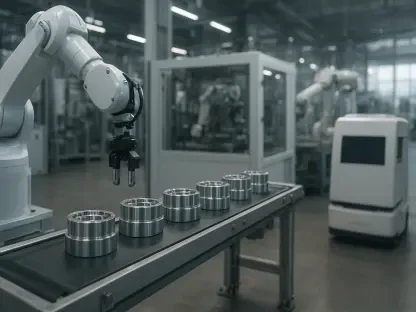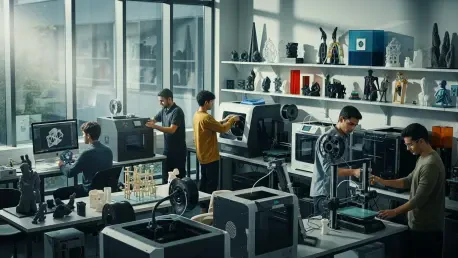

The rapid evolution of advanced manufacturing technologies has transformed Chinese industrial landscapes from labor-intensive assembly lines into sophisticated centers of digital precision and high-tech innovation. For years, the discipline of additive manufacturing was relegated to a secondary status, often existing as a singular, brief module tucked away within broader mechanical engineering programs at vocational schools and technical universities. However, the Ministry of Education has recently implemented a decisive shift by formalizing 3D printing as a dedicated undergraduate major across dozens of institutions nationwide. This move signals a profound recognition that digital fabrication is no longer a peripheral tool for rapid prototyping but a foundational pillar of the modern industrial economy. By elevating these studies to an independent academic track, the government aims to bridge the widening gap between technological capability and professional expertise. This systemic change reflects a broader national ambition to transition from a reliance on sheer production volume to a future defined by high-value, precision-engineered products that demand a workforce capable of navigating complex digital workflows.
Strategic Integration: The Rise of Academic Autonomy in Additive Manufacturing
The unprecedented speed at which these academic programs have expanded across the country demonstrates the high level of urgency with which the industrial sector is demanding qualified professionals. Between 2026 and 2028, the number of institutions offering specialized degrees in additive manufacturing is projected to grow from 29 recognized majors to nearly double that figure, reflecting a massive investment in educational infrastructure. This explosive growth is not merely a reaction to industry trends but the result of a coordinated top-down mandate designed to ensure that the domestic workforce remains compatible with the rapid advancements occurring in hardware and software. The Ministry of Education has recently evaluated the success of early adopters, concluding that the experimental phase of integrated manufacturing education was sufficiently robust to warrant this large-scale implementation. Consequently, the current landscape of higher education is witnessing a fundamental reorganization as universities scramble to build laboratories and secure partnerships with leading 3D printing equipment manufacturers.
Strategic diversity in the selection of participating institutions reveals a carefully crafted plan to populate every level of the industrial hierarchy with specialized talent. By authorizing prestigious research-oriented schools like the Harbin Institute of Technology alongside more application-focused vocational colleges, the government is simultaneously addressing the need for theoretical innovation and practical execution. Elite universities are tasked with pushing the boundaries of material science and process optimization, while technical schools focus on the daily operation and maintenance of complex additive production lines. This two-pronged approach ensures that the industry will not suffer from a top-heavy structure where high-level researchers lack the support of skilled process engineers. Furthermore, this tiered strategy allows for a more fluid exchange of ideas and talent between academic research and the factory floor, fostering an environment where theoretical breakthroughs can be rapidly tested and implemented in real-world manufacturing scenarios.
Industrial Imperatives: Transitioning from Prototyping to Full-Scale Production
The decision to formalize these academic degrees is deeply rooted in the fundamental transformation of how 3D printing technologies are applied within critical sectors such as aerospace, medical device manufacturing, and automotive design. In the past, the technology was largely restricted to the creation of non-functional visual models or temporary molds, but today it is used to manufacture flight-ready structural components and personalized medical implants. This shift from simple prototyping to actual end-use production has introduced a level of complexity that traditional engineering curricula were simply not designed to handle. Producing parts that must withstand extreme mechanical stress or biological environments requires a level of process control and quality assurance that can only be mastered through dedicated study. As companies move away from subtractive methods to embrace the design freedom offered by additive manufacturing, they require engineers who can validate every layer of a build. This transition necessitates a workforce that treats 3D printing as a primary manufacturing process rather than a secondary convenience.
Despite China becoming a global leader in the production of both professional-grade and consumer-facing 3D printing hardware, the industry has reached a point where equipment availability is no longer the primary driver of growth. Domestic firms have successfully flooded the international market with reliable, cost-effective machines, yet they have encountered a significant bottleneck in the form of a human capital shortage. The rapid proliferation of these devices has outpaced the ability of the traditional education system to produce graduates who can effectively operate them at an industrial scale. This imbalance has created a scenario where the lack of specialized labor is the single greatest threat to the sustained expansion of the sector. By institutionalizing 3D printing degrees, the government is essentially future-proofing its manufacturing base against this talent scarcity. This move ensures that as domestic companies continue to expand their global footprint, they will have a consistent pipeline of professionals who can transform raw hardware potential into high-value industrial output, maintaining a competitive edge over international rivals.
Multidisciplinary Foundations: Cultivating a New Breed of Industrial Engineers
Modern additive manufacturing is an inherently multidisciplinary field that requires a synthesis of skills far beyond the scope of conventional mechanical design. The next generation of engineers must be experts in generative design and topology optimization, techniques that allow computers to dictate the most efficient geometries for specific performance requirements. These processes often result in organic, complex shapes that are impossible to produce through traditional milling or casting, necessitating a deep understanding of how to translate digital simulations into physical objects. Furthermore, the integration of artificial intelligence into the manufacturing workflow has made it essential for engineers to understand simulation software that can predict build failures before a single drop of resin is cured. Mastering these tools requires a unique combination of computer science, structural engineering, and digital aesthetics. Students in these new degree programs are expected to become proficient in managing these interconnected systems, ensuring that the design phase is perfectly synchronized with the physical capabilities of the printing hardware.
A significant portion of the new curriculum is dedicated to the study of materials science, as the behavior of metal powders, photopolymers, and composite filaments is critical to the success of any additive process. Engineers must be able to predict how various materials will react to the intense thermal cycles of laser melting or the chemical interactions involved in liquid-based printing. Because these specialized skills are in such high demand and short supply, the labor market for additive manufacturing experts has become one of the most lucrative sectors within the broader engineering field. Salaries for experienced process engineers and materials researchers frequently exceed those in traditional manufacturing roles, creating a powerful incentive for students to pursue these new majors. This economic reality has made specialized education a critical competitive advantage for both the individuals entering the workforce and the firms that employ them. Companies that can attract and retain this talent are better positioned to dominate the market, as the human element remains the most difficult component of the manufacturing puzzle to replicate or automate.
Global Geopolitics: Contrasting Educational Models for Manufacturing Dominance
When examining the global landscape of technical education, a striking divergence exists between the large-scale undergraduate model adopted in China and the more fragmented graduate-level approach favored in Western nations. In the United States and parts of Europe, specialization in additive manufacturing is often reserved for post-graduate research or treated as a niche elective for seniors in mechanical engineering programs. While this model produces highly specialized researchers, it often fails to generate a broad, standardized workforce capable of immediate deployment on an industrial scale. In contrast, the Chinese strategy aims to produce thousands of “ready-to-work” graduates each year who are trained specifically to operate within a digital manufacturing ecosystem. This approach favors rapid, large-scale adoption of technology across the entire manufacturing sector rather than isolated pockets of high-level innovation. By front-loading this specialized knowledge at the undergraduate level, the educational system is creating a massive base of professionals who view additive methods as the default standard for production.
The long-term impact of embedding these technical skills into the bedrock of undergraduate education cannot be overstated, as it creates a generation of manufacturing professionals who are digital natives in their field. These individuals possess a form of tribal knowledge regarding the nuances of additive processes that cannot be easily taught through short-term certification programs or on-the-job training. As 3D printing hardware and software continue to become standardized commodities available to any nation, the true differentiator in industrial power will be the proficiency and density of the engineering talent pool. China is essentially betting that by building the world’s largest specialized workforce, it can secure a permanent advantage in the race for decentralized, high-tech production. This strategic investment in human capital is designed to ensure that the country remains the primary hub for advanced manufacturing, even as the global economy shifts away from traditional centralized factories. The formalization of these degrees is therefore a geopolitical move as much as an educational one, intended to cement a leading role in the next industrial era.
Future Horizons: Establishing a Sustainable Pipeline for High-Tech Industry
Establishing a sustainable pipeline for high-tech industry requires a continuous feedback loop between academic institutions and the private sector to ensure that curricula remain relevant. As the technologies surrounding 3D printing evolve, universities must be prepared to update their laboratory equipment and software suites at a pace that matches the industry. This requires significant ongoing investment from both the government and corporate partners, who have a vested interest in the quality of the graduates entering the workforce. Collaborative research projects and internship programs have become essential components of the degree programs, allowing students to gain experience with the latest industrial-grade machines before they even graduate. This integration of practical experience with theoretical study helps to smooth the transition from the classroom to the factory floor, reducing the time required for new hires to become productive. By fostering these deep connections between education and industry, the system ensures that the workforce is not just large in number but also highly capable of solving the complex problems encountered in modern production environments.
The decision to formalize these academic pathways represented a critical acknowledgement that the era of treating 3D printing as a novelty has passed. To capitalize on this institutional shift, industrial leaders began prioritizing the recruitment of these specialized graduates to lead their digital transformation departments. Educational administrators focused on expanding the use of cloud-based simulation tools within the classroom to prepare students for the decentralized nature of modern manufacturing networks. Furthermore, the standardization of these degrees allowed for a more consistent evaluation of talent across different regions, simplifying the hiring process for multinational corporations. Moving forward, the focus shifted toward establishing international certification standards that recognized these Chinese degrees, facilitating a global exchange of manufacturing expertise. Policy makers also encouraged the creation of alumni networks and professional associations to ensure that the knowledge gained in these programs continued to circulate and evolve throughout the engineers’ careers. These combined actions secured a resilient infrastructure for the manufacturing sector, turning a temporary talent gap into a permanent strategic strength.