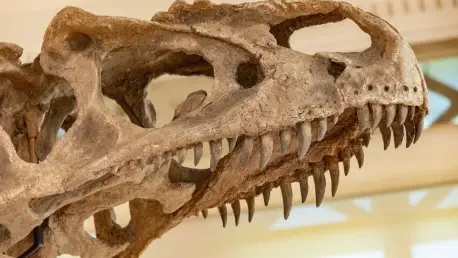

Collaborating with musculoskeletal biologist Dr. Matt Dempsey, artists have ensured that these nine-meter sculptures reflect the latest vertebrate paleontology. Blenheim Palace, a site known for its Baroque architecture, now serves as the backdrop for an unprecedented fusion of ancient history and modern manufacturing. The exhibition, titled “Dinosaurs Are Forever,” brings five massive Megalosaurus reconstructions to the public eye, pushing the boundaries of what is possible with accessible hardware. Spearheaded by artist Jay Jay Burridge and his studio, Future Fossils, the project utilized cutting-edge 3D printing to bridge the gap between scientific data and physical presence. By integrating biological accuracy with high-tech fabrication, the installation challenges traditional museum displays, offering a tactile and imposing experience. Visitors witness the intersection of history and technology, where the world’s first named dinosaur is reimagined through additive manufacturing.
Scaling Production: The Efficiency of Desktop Print Farms
Instead of relying on industrial-sized machinery that typically carries prohibitive costs, the production team utilized a “print farm” consisting of 14 Bambu Lab desktop 3D printers. This strategic move highlights a shift in contemporary manufacturing, proving that high-volume and large-scale projects can be successfully managed by synchronizing several smaller, more affordable units. By scaling out the production process rather than scaling up with massive equipment, the project showcased the democratization of fabrication technology, allowing independent studios to achieve results previously reserved for industrial facilities. This approach allowed for a redundant system where multiple components were printed simultaneously, significantly reducing the downtime that often plagues single-machine setups. The use of these desktop units demonstrated that precision and scale are no longer exclusive to the largest factories, enabling creative freedom in a decentralized environment.
The technical requirements for the sculptures involved seven weeks of continuous printing using ABS-GF, a glass-fiber-reinforced filament designed for high-performance applications. This specific material choice provided the necessary structural integrity for outdoor display, ensuring the massive reconstructions could withstand environmental stressors while remaining lightweight. Choosing a glass-filled polymer allowed the team to achieve a balance between rigidity and ease of processing, which was critical for the complex geometry of dinosaur bones. Once the components were transported from the print farm to the workshop, they underwent traditional hand-finishing techniques to refine the surfaces. These printed elements were ultimately mounted onto lightweight, movable frames, resulting in structures that were both physically imposing and engineered for logistical flexibility. This hybrid workflow combined automated production with artisan craftsmanship to meet high standards.
Scientific Accuracy: Merging Paleontology and Creative Innovation
To ensure the reconstructions were grounded in scientific reality, Burridge collaborated closely with musculoskeletal biologist and vertebrate paleontologist Dr. Matt Dempsey. Together, they developed a “new interpretation” of the Megalosaurus by analyzing fossil records and comparing them with closely related species to establish accurate biological proportions. This partnership ensured that the sculptures were not merely artistic impressions but were informed by the latest musculoskeletal research available in the field today. By examining muscle attachment points and skeletal structures, the team created a pose that felt dynamic and biologically plausible. This rigorous attention to detail elevates the project from a simple art installation to a valuable educational tool that reflects modern paleontology. The collaboration bridged the gap between the aesthetic requirements of a public exhibition and the standards of scientific inquiry, proving art can enhance communication.
The final sculptures exhibit a unique “machine-age” aesthetic that bridges biological form with modern engineering principles. This stylistic choice reflects a philosophy that using contemporary technology to reconstruct creatures from the deep past is a logical progression of human interpretation. By blending scientific rigor with a high-tech finish, the project frames humanity’s technological evolution as the primary tool for understanding and resurrecting natural history. The visible evidence of the 3D printing process, such as the subtle layer lines and the structural ribs, emphasizes the connection between the prehistoric subject and the tools used to recreate it. This juxtaposition serves to remind the audience that our understanding of the past is always mediated by the technology of the present. Rather than attempting a hyper-realistic skin texture, the artists chose to celebrate the fabrication process itself, making the manufacturing story as much a part of the exhibition as the dinosaurs.
Historical Heritage: Honoring Oxfordshire’s Paleontological Legacy
The choice of the Megalosaurus is particularly significant given its status as the first dinosaur ever to be scientifically named, a milestone reached in 1824. This historical legacy is deeply rooted in Oxfordshire, the same region where the exhibition is held and where the original fossils were first discovered two centuries ago. By placing these high-tech recreations at Blenheim Palace, the project creates a bridge between the birth of paleontology and the future of additive manufacturing. The presence of these sculptures near recent dinosaur trackway discoveries at Dewars Farm Quarry reinforces the area’s importance to scientific study. This local connection adds a layer of depth to the exhibition, grounding the advanced technology in a physical landscape that has been a center for discovery for centuries. The exhibition effectively honors the pioneers of the field while showcasing how modern tools can revitalize local heritage for an audience in a meaningful way.
The project established a blueprint for how distributed manufacturing models could be applied to large-scale cultural and educational installations. By utilizing desktop hardware and engineering-grade materials, the team proved that high-quality results were achievable without the overhead of traditional industrial processes. They demonstrated that specialized filaments, such as glass-fiber composites, offered a viable path for creating durable outdoor structures. Furthermore, the collaboration between artists and scientists suggested that interdisciplinary teams could produce more engaging and accurate public outreach materials. Organizations should consider adopting decentralized print farms to reduce costs and increase creative freedom during the design phase. This initiative provided a clear example of how to leverage local history to drive interest in modern technological advancements. The success of the installation showed that blending heritage with innovation was a strategy for engagement.