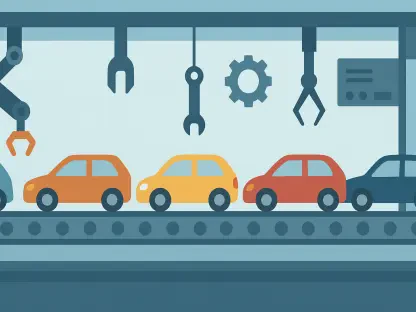

The traditional automotive engineering cycle is undergoing a fundamental transformation as General Motors abandons the sequential, hardware-centric methodologies that defined the industry for over a century in favor of a virtual-first paradigm. This strategic pivot represents more than just a change in software; it is a complete re-engineering of how a vehicle comes to life, moving from a fragmented collection of departments to a unified digital thread that persists throughout the lifecycle of a car. By integrating artificial intelligence and immersive simulation technologies, the company has managed to break down the silos that historically slowed production and increased costs. The goal is to create a seamless flow of data where every decision, from the curve of a fender to the logic of a braking controller, is validated in a virtual environment before any physical material is cut. This shift allows for an unprecedented level of precision and speed, ensuring that the software-defined vehicles of the modern era are not only smarter but are also brought to market with a degree of efficiency that was previously considered impossible in the heavy manufacturing sector.
Transforming Development Cycles: From Sequential Logic to Concurrent Real-Time Design
Historically, the process of bringing a new vehicle to the showroom floor resembled a long-distance relay race, where designers finished their sketches before handing off to engineers, who then eventually passed their blueprints to manufacturing experts. This linear progression often led to significant bottlenecks, as a single error found late in the physical prototyping stage could force entire departments to restart their work from scratch. To eliminate these redundancies, General Motors has implemented a concurrent development model where multidisciplinary teams operate simultaneously within a shared digital workspace. This ecosystem allows safety analysts, software developers, and mechanical engineers to iterate on the same model in real time. By identifying potential integration conflicts in the virtual world months earlier than before, the company avoids the costly delays associated with late-stage hardware revisions. This collaborative environment ensures that every stakeholder has visibility into the evolving design, fostering a culture of continuous improvement and rapid problem-solving.
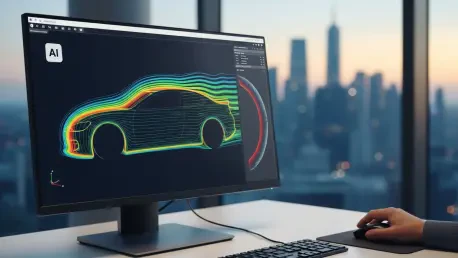
The infusion of generative artificial intelligence has acted as a significant force multiplier within this new framework, particularly during the initial creative design and aerodynamic refinement phases. What once required weeks of painstaking manual labor to translate a conceptual sketch into a high-fidelity three-dimensional model can now be achieved in less than twenty-four hours using advanced AI toolsets. These systems analyze vast repositories of proprietary data to suggest optimized surfaces that balance aesthetic appeal with functional performance requirements. For instance, virtual wind tunnels provide designers with instantaneous feedback regarding how minor adjustments to a vehicle’s silhouette affect its drag coefficient and overall energy efficiency. This rapid feedback loop allows the design team to explore thousands of variations in the time it used to take to test a single physical clay model. Consequently, the transition to virtual-first tools has not only accelerated the pace of innovation but has also empowered designers to push the boundaries of automotive form and function without the traditional constraints of physical modeling costs.
Validating System Integrity: The Synergy of Co-Simulation and Safety Testing
As vehicles become increasingly complex and software-dependent, the need for perfect synchronization between electronic control units and mechanical components has never been more critical. General Motors utilizes advanced co-simulation techniques to bridge the gap between abstract software code and the physical laws of motion. This process involves running virtual software controllers against high-fidelity physics models of steering, suspension, and braking systems in a closed-loop environment. By doing so, engineers can verify exactly how a vehicle will respond to diverse inputs long before the first chassis is assembled on the factory floor. This proactive approach to validation ensures that the software-defined architecture is robust and capable of handling the intricate demands of modern transportation. Furthermore, this digital synchronization allows for the early detection of software bugs that might otherwise remain hidden until expensive field testing begins. The result is a more reliable final product that integrates the latest technological advancements with the fundamental mechanical integrity expected by consumers in today’s competitive automotive market.
Beyond system control, the virtual-first philosophy has revolutionized the way vehicles are tested for structural integrity and passenger safety. Engineers now rely on high-fidelity simulations to perform complex evaluations, such as roof crush and side-impact tests, which previously required the destruction of multiple expensive prototypes. These digital simulations are so accurate that a structural analysis that once took forty hours to compute is now completed in under five minutes, allowing for the exploration of thousands of rare edge-case scenarios. While physical crash tests are still conducted for final regulatory certification, the majority of the optimization occurs in the digital realm. This capability allows the engineering team to refine energy-absorbing structures and airbag deployment timing with a level of granularity that physical testing alone cannot provide. By the time a physical vehicle reaches the test track, it has already been “crashed” thousands of times in a computer, ensuring that it meets the highest safety standards while significantly reducing the environmental impact and financial burden of traditional automotive development cycles.
Future-Proofing Production: Immersive Technologies and Data-Driven Manufacturing
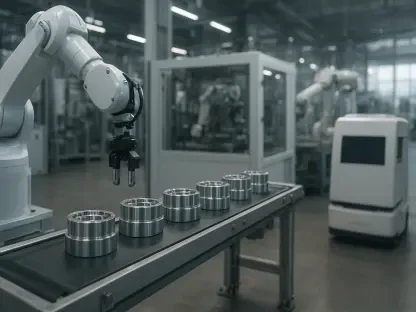
The benefits of the digital thread extend far beyond the design studio and into the actual manufacturing facilities where vehicles are built. Manufacturing engineers now employ Extended Reality tools, including augmented and virtual reality headsets, to plan and validate assembly sequences within a completely immersive environment. By overlaying digital equipment designs onto the physical layout of a plant floor, the company can identify potential ergonomic hazards and logistical bottlenecks before any heavy machinery is installed. This allows for the optimization of workstation layouts, ensuring that assembly line workers can perform their tasks safely and efficiently. The ability to virtually walk through a future production line enables teams to refine the placement of robotics and material handling systems, which drastically reduces the time required to transition a factory for a new vehicle launch. This level of foresight ensures that the manufacturing process is as innovative as the vehicles themselves, creating a cohesive link between the initial digital concept and the final physical product rolling off the assembly line for consumers.
The shift toward a virtual-first development model established a new benchmark for how the automotive industry approached innovation and operational efficiency. By prioritizing high-fidelity simulations and an integrated digital thread, the organization moved away from reactive engineering and toward a proactive, data-driven strategy. This transition empowered teams to solve complex technical challenges in a virtual space, which minimized the reliance on physical prototypes and accelerated the delivery of software-defined features. Moving forward, the focus should remain on expanding these digital capabilities to include real-time vehicle performance monitoring through connected fleet data. This will allow for the continuous refinement of virtual models based on actual driving conditions, creating a permanent feedback loop between production and real-world usage. Investing in the further democratization of AI tools across all engineering disciplines will likely be the next logical step to maintain this competitive edge. The era of the physical-first prototype effectively ended, giving way to a more agile and sustainable future where digital precision dictated the pace of the entire global automotive landscape.