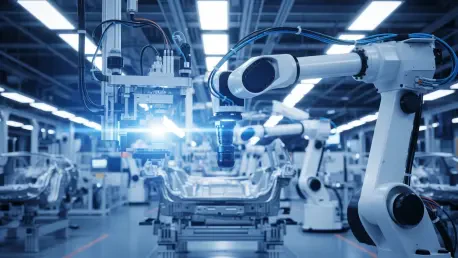

The relentless hum of the assembly line is undergoing a profound transformation as sophisticated algorithms migrate from sterile server rooms to the greasy, high-stakes environment of heavy industrial manufacturing. While artificial intelligence has long been confined to data centers and computer screens, a new era of “Physical AI” is moving algorithms directly into the grit of the assembly line. The partnership between GFT and Google Cloud marks a pivot from theoretical automation to a tangible reality where robots no longer just follow scripts but perceive and react to the physical world. This transition is not merely a technical upgrade; it is a fundamental shift in how the automotive industry addresses the persistent challenge of manufacturing precision.
By integrating cloud intelligence with mechanical limbs, manufacturers are finally bridging the gap between digital perception and physical execution. These systems allow for a level of adaptability that was previously impossible, as robots can now interpret visual data in real time to make split-second decisions. This evolution represents the next stage of the industrial revolution, where the boundary between software and hardware dissolves to create a more resilient production environment.
The Dawn of Physical AI on the Factory Floor
The emergence of Physical AI represents a departure from traditional robotics, which historically relied on rigid, pre-programmed paths that could not account for unexpected variables. In this new paradigm, the collaboration between GFT and Google Cloud provides the sensory and cognitive framework necessary for machines to understand their surroundings. Instead of being isolated tools, these robots function as extensions of a vast digital nervous system, processing information from the cloud to navigate the complexities of a modern factory.
This movement toward smarter hardware is driven by the necessity for near-perfect accuracy in an increasingly competitive market. As car components become more complex, the margin for error shrinks, making human-only inspection less viable for high-volume production. By grounding artificial intelligence in the physical world, the industry is moving away from static automation and toward a dynamic, self-correcting manufacturing model that prioritizes agility and long-term sustainability.
Why the Automotive Industry Is Doubling Down on Automation
The stakes for precision in car manufacturing have never been higher, with the automotive sector currently accounting for one-third of all industrial robot installations in the United States. As global installations are projected to surge from their current levels to 700,000 by 2028, manufacturers are facing a “digital-or-die” moment. With 41% of firms anticipating that physical AI will fundamentally transform their organizational structure, the demand for systems that bridge the gap between cloud-based software and heavy hardware is becoming the primary driver of industrial competition.
Labor shortages and the rising cost of materials further incentivize this aggressive shift toward high-tech solutions. Companies that fail to adopt these integrated systems risk falling behind as competitors leverage AI to reduce waste and accelerate throughput. Consequently, the push for automation is no longer just about replacing manual labor; it is about building a smarter infrastructure that can handle the intricacies of electric vehicle production and advanced safety features.
A Three-Tiered Robotic Ecosystem for Precision Manufacturing
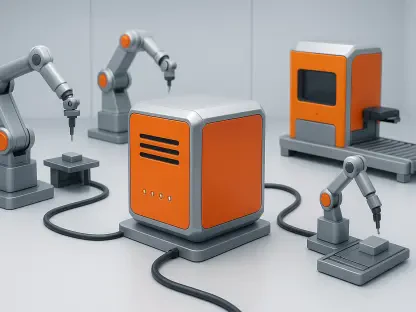
The GFT and Google Cloud solution utilizes a sophisticated, collaborative workflow involving three distinct robotic arms that function as a single unit. The first robot acts as the primary inspector, using high-resolution cameras to verify serial numbers and scan for defects in components like doors and bumpers. By capturing images from multiple angles, this initial unit creates a comprehensive digital twin of the part, which is then analyzed by cloud-based algorithms to detect even the slightest deviation from the standard.
The second robot takes immediate action by marking identified flaws, while the third robot performs physical interventions, such as realigning parts or removing faulty units for human review. This tiered approach ensures that no defective component moves further down the line, significantly reducing the cost of recalls and rework. By offloading these high-frequency visual inspections to robots, the system ensures a level of consistency that exceeds human capability, allowing the production line to operate at peak efficiency.
Real-World Impact and the Power of Agentic AI
The true intelligence of this system lies in its “agentic AI” capabilities, which allow it to go beyond simple error detection to perform complex root cause analysis. Instead of just flagging a defective bumper, the AI analyzes real-time data to pinpoint exactly where the error originated in the production process, preventing a single mistake from becoming a systemic failure. This capability transforms the robot from a passive observer into an active problem-solver that can suggest adjustments to upstream machinery.
This proactive approach is already being utilized by a major U.S.-based automaker, proving that the integration of cloud intelligence and physical automation is a viable solution for maintaining high-speed production without sacrificing quality. The ability to diagnose issues in real time means that factory managers can address mechanical wear or calibration shifts before they lead to significant downtime. This shift toward agentic behavior marks a milestone in industrial history, where machines actively contribute to the optimization of the entire factory ecosystem.
Strategies for Integrating Cloud-Driven Robotics in Production
To successfully implement a Physical AI framework, manufacturers focused on creating a seamless data loop between the factory floor and the cloud. This involved deploying high-speed connectivity to handle real-time image transmission and establishing “agentic” workflows that allowed AI to make autonomous decisions regarding quality control. By prioritizing root cause analysis over simple detection, companies minimized waste and shifted their human workforce toward higher-value oversight roles. Success in this new landscape required a commitment to digital transformation that treated hardware and software as a single, unified entity.
The transition necessitated a reevaluation of traditional manufacturing silos, as IT departments and factory floor managers worked in tandem to maintain these complex systems. Organizations that embraced this holistic view found that they could respond more quickly to market changes and consumer demands. Ultimately, the integration of these AI-driven robots served as a blueprint for the future of all heavy industry, where data-driven insights and physical labor became inseparable components of a modern, efficient production strategy.