
The ‘Rollerbot 2.0’ system represents a leap forward in the ability to take large-format metal parts from raw printing to certified, service-ready status on a single site. This technical milestone mirrors a broader metamorphosis within the additive manufacturing sector, which is rapidly transitioning from a niche prototyping tool into a fundamental pillar of decentralized, high-value industrial production. As of late 2026, the industry is no longer defined by experimental curiosity but by a multi-faceted drive toward operational scalability and technical precision. This evolution is characterized by a strategic convergence where sophisticated hardware meets data-driven process intelligence, allowing manufacturers to overcome historical barriers related to speed, size, and repeatability. The current landscape reflects a holistic approach to growth, integrating not only the machines themselves but also the human capital and software ecosystems required to sustain a digital manufacturing revolution. By addressing these challenges simultaneously, the industry is positioning itself as a resilient alternative to traditional global supply chains, offering a level of flexibility and responsiveness that was previously unimaginable in heavy industry and high-tech sectors.
Cultivating a Skilled Workforce Through Educational Initiatives
A primary concern for the long-term sustainability of the manufacturing sector is the development of a workforce capable of navigating the complexities of digital fabrication. America Makes has addressed this challenge by launching a nationwide educational initiative centered on drone technology, which serves as a highly engaging entry point for the next generation of engineers. By focusing on high-interest applications that blend robotics with advanced manufacturing, the program successfully bridges the gap between abstract engineering concepts and tangible physical results. Students across key industrial states are now being exposed to the complete Design + Build + Fly lifecycle, providing them with a comprehensive understanding of how digital inputs translate into functional hardware. This initiative is not merely about teaching CAD skills; it is about fostering a multidisciplinary mindset that is essential for the future of the American industrial base. As these educational programs expand between now and 2030, the goal is to create a talent pipeline that is as innovative and adaptable as the technology it will eventually operate in professional settings.
This specific curriculum is meticulously structured to simulate the real-world trade-offs and decision-making processes faced by professional additive manufacturing engineers on a daily basis. Students are tasked with navigating the delicate balance of optimizing component weight to maximize battery efficiency while simultaneously ensuring that the 3D-printed airframe maintains the structural integrity required for high-speed flight. By introducing these constraints early in the educational process, the program cultivates a deep appreciation for the “Design for Additive Manufacturing” philosophy, which is often the most significant hurdle for newcomers to the field. Furthermore, by democratizing access to high-tier engineering education through community engagement portals, the initiative ensures that a diverse range of students can participate in the digital economy. This movement toward accessible, application-based learning is a critical component of the industry’s growth strategy, as it prepares the workforce to handle the increasingly kinetic and complex nature of modern advanced manufacturing environments without the need for traditional, years-long retraining cycles.
Strategic Leadership and the Transition to Industrial Scale
As additive manufacturing firms mature and move beyond their initial venture-funded stages, there is a noticeable shift in leadership dynamics, moving from research-centric pioneers to seasoned operational veterans. This transition is essential for companies that are currently graduating from the startup phase into the demanding world of industrial-scale execution. For instance, the recruitment of executives with decades of experience in global sales and complex supply chain management at firms like VulcanForms and Velo3D signifies a pivot toward commercial stability. These leaders bring a wealth of knowledge from sectors such as aerospace and defense, where the standards for quality and reliability are exceptionally high. Their presence in the additive space is a clear indicator that the technology has reached a level of maturity where the primary challenge is no longer “making it work,” but rather “making it work at scale.” By aligning organizational structures with the rigorous demands of global enterprises, these firms are ensuring that their proprietary technologies can be integrated seamlessly into existing manufacturing ecosystems.
These leadership changes reflect a broader industry trend toward manufacturing readiness and a renewed focus on operational discipline across the board. By integrating high-level software engineering with rigorous aerospace-standard operations, companies are successfully transforming 3D printing from a specialty process into a dependable, repeatable industrial solution. The strategic focus has noticeably shifted from the pursuit of the “optimized design” to the achievement of “scaled production,” which is the only way to provide the supply chain resilience required by modern global enterprises. This shift is particularly evident in the way firms are managing their production campuses, where the emphasis is now on production consistency, material traceability, and meeting strict delivery timelines. As these veteran leaders implement standardized manufacturing protocols, the industry is shedding its reputation for being unpredictable, replacing it with a new identity centered on precision and reliability. This professionalization of the sector is a necessary step to secure long-term contracts with major original equipment manufacturers who demand nothing less than perfection.
Advancements in Large-Format Metal Fabrication and Certification
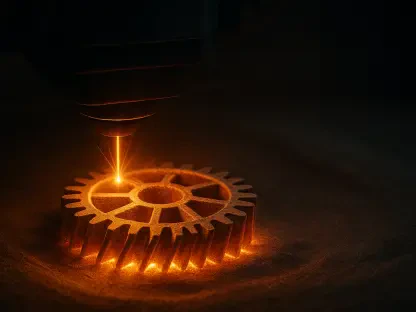
In the realm of large-scale metal fabrication, Wire Arc Additive Manufacturing is emerging as a formidable and highly viable alternative to traditional forging and casting methods. Companies such as DEEP Manufacturing have reached a significant milestone by providing 24/7 certified production for critical industrial components, including pressure vessels and complex propeller blades. This maturation of the technology is a significant breakthrough because it directly addresses the historical bottleneck of certification, which has long been a primary obstacle to widespread adoption in regulated industries. By streamlining the workflow so that parts can move from the initial printing stage to a fully certified, service-ready status on a single site, the industry is dramatically reducing lead times for critical infrastructure. This localized approach to production not only saves time but also reduces the logistical risks associated with transporting massive metal components across international borders, thereby strengthening domestic manufacturing capabilities for the energy and defense sectors.
The expansion of material portfolios to include specialized, high-performance alloys further demonstrates the technical progress being made in the large-format sector. Manufacturers are now routinely working with materials like super duplex stainless steel and nickel aluminum bronze, which are essential for the rigorous demands of subsea and maritime environments. The industry is no longer simply exploring whether large-format printing is a theoretical possibility; it is actively integrating these sophisticated systems into the fabrication of essential components for critical infrastructure. This progress highlights a fundamental shift in industry priorities toward the ability to certify and ship high-performance parts at an industrial pace that rivals traditional methods. As these large-scale systems become more common in industrial hubs from Bristol to Houston, the reliance on traditional foundries is decreasing, giving way to a more agile and digitally-driven approach to heavy metal fabrication. This transition is proving to be a game-changer for industries that require bespoke, large-scale solutions without the overhead of expensive molds or long-lead-time castings.
Automation and the Rise of Hybrid Manufacturing Platforms
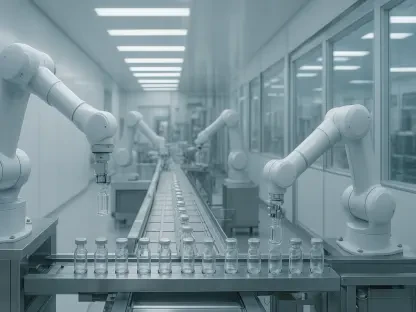
A recurring theme in recent industrial developments is the recognition that the 3D printing process itself is only one segment of a much larger and more complex manufacturing workflow. New automated hybrid platforms are fundamentally changing the landscape by treating additive manufacturing as a modular component within a larger, fully connected production line. By integrating diverse processes such as Digital Light Processing and pellet extrusion with precision CNC micro-milling, firms are successfully reducing the need for manual intervention, which has traditionally been a major cost driver and a source of human error. These integrated systems allow for a seamless transition between the additive build and the subtractive finishing stages, ensuring that parts are produced with the highest possible efficiency. This movement toward total automation is essential for making additive manufacturing economically competitive with traditional mass-production techniques, especially for small to medium-sized batches where the cost of setup is a critical factor.
This hybrid approach allows manufacturers to combine the unparalleled geometric flexibility of 3D printing with the exacting surface finishes and tolerances that only traditional machining can provide. Such systems are particularly ideal for applications where custom tooling is economically unfeasible, yet high precision remains a mandatory requirement for the final product. Automation in post-processing steps, including cleaning, curing, and final machining, ensures that the final product meets industrial standards while maintaining the speed and efficiency of a streamlined, digital workflow. As these hybrid platforms become more sophisticated, the distinction between “additive” and “traditional” manufacturing is beginning to blur, leading to a new paradigm of “smart” production. This integration not only improves the quality of the final part but also provides a level of process control that was previously difficult to achieve. The result is a highly flexible manufacturing environment that can pivot between different products and materials with minimal downtime, representing the pinnacle of modern industrial agility.
Predictive Intelligence and Data-Driven Production Reliability
The inherent complexity of laser-based powder bed fusion has historically required a tedious trial-and-error approach to achieve success, but the arrival of new “Additive Build Intelligence” solutions is fundamentally changing this dynamic. By utilizing advanced physics-based optimization and sophisticated data intelligence, engineers can now move beyond simple, reactive monitoring to gain truly predictive insights. These systems are capable of capturing and interpreting vast amounts of process data in real time, allowing for the identification of potential build failures or thermal anomalies before they even occur. This proactive approach to quality control is a massive leap forward for the industry, as it provides a level of certainty that was previously missing from metal additive processes. The ability to predict a failure during the build process allows for immediate corrective action, which can save thousands of dollars in material costs and hundreds of hours in lost machine time, making the technology far more attractive to high-stakes industries.
This shift toward predictable production is an absolute necessity for industries where the cost of a failed build is prohibitively high, such as in the aerospace and medical sectors. As the data generated during a build becomes just as valuable as the physical part itself, predictive intelligence is rapidly replacing reactive monitoring as the standard for quality assurance. This digital oversight ensures “right-first-time” manufacturing, which is a fundamental requirement for the full-scale industrialization of metal additive manufacturing. Furthermore, the data collected during these builds provides an immutable record of the production process, which is essential for meeting the strict traceability requirements of regulatory bodies. By creating a “digital twin” of the build process, manufacturers can prove the integrity of a part without the need for destructive testing. This reliance on data-driven reliability is paving the way for a future where 3D-printed parts are trusted implicitly for use in the most critical and demanding applications, from jet engines to surgical implants.
Aesthetic Integration of 3D Printing in Urban Infrastructure
While much of the growth in additive manufacturing is currently driven by heavy industry, the architectural and artistic applications of the technology are reaching new levels of sophistication and public visibility. Large-scale ceramic installations, such as the intricate facades integrated into electrical switchstations in the Netherlands, demonstrate how functional urban infrastructure can be transformed into compelling public art. These projects utilize robotic clay printing to create unique, mass-customized components that would be physically impossible or economically prohibitive to produce using traditional molds. This application of 3D printing highlights the technology’s ability to breathe new life into traditional materials like ceramic, combining ancient craft with modern digital tools. The result is a dynamic architectural language that allows for complex patterns and textures, which can be tailored to the specific environment and lighting conditions of a site, enhancing the visual landscape of modern cities.
These aesthetic applications are significant because they highlight the versatility of additive manufacturing in using traditional materials to solve contemporary design challenges. The ability to create complex reliefs and glazes that interact with sunlight shows that as the technology becomes more industrially capable, it also becomes more creatively expressive. This integration of form and function suggests that 3D printing will play an increasingly prominent role in the visual and structural fabric of future urban environments. Beyond just looking good, these printed ceramic elements can be designed with specific functional properties, such as acoustic damping or thermal management, proving that beauty and utility are not mutually exclusive. As architects and designers become more comfortable with these tools, we can expect to see a surge in mass-customized public infrastructure that reflects the unique identity of its location. This movement represents a return to architectural ornament, but one that is powered by the efficiency and precision of the digital age, creating a more human-centric built environment.
Strategic Frameworks for Future Industrial Implementation
The strategic advancements documented throughout late 2026 provided a clear roadmap for the continued integration of additive manufacturing into the global industrial core. It became evident that the industry had successfully moved beyond the experimentation phase, establishing a foundation built on certified processes, professional leadership, and automated workflows. The integration of large-format metal systems and hybrid manufacturing platforms allowed for a more localized and resilient production model, which effectively mitigated the risks of global supply chain disruptions. Furthermore, the emphasis on predictive intelligence and data-driven reliability transformed 3D printing into a trusted solution for the most demanding sectors. These developments suggested that the future of manufacturing would be defined by a blend of digital agility and physical precision, where the ability to rapidly iterate and produce high-quality components was no longer a luxury but a standard requirement. The industry proved that it could meet the dual demands of high-performance engineering and economic efficiency, securing its place as a permanent fixture in the modern industrial landscape.
To maintain this momentum, stakeholders were encouraged to prioritize the continued development of standardized certification protocols and the expansion of the skilled workforce. The success of educational initiatives showed that investing in human capital was just as important as investing in the machines themselves. Moving forward, the industry needed to focus on further integrating these digital tools into the broader manufacturing ecosystem, ensuring that additive manufacturing was not treated as an isolated process but as a key component of a unified production strategy. The use of advanced materials and the exploration of aesthetic applications in public infrastructure also offered new avenues for growth, broadening the technology’s impact beyond traditional industrial sectors. By continuing to leverage data-driven insights and operational excellence, the additive manufacturing sector was well-positioned to drive the next wave of global industrial innovation. The lessons learned during this period of rapid maturation served as a vital guide for future investments and strategic planning, ensuring that the technology would continue to evolve in a way that was both sustainable and transformative.