
The rapid acceleration of industrial electrification is fundamentally reshaping how the global metalworking sector handles heat treatment and melting operations, creating a paradigm shift in factory efficiency. This evolution is largely driven by a departure from fossil fuel-dependent systems in favor of high-frequency electromagnetic induction technology, which offers unprecedented precision and thermal efficiency. As international climate targets become more stringent, manufacturers are compelled to adopt cleaner alternatives that minimize carbon footprints while maximizing throughput. Consequently, the induction furnace market has emerged as a critical component of the modern supply chain, bridging the gap between traditional metallurgy and the sustainable digital factories of tomorrow. This sector is currently on a path toward a valuation of $1.52 billion by 2035, reflecting a deep-seated commitment to technological modernization across both emerging and developed economies. The current state of the industry suggests that the days of the smoke-filled, inefficient foundry are rapidly coming to a close as electricity takes center stage in metal production. Modern systems are now designed to handle a wide range of alloys, ensuring that quality remains consistent even when using lower-grade raw materials.
Economic Foundations: The Financial Growth of Industrial Melting
Market Milestones: Current Valuations and Growth Rates
The financial health of the global induction furnace sector is currently characterized by steady, resilient growth that mirrors the long-term nature of capital-intensive industrial investments. In the current year of 2026, the market has successfully reached a valuation of $1.1 billion, a milestone that underscores the widespread replacement of legacy combustion equipment with electrical alternatives. Analysts have observed a consistent compound annual growth rate of 3.68%, a figure that, while seemingly conservative, indicates a mature market benefiting from reliable and predictable demand cycles. This trajectory is supported by the massive scale of infrastructure projects currently underway in developing nations, as well as the aggressive retrofitting of existing facilities in North America and Europe. The climb toward the projected $1.52 billion mark by 2035 is not merely a matter of quantity but a reflection of the increasing value of high-tech, automated melting solutions. Investors are increasingly viewing the induction furnace as a safe harbor for capital, as the technology is indispensable for the production of essential materials like steel, iron, and copper. This financial stability provides manufacturers with the confidence to engage in long-term research and development, ensuring that the next generation of furnaces will be even more efficient.
Investment Patterns: Capital Commitment in Heavy Machinery
Strategic investments in the metallurgy sector are often defined by multi-decade life cycles, making the current surge in induction furnace acquisitions particularly significant for the global economy. Companies are no longer looking for the cheapest upfront option but are instead calculating the total cost of ownership, where energy savings and reduced material waste play a starring role. The shift toward electrification is fueled by a desire to insulate production costs from the volatility of natural gas and coal prices, which have plagued traditional foundries for years. By committing to induction technology, industrial players are effectively locking in their energy efficiency profiles and aligning themselves with the growing availability of renewable electricity. Furthermore, the market is seeing a high volume of replacement orders as units installed during the industrial booms of the late 20th century finally reach the end of their operational lives. These modern replacements are significantly more compact and powerful, allowing for higher production density within the same factory footprint. The capital being deployed today is building a more resilient industrial base that can withstand the economic fluctuations of the coming decade. This commitment to modernizing the “iron heart” of manufacturing ensures that the sector remains competitive in an increasingly globalized market.
Strategic Drivers: The Intersection of Green Policy and Operational Efficiency
The Recycling Revolution: Advancing the Circular Economy
Metal recycling has transitioned from a niche environmental initiative to the primary economic driver for the induction furnace industry, currently influencing over two-thirds of all new equipment purchases. Induction technology is uniquely suited for secondary steel production because it allows for the melting of scrap metal with minimal oxidation and zero direct emissions from combustion. This capability is vital as the global supply of high-grade iron ore becomes more expensive and difficult to extract, forcing manufacturers to look toward the massive reservoirs of existing metal scrap. Modern induction furnaces can process various grades of scrap, from heavy industrial plate to light consumer recyclables, with a level of purity that was previously difficult to achieve. This shift toward a circular economy is being codified in international trade agreements, where the “carbon intensity” of steel is becoming a deciding factor in market access. As a result, the demand for furnaces that can efficiently turn yesterday’s automobiles into tomorrow’s structural beams has never been higher. This transition not only reduces the environmental impact of mining but also significantly lowers the energy required to produce a ton of finished metal. The logistical advantage of being able to set up a recycling-focused mini-mill near urban centers, rather than near remote mines, is further accelerating this trend.
Energy Efficiency: Meeting Global Sustainability Mandates
Operational efficiency has become the primary metric by which modern foundry success is measured, with many organizations currently targeting a 25% improvement in energy utilization by the end of the decade. Induction furnaces are at the forefront of this movement because they heat the metal directly through electromagnetic waves rather than heating the surrounding atmosphere. This fundamental physical advantage eliminates the massive energy losses associated with flue gases and radiant heat escape that characterize traditional gas-fired furnaces. In many jurisdictions, governments have introduced strict environmental, social, and governance (ESG) targets that effectively penalize inefficient production methods, making induction technology an economic necessity. The move toward “Green Steel” is no longer a marketing slogan but a tangible requirement for participating in the supply chains of major automotive and aerospace companies. By eliminating the need for fossil fuel combustion on-site, foundries can drastically reduce their scope 1 emissions and simplify their regulatory compliance. This environmental benefit is coupled with a much safer and cooler working environment for employees, which has become a key factor in labor retention within the industrial sector. The synergy between government policy and technological capability is creating a powerful tailwind that is carrying the induction furnace market toward its 2035 targets.
Product Categorization: Distinguishing Melting and Heating Applications
Melting Applications: The Workhorse of Modern Foundries
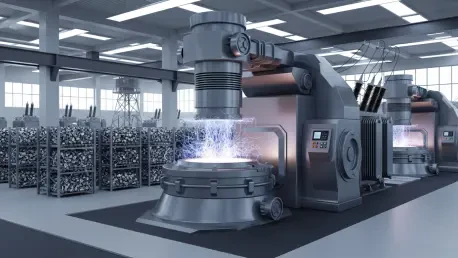
The melting segment continues to dominate the global market landscape, currently accounting for approximately 66% of the total industry value at nearly $0.70 billion. These high-capacity units are the essential tools of the iron and steel industries, where they provide the controlled environment necessary for refining complex alloys. The popularity of induction melting stems from its ability to offer rapid heating cycles and exceptional temperature uniformity, which are critical for maintaining the structural integrity of the final product. Unlike older arc furnaces, induction units provide a natural stirring action caused by the electromagnetic field, ensuring that alloying elements are distributed perfectly throughout the melt. This homogenization leads to higher quality castings and fewer rejected batches, directly impacting the bottom line of the foundry. As the demand for specialized high-strength steels grows, the precision of induction melting becomes even more valuable, allowing for the creation of metals with very specific chemical profiles. The current market for these units is split between large-scale industrial furnaces and smaller, specialized laboratory units used for material science research. This versatility ensures that induction melting remains the preferred choice across the entire spectrum of metal production, from heavy infrastructure to advanced nanotechnology.
Heating Systems: Precision for Advanced Manufacturing
Induction heating furnaces, while representing a smaller portion of the overall market compared to melting units, are seeing rapid growth in sectors that require extreme precision and localized thermal treatment. These systems are indispensable for processes such as forging, hardening, and brazing, where the speed of the heating cycle is paramount to preventing surface oxidation and maintaining grain structure. In the aerospace industry, for example, components such as turbine blades and landing gear parts must undergo rigorous heat treatment protocols that only induction technology can reliably provide. The ability to target heat to a specific depth or area of a part allows manufacturers to create components with hard, wear-resistant surfaces and tough, ductile cores. This level of control is simply not possible with traditional oven-based heating methods, which are slower and less predictable. Furthermore, the integration of induction heating into automated production lines has enabled the rise of “just-in-time” manufacturing for metal components. The technology’s instant-on capability means that energy is only consumed when a part is actually being processed, leading to significant savings in high-volume environments. As the complexity of mechanical assemblies increases, the demand for these highly specialized heating solutions is expected to outpace the broader market growth.
Regional Powerhouses: Shaping the Global Market Outlook
Asia-Pacific: The Epicenter of Industrial Production
The Asia-Pacific region remains the undisputed leader in the global induction furnace market, currently commanding a 42% share of total demand and serving as the primary site for new installations. This dominance is driven by the massive scale of infrastructure development in China and India, where the demand for steel and iron continues to reach record levels. In these nations, the transition from large, polluting blast furnaces to cleaner, electricity-based induction mills is being heavily subsidized by governments seeking to improve urban air quality. The regional market is also benefiting from a robust domestic manufacturing base that produces both the furnaces and the metals they process, creating a self-sustaining industrial ecosystem. Beyond the traditional giants, Southeast Asian nations like Vietnam and Indonesia are rapidly expanding their metalworking capabilities to support growing automotive and electronics sectors. The concentration of manufacturing expertise in this part of the world has led to the development of highly cost-effective induction solutions that are now being exported globally. For any manufacturer in this space, maintaining a strong presence in the Asia-Pacific region is no longer optional; it is the foundation of global market strategy. The sheer volume of raw material throughput in this region ensures that it will remain the primary engine of growth through 2035.
Western Markets: Innovation and Modernization Strategies
While the Asia-Pacific region leads in volume, Europe and North America are setting the pace for technological sophistication and the integration of digital tools. In Europe, the market is shaped by some of the world’s strictest environmental regulations, which have made energy efficiency the primary competitive advantage for any foundry. This has led to the early adoption of “smart” furnaces that utilize advanced monitoring to squeeze every possible kilowatt of efficiency out of the melting process. Meanwhile, in North America, the market is undergoing a significant modernization phase as domestic manufacturers seek to reshore production and combat rising labor costs through automation. The focus in the United States is on high-precision “smart” units that can operate with minimal human intervention, utilizing robotics for charging and pouring operations. Both regions have highly developed metal recycling infrastructures, which provide a steady stream of scrap metal for induction-based secondary production. The Western markets are also characterized by a high demand for specialty melting solutions used in the medical, defense, and high-tech sectors. This focus on high-value, low-volume production requires furnaces that can handle exotic alloys and maintain extreme purity levels. Consequently, the Western market acts as a proving ground for the most advanced technologies before they are scaled up for global distribution.
Technical Advancements: Digital Oversight and Predictive Analytics
Smart Sensors: Real-Time Monitoring and Quality Assurance
The current era of induction furnace technology is defined by the integration of sophisticated sensor arrays and Internet of Things (IoT) connectivity that provide unprecedented visibility into the melting process. Modern units are equipped with sensors that monitor electrical harmonics, cooling water flow, and refractory lining thickness in real-time, allowing operators to make adjustments on the fly. This level of digital oversight ensures that every batch of metal meets the exact specifications required, significantly reducing the occurrence of off-spec heats. Data collected from these sensors is often fed into centralized management systems that allow plant managers to compare the performance of multiple furnaces across different locations. This ability to benchmark operations has uncovered hidden efficiencies and allowed for the optimization of power consumption patterns during peak and off-peak hours. Furthermore, the use of infrared thermography and laser-based monitoring has made it possible to detect hotspots or thinning linings before they pose a safety risk. The move toward data-driven metallurgy is transforming the role of the furnace operator from a manual laborer to a data analyst. As these digital tools become more affordable, they are being adopted by even smaller foundries, leveling the playing field and raising the global standard for metal quality.
Predictive Maintenance: Reducing Downtime and Operational Risk
Predictive maintenance has emerged as one of the most impactful technological advancements in the induction furnace market, fundamentally changing how companies manage their equipment lifecycles. By utilizing machine learning algorithms to analyze historical performance data, companies can now predict with high accuracy when a specific component is likely to fail. This allows maintenance crews to perform repairs during scheduled breaks rather than reacting to a catastrophic failure during a production run. For continuous casting operations, where even a few hours of downtime can result in hundreds of thousands of dollars in lost revenue, this capability is revolutionary. The focus on predictive analytics is particularly important for the furnace’s refractory lining, which is the most critical and vulnerable part of the system. Sophisticated software can now track the erosion rate of the lining based on the types of alloys melted and the temperatures reached, providing a “remaining life” estimate for the operator. This proactive approach not only extends the life of the equipment but also significantly improves factory safety by preventing molten metal leaks. As the industry moves closer to 2035, the expectation is that self-diagnostic and even self-healing systems will become standard features of high-end induction units.
Operational Hurdles: Addressing Grid Stability and Capital Costs
Power Supply Challenges: The Reliability of the Electrical Grid
Despite the clear benefits of induction technology, the industry continues to face a significant challenge regarding the stability and capacity of the global electrical grid. Induction furnaces are among the most power-intensive pieces of equipment in any factory, and their operation can place immense strain on local utility networks. In many regions, the existing infrastructure is struggling to keep up with the rapid pace of industrial electrification, leading to voltage fluctuations and power quality issues. For a furnace operator, a sudden drop in power can lead to a 20% loss in efficiency or, in extreme cases, the freezing of a melt inside the crucible. This dependency on a stable grid has led many large-scale producers to invest in their own power conditioning equipment and even on-site renewable energy storage systems. Furthermore, the intermittent nature of wind and solar power requires advanced control systems that can ramp furnace power up or down in response to grid availability. Manufacturers are currently developing new power supply topologies that are more resilient to grid instability and produce fewer electrical harmonics. Solving the “power puzzle” is essential for the continued expansion of the market, particularly in developing nations where grid reliability remains a primary concern for industrial investors.
Capital Expenditure: Navigating the High Cost of Entry
The high initial capital expenditure required to install a modern induction furnace system remains a formidable barrier for many small and medium-sized enterprises. While the long-term operational savings in energy and material waste are well-documented, the upfront cost of the furnace, the power supply, and the necessary cooling and ventilation systems can be staggering. This financial hurdle is exacerbated by the need for specialized electrical infrastructure and foundation work to support the weight of the equipment and its cooling requirements. In response to this challenge, many manufacturers have begun offering modular designs that allow for a more gradual investment path. Companies can start with a single, smaller unit and add capacity as their business grows, rather than committing to a massive facility from day one. Additionally, the rise of “equipment-as-a-service” models and innovative leasing programs is helping to lower the barrier to entry for smaller foundries. These financial arrangements allow companies to pay for the furnace based on its output or energy savings, shifting the cost from a capital expense to an operational one. This flexibility is crucial for ensuring that the benefits of induction technology are accessible to the entire manufacturing sector, not just the largest global players.
Competitive Landscape: Corporate Strategy and Industry Innovation
Global Leadership: Conglomerates and Specialized Engineering
The competitive environment for induction furnaces is a dynamic mix of massive global conglomerates and highly specialized engineering firms, each carved out a specific niche. Leaders like the Inductotherm Group have maintained their dominance by offering an exhaustive range of products and a global service network that can support customers in almost any country. These large players benefit from economies of scale and the ability to invest heavily in broad-based research and development that covers everything from vacuum melting to high-frequency heating. In contrast, firms like OTTO JUNKER and ABP Induction Systems focus on high-end engineering and customized solutions for the most demanding industrial applications. These specialized companies often lead the way in energy efficiency and digital integration, catering to clients who require bespoke systems for unique alloys or production processes. Competition is currently intensifying as manufacturers from emerging markets begin to move up the value chain, offering increasingly sophisticated equipment at competitive price points. This pressure is driving a constant cycle of innovation, where manufacturers must continuously improve their product performance to maintain market share. Strategic partnerships between furnace makers and digital technology companies are also becoming more common as the industry looks to integrate AI and advanced analytics into its core offerings.
Strategic Priorities: ROI and Product Performance Enhancement
Corporate strategies across the induction furnace industry are currently centered on providing a clear and data-driven return on investment for customers who are wary of high energy costs. Recent product launches have focused heavily on enhancing the “wall-to-melt” efficiency of the power supplies, with some new systems achieving overall efficiencies of over 95%. Manufacturers are also integrating artificial intelligence to help manage production schedules, ensuring that the furnace operates at its most efficient temperature for as long as possible. The goal is to move beyond simply selling a piece of machinery and instead provide a complete thermal management solution. This includes offering comprehensive training programs for operators, as human error remains a major cause of inefficiency and equipment wear. Many companies are also expanding their after-market services, utilizing remote monitoring to provide technical support and spare parts before a customer even realizes they need them. This focus on long-term partnership and service-based revenue is helping to stabilize the income of furnace manufacturers and provide more value to the end-user. As we approach 2035, the companies that succeed will be those that can prove their equipment not only melts metal but does so with the smallest possible economic and environmental footprint.
Future Horizons: The Path Toward Industry 5.0
Human-Centric Systems: Integrating Safety and Sustainability
The transition toward Industry 5.0 is expected to bring a more resilient and human-centric approach to furnace operation, moving beyond the pure automation of the previous decade. The industry realized that while machines are excellent at repetitive tasks, human intuition and oversight are still vital for handling the unexpected variables of metal production. Future induction systems were designed to work more harmoniously with operators, utilizing augmented reality interfaces to provide real-time guidance and safety warnings. This shift prioritized the well-being of the workforce, creating a cleaner and more ergonomic environment that challenged the traditional “dirty” image of the foundry. Sustainability also became a non-negotiable pillar of the sector, as the path forward was cleared by the adoption of closed-loop cooling systems that virtually eliminated water waste. These innovations allowed foundries to operate even in water-stressed regions, future-proofing the industrial base against the impacts of climate change. The industry successfully demonstrated that high-output manufacturing did not have to come at the expense of environmental stewardship or worker safety. By focusing on these human-centric values, the sector was able to attract a new generation of skilled technicians and engineers who were eager to work at the cutting edge of green technology.
Material Science: Meeting the Needs of Next-Generation Alloys
The evolution of material science through 2035 demanded even more precise melting environments, and the induction furnace market was ready to meet these challenges. The rise of advanced aerospace and defense alloys, which require melting in a vacuum or under inert gas to prevent contamination, drove a new wave of specialized furnace development. These systems provided the extreme purity required for the next generation of high-performance components, from lightweight EV frames to high-temperature jet engine parts. Modular and compact designs became the standard, allowing smaller enterprises to participate in high-value specialty markets that were previously the domain of industrial giants. The success of the industry was built on a foundation of continuous innovation and a willingness to adapt to the changing needs of the global economy. As a final step, manufacturers are encouraged to prioritize grid-balancing technologies and invest in workforce retraining to fully capitalize on these digital advancements. The path to a $1.52 billion market was paved by those who recognized that the future of metal was electric, digital, and sustainable. This strategic foresight ensured that the induction furnace remained the heartbeat of global manufacturing for decades to come.