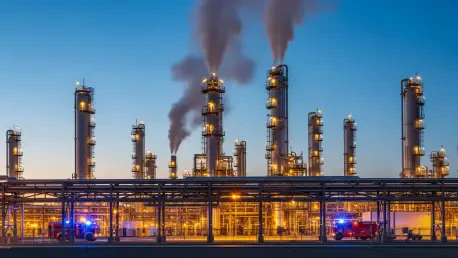

The industrial landscape of Haldia was recently shaken by a catastrophic blaze that erupted at the Haldia Petrochemicals Limited complex, underscoring the persistent hazards associated with large-scale chemical processing. This sudden ignition occurred during a period of routine operations, sending plumes of thick black smoke high into the atmosphere and triggering an immediate evacuation of the surrounding vicinity. As one of the largest naphtha cracker facilities in the region, the plant serves as a critical node in the petrochemical supply chain, making any disruption a matter of significant economic and safety concern. Early reports suggest that the fire started in a high-pressure unit, where volatile hydrocarbons are processed under extreme temperatures, leading to a rapid escalation that challenged the facility’s internal suppression systems. The intense heat and the threat of secondary explosions forced a total lockdown as engineers worked to isolate fuel lines.
Immediate Casualty Management: Assessing the Human Toll
Medical facilities in the East Midnapore district were placed on high alert as more than twenty workers sustained varying degrees of burn injuries and respiratory distress. Among those affected, several individuals were reported to be in critical condition, requiring urgent transfer to specialized burn units in Kolkata for advanced intensive care. The logistics of transporting the injured were complicated by the chaotic environment surrounding the industrial zone, though the presence of dedicated industrial ambulances helped mitigate initial delays. Emergency responders noted that the majority of the casualties were technicians and operators who were in close proximity to the unit when the flare-up occurred. Hospital administrators worked tirelessly to coordinate with the petrochemical firm to ensure that all victims received immediate stabilization and psychological support. The prioritization of human life became the primary focus as the fire continued to burn, with medical teams setting up triage.
To combat the inferno, over ten fire tenders were dispatched from Haldia, Mecheda, and other neighboring municipalities, creating a multi-agency response to the crisis. Firefighters faced the daunting task of cooling down adjacent storage tanks filled with highly flammable chemicals, which posed a risk of a secondary, much larger disaster. Using specialized foam and high-pressure water monitors, the crews established a defensive perimeter around the affected naphtha cracker unit to contain the flames within the primary structure. The process of dousing such a chemical fire is notoriously difficult, as water alone can often cause volatile liquids to spread rather than extinguishing them. Coordination between the plant’s internal safety team and the state fire services was essential for managing the water supply and chemical foam stocks. Continuous monitoring of the air quality was also initiated to assess the potential health risks to the residents living in the nearby residential blocks.
Infrastructure Disruptions: Managing Risks and Future Safety
The proximity of the industrial complex to vital transport arteries led to the immediate suspension of all train services on the Panskura-Haldia section of the South Eastern Railway. This decision was made to ensure the safety of passengers and to prevent any sparks from passing locomotives from interacting with fugitive gas emissions that might have escaped during the incident. Consequently, several commuter and freight trains were stalled or diverted, leading to a significant backlog in the movement of goods to and from the Haldia port. Local authorities established a safety zone that restricted movement on the highways leading to the plant, effectively sealing off the industrial hub from the rest of the district. The disruption highlighted the deep integration of the regional infrastructure with the petrochemical sector, as the temporary closure of the rail line echoed through the logistical networks of neighboring states. Rail officials monitored the situation closely before giving clearance.
In the aftermath of the blaze, the focus shifted toward rigorous investigation and the implementation of enhanced safety protocols to prevent future occurrences. Regulatory bodies mandated a comprehensive audit of the facility’s hardware and software control systems to identify the specific failure that allowed the ignition to bypass established safety barriers. This incident served as a wake-up call for the entire petrochemical industry, prompting a re-evaluation of emergency response timelines and the reliability of automated suppression technologies. Engineers began exploring the integration of advanced thermal sensors and artificial intelligence to detect heat anomalies before they could manifest into open flames. Furthermore, the local government collaborated with industry leaders to strengthen the communication bridge between industrial safety units and public emergency services. These measures were aimed at ensuring that the recovery process not only addressed the physical damage but also restored public confidence.