
The global manufacturing landscape is currently navigating a pivotal transformation as industrial facilities pivot away from traditional, labor-intensive production models toward highly sophisticated and automated pulp molding technologies. This shift is not merely a trend but a necessary response to the staggering volume of non-biodegradable waste generated by legacy plastic packaging methods. By integrating high-precision engineering with eco-friendly material processing, the industry is effectively redefining the baseline for sustainable production. The transition enables companies to meet the surging consumer demand for plastic-free alternatives without compromising on the speed or durability that modern supply chains require. As environmental mandates become more stringent, the focus has shifted toward creating scalable solutions that allow businesses to replace single-use plastics with compostable, molded fiber products that offer comparable performance metrics. This evolution marks a significant milestone in industrial history, moving molded fiber from a niche material to a primary high-performance standard for international commerce.
Market Drivers and Material Versatility
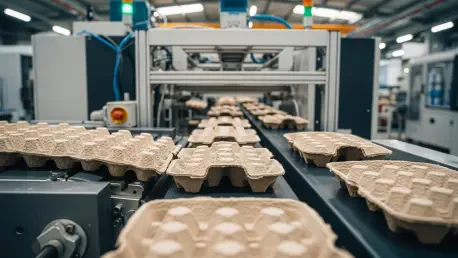
The transition toward sustainable packaging is primarily being fueled by increasingly strict environmental regulations and the rising economic burden of maintaining a manual workforce in high-output environments. Global bans on expanded polystyrene and the phased elimination of single-use plastic containers have forced manufacturers to look for durable, reliable alternatives that can be integrated into existing supply chains. High-capacity molded fiber production lines now address these market requirements by providing equipment capable of producing a vast array of high-volume items, such as egg trays, coffee cup carriers, and protective corner protectors. These systems allow companies to remain compliant with international environmental standards while significantly reducing their carbon footprint through the use of biodegradable materials. By automating the manufacturing process, businesses are able to mitigate the risks associated with labor shortages and fluctuating wages, ensuring long-term operational stability.
Navigating Regulatory Pressures: The End of Single-Use Plastics
Legislative frameworks across various continents have reached a tipping point, where the financial penalties for using non-recyclable materials often outweigh the costs of upgrading to green manufacturing technologies. In response, modern pulp molding systems have been engineered to deliver a level of throughput that matches the demands of the global logistics and food service industries. These systems are not only capable of processing vast quantities of raw pulp but are also designed to produce items that maintain their structural integrity under various temperature and moisture conditions. This reliability is crucial for businesses that need to ensure their products remain protected throughout the entire shipping and handling process. As a result, molded fiber has transitioned from being a secondary packaging option to a primary solution for companies looking to future-proof their operations against coming environmental legislation. The ability to scale production rapidly allows these firms to capture market share as plastic alternatives are phased out.
Industrial Expansion: Meeting the Demand for High-Precision Packaging
Beyond the production of common food service items, modern pulp molding technology has expanded its reach into high-end industrial sectors where precision and structural integrity are paramount. It is now frequently utilized to create precision-engineered packaging for sensitive electronics, medical devices, and premium consumer goods that demand a high degree of shock absorption and protection. This enhanced versatility is a result of advanced thermoforming techniques that allow for the creation of intricate shapes with smooth, high-quality finishes that rival traditional plastic injection molding. As a result, manufacturers are no longer limited by the aesthetic or functional constraints of older fiber molding methods, allowing them to serve a more diverse range of industrial clients. This capability enables brands to maintain a professional product presentation while fulfilling their commitment to sustainability. By meeting the specific needs of these high-stakes industries, molded fiber has solidified its position as a versatile and reliable material.
Integrated Automation and Process Management
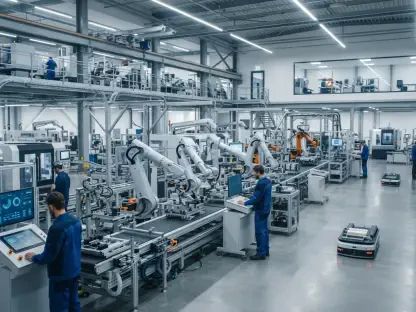
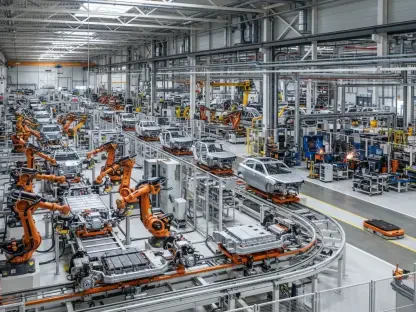
A significant breakthrough in the efficiency of the molded fiber industry is the transition from fragmented, multi-stage production setups to fully integrated and unified manufacturing systems. In traditional factory layouts, essential steps such as pulping, forming, and drying were often managed as distinct and separate tasks, which frequently led to process inconsistencies and reduced overall throughput. Modern production lines now combine these critical functions into a single, seamless operation, which ensures a much higher level of product consistency than manual or semi-automated methods could ever provide. By streamlining the flow of raw material from the pulping tank directly to the finished product output, manufacturers can significantly reduce the lead times associated with high-volume orders. This level of integration not only maximizes the utilization of factory floor space but also minimizes the handling of wet products, which reduces the risk of structural damage during the manufacturing cycle.
Streamlining Operations: Unified Systems vs Fragmented Production
The integration of every manufacturing phase into a singular, automated workflow has eliminated the bottlenecks that previously hindered the scalability of molded fiber production. In these modern configurations, the slurry preparation, mold vacuum suction, and high-temperature drying are synchronized through advanced timing mechanisms that prevent delays between stages. This synchronization is particularly important during the drying phase, where maintaining a constant temperature and airflow is essential for preventing warping or uneven thickness in the final product. Because the entire process is contained within a unified system, there is a substantial reduction in the energy lost during the transfer of materials between machines. This efficiency translates into a lower cost per unit, making molded fiber more competitive with traditional plastic manufacturing. Furthermore, the reduction in manual intervention leads to a safer working environment and allows for more predictable production schedules that can meet the rigorous demands of global distributors.
Centralized Control: Harnessing Data for Enhanced Quality Consistency
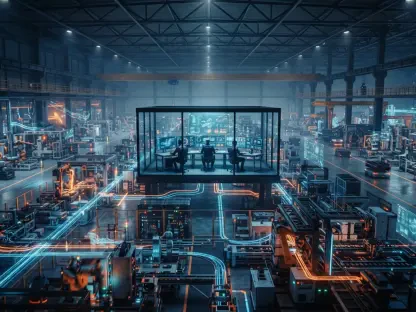
Centralized monitoring systems have revolutionized how factory operators manage the manufacturing lifecycle, providing them with a clear and comprehensive view of the entire line through a single interface. This advanced technology enables the real-time tracking of critical production variables, including mold temperatures, moisture levels, and energy consumption patterns across every stage of the process. Having access to such granular data allows plant managers to make immediate, informed adjustments to the machinery, which helps in preventing defects and ensuring that every batch of products meets strict quality tolerances. Furthermore, the ability to store and analyze historical production data provides valuable insights into long-term equipment performance and areas where efficiency can be further optimized. This digital transformation reduces the likelihood of human error and ensures that the production facility operates at peak capacity with minimal waste. The result is a more resilient and predictable manufacturing environment.
Engineering Innovation and Resource Efficiency
One of the most innovative engineering developments in recent years is the strategic shift toward what is known as robot-free automation within the pulp molding process. Instead of relying on complex robotic arms that often require expensive programming, specialized technical staff, and frequent maintenance intervals, these systems utilize integrated mechanical conveying. This mechanical approach allows for the high-speed transfer of products between the forming molds and the drying stages with exceptional reliability and lower technical complexity. By reducing the number of electronic sensors and high-maintenance joints associated with traditional robotics, these systems have become much more accessible to a wider range of manufacturers, especially those operating in emerging markets. This simplification of the automation process does not sacrifice speed; rather, it enhances the overall uptime of the production line by making routine servicing much faster and easier for standard on-site technicians to perform.
Simplifying Automation: The Robot-Free Mechanical Advantage
The decision to utilize mechanical conveying over traditional robotics has proven to be a decisive factor in improving the operational lifespan of molded fiber production lines. These mechanical systems are designed to operate continuously in the humid and high-temperature environments typical of pulp molding facilities, where electronic components often struggle with longevity. By focusing on robust mechanical engineering, manufacturers can achieve precise product positioning and smooth transitions without the software vulnerabilities inherent in complex robotic setups. This approach significantly lowers the total cost of ownership, as it reduces the need for expensive spare parts and specialized external consultants for troubleshooting. Additionally, the simplified design allows for faster mold changes, enabling a single production line to switch between different product types with minimal downtime. This flexibility is essential for businesses that need to respond quickly to changing market trends or customized client requests without overhaul.
Circular Economy Solutions: Utilizing Agricultural Waste as Raw Material
The current generation of molding technology is designed to support a circular economy by effectively processing a diverse range of renewable and agricultural raw materials. While recycled paper remains a staple, advances in pulping chemistry and mechanical refining now allow for the use of bamboo fiber, sugarcane bagasse, and wheat straw as primary feedstocks. These materials are often agricultural byproducts that would otherwise be discarded or burned, but in a molded fiber system, they are transformed into high-value packaging solutions. The ability to process these varied fibers allows manufacturers to source materials locally, reducing transportation costs and further lowering the carbon footprint of the final product. Additionally, products made from these non-wood fibers often possess unique structural properties, such as enhanced stiffness or a more premium surface texture, which are highly desirable for luxury packaging and food service applications where presentation is just as important as function.
Strategic Energy Management: Multi-Layer Drying and Heat Recovery
Energy efficiency has emerged as a critical strategic asset for modern manufacturers, particularly since the drying stage of molded fiber production is traditionally a power-intensive endeavor. To address this challenge, high-efficiency production lines now incorporate multi-layer drying systems and sophisticated heat recovery technology that captures and repurposes thermal energy that would otherwise be wasted. These engineering improvements have significantly lowered the operational costs associated with molded fiber manufacturing, making it a highly competitive alternative to plastic. By minimizing the total energy input required to remove moisture from the molded products, facilities can achieve a faster return on investment and lower the per-unit cost of production. This focus on resource optimization ensures that the shift toward sustainable manufacturing is not only an ethical choice but also a financially sound business decision. The integration of high-efficiency burners and insulated drying chambers further contributes to a more sustainable ecosystem.
Future Considerations: Sustaining the Industrial Transformation
The transition toward automated pulp molding successfully provided a clear roadmap for industries that sought to reconcile their financial objectives with global environmental stewardship. Manufacturers who adopted these high-efficiency systems realized significant gains in operational consistency while simultaneously reducing their heavy reliance on fossil-fuel-based packaging materials. The implementation of robot-free automation and advanced heat recovery proved to be a decisive factor in making sustainable production financially viable on a global scale. Looking back, the industry benefited from a renewed focus on agricultural waste processing and the expansion of molded fiber into increasingly complex industrial sectors like electronics and healthcare. By prioritizing resource efficiency and streamlined mechanical designs, the market effectively moved past the limitations of traditional plastic manufacturing. Companies that invested in these comprehensive technology upgrades found themselves better positioned to meet strict international standards, ensuring that the legacy of production was one of renewal.