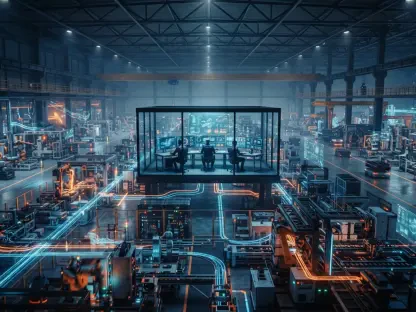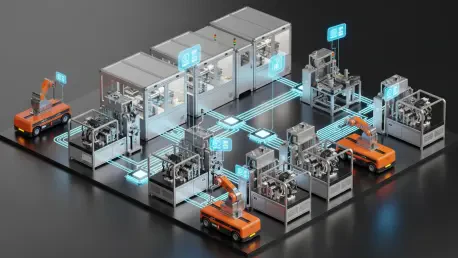

The global manufacturing landscape is currently undergoing a seismic transformation as legacy digital tools evolve into autonomous systems capable of governing complex industrial environments without human intervention. This transition marks the end of the era characterized by passive diagnostic dashboards and the beginning of a period where Agentic AI serves as the central nervous system of the smart factory. By 2027, the primary objective for industrial leaders will no longer be how quickly a human can react to a dashboard alert, but how effectively an autonomous agent can prevent the alert from ever occurring. This evolution represents a departure from the human-in-the-loop systems that defined the early 2020s, replacing them with human-on-the-loop architectures where digital entities manage the heavy lifting of operational logic. As these systems become more sophisticated, they are closing the critical gap between sensing a problem and executing a solution, effectively eliminating the latency that has traditionally plagued complex production lines. The resulting shift is creating a landscape where the factory operates as a self-correcting entity, capable of adjusting its own parameters to maintain peak efficiency without the need for constant manual intervention. Consequently, the role of digital technology in manufacturing is transitioning from a tool used by laborers to a partner that drives the very heartbeat of industrial output, setting a new standard for global competitiveness.
Beyond the Chatbot: The Rise of Autonomous Execution
The transition toward agentic artificial intelligence represents a fundamental shift from the conversational assistants that dominated the industrial landscape only a few years ago to a more robust framework of autonomous execution. Traditional chatbots were limited by their reactive nature, requiring a human operator to identify a problem, formulate a query, and then interpret the provided answer before taking any physical action. In contrast, Agentic AI possesses the inherent capability to monitor industrial environments continuously and make high-stakes decisions based on real-time sensory input. This autonomy is achieved by moving beyond simple text prediction and into the realm of goal-oriented behavior, where the AI is tasked with maintaining specific performance metrics rather than just answering questions. By 2027, the focus of smart factory workflows will center on these agents that can sense an anomaly and immediately trigger a corrective response without waiting for a manual prompt. This shift effectively eliminates the bottleneck of human response time, which is often the difference between a minor adjustment and a catastrophic equipment failure on a high-speed production line.
Furthermore, the intelligence of these systems is characterized by a capacity for multi-step reasoning that was previously unattainable for standard automation software. Unlike a basic heuristic system that follows a rigid if-then logic, an agentic system can evaluate a complex set of variables and plan a sequence of actions to achieve a desired outcome. For example, if a temperature sensor on a CNC machine indicates a spike, an AI agent does not just flag the error; it checks the current production schedule, assesses the wear-level of the cutting tool, and cross-references the availability of spare parts in the inventory. If the agent determines that the heat is caused by tool friction, it can autonomously slow the feed rate to prevent damage while simultaneously scheduling a maintenance technician for the next available downtime window. This level of cross-system coordination allows the factory to maintain a state of continuous optimization, as the AI manages the intricate dependencies between mechanical performance, resource availability, and delivery deadlines.
Harmonizing DatThe Power of Model Context Protocol
One of the most significant advancements facilitating the rise of Agentic AI is the move toward live telemetry as the primary source of operational truth. Historically, factory data was often processed in batches or stored in silos, creating a lag that made real-time autonomous decision-making nearly impossible. By 2027, however, sensors tracking everything from acoustic vibrations to power consumption will feed directly into agentic reasoning engines, providing a high-fidelity digital twin of the physical environment. This constant stream of data allows the AI to develop a nuanced understanding of the factory’s operational baseline, making it much more effective at identifying the subtle precursors to mechanical failure or quality degradation. When the AI is integrated directly with the live pulse of the machinery, it can execute micro-adjustments to the workflow that are invisible to the naked eye but result in significant gains in overall equipment effectiveness. This shift from historical reporting to real-time action is what truly defines the modern agentic workflow.
The implementation of these systems has been greatly accelerated by the emergence of the Model Context Protocol (MCP), which serves as a universal interface for AI agents. This protocol solves the long-standing challenge of data fragmentation by allowing agents to connect seamlessly with disparate software systems such as Enterprise Resource Planning (ERP) and Manufacturing Execution Systems (MES). Previously, creating these connections required expensive custom coding and lengthy integration cycles that often became obsolete as soon as a software update was released. With MCP, manufacturers can deploy agents that have a holistic view of the entire facility, enabling them to pull data from a warehouse management system and push instructions to a robotic arm through a single, standardized layer. This interoperability is the backbone of the autonomous factory, as it ensures that the AI has the necessary context to make informed decisions. By standardizing how AI interacts with industrial data, the industry has paved the way for a rapid scaling of agentic tools across various sectors, from automotive assembly to pharmaceutical packaging.
Operational Excellence: Redefining Production and Maintenance Cycles
The practical impact of Agentic AI is perhaps most visible in the way it has redefined production scheduling and the management of supply chain variability. In a traditional setting, a production planner would spend hours adjusting schedules based on delayed shipments or machine breakdowns, often working with data that was already several hours old. Today, agentic systems ingest real-time signals from the global supply chain and the local shop floor to rebalance workflows on the fly. If a critical component is delayed at a port, the AI can automatically reprioritize orders that use available materials, ensuring that the labor force remains productive and the machines do not sit idle. This dynamic scheduling capability ensures that the factory remains resilient in the face of external shocks, as the system can simulate thousands of potential schedule configurations in seconds to find the most efficient path forward. This level of agility has become a prerequisite for success in an era where consumer expectations for customization and rapid delivery continue to escalate.
Simultaneously, the line between predictive and reactive maintenance has blurred as Agentic AI takes ownership of the entire service lifecycle. These systems do not simply predict when a machine might fail; they orchestrate the entire response required to prevent that failure from disrupting operations. When an agent detects a vibration pattern indicative of a failing bearing, it initiates a workflow that involves verifying the part is in stock, placing an order if it is not, and updating the digital work order for the maintenance team. It can even provide the technician with a summarized history of the machine’s performance and a step-by-step guide for the specific repair needed. This comprehensive approach to maintenance reduces the administrative burden on human supervisors and ensures that technical staff can focus on the physical execution of repairs rather than data entry. By managing the logistics of maintenance, the AI ensures that the physical assets of the factory are preserved, extending their operational lifespan and maximizing the return on capital investment.
Strategic Implementation: Economic Growth and Workforce Shifts
The economic trajectory for Agentic AI in the manufacturing sector is remarkably steep, with market projections suggesting a total value of $45 billion by 2030. This growth is driven by a fourfold increase in adoption rates expected between 2026 and 2027 as companies move from experimental pilots to full-scale production deployments. Organizations that have successfully integrated these systems are seeing a dramatic reduction in operational costs, largely due to the elimination of waste and the optimization of energy consumption. However, achieving these results requires a disciplined approach to data readiness and a clear understanding of the project scope. Successful manufacturers are treating AI integration as a core operational discipline rather than a peripheral IT project, ensuring that every agent is deployed with specific performance indicators and safety guardrails. This strategic focus is what separates the leaders in the industry from those who are merely following trends, as the former are building a foundation for long-term digital autonomy.
As these autonomous systems take over the procedural and repetitive aspects of factory management, the role of the human worker is undergoing a significant elevation. In the factory of 2027, human personnel are no longer required to perform manual data entry or routine monitoring tasks that are better handled by machines. Instead, they have transitioned into roles as strategic architects and system supervisors who define the boundaries within which the AI operates. This shift allows the workforce to focus on high-level strategy, such as designing more efficient production processes or handling complex exceptions that require human intuition and ethical judgment. By moving upstream in the decision-making process, employees are becoming more valuable to their organizations, and the focus of labor has shifted from physical output to cognitive oversight. This evolution of the workforce is essential for maintaining a competitive edge, as it combines the processing power of artificial intelligence with the creative problem-solving abilities of the human mind.
Strategic Trajectories: Establishing a Foundation for Intelligent Autonomy
Industrial leaders recognized that the initial transition toward agentic workflows required more than just new software; it demanded a total transformation of organizational culture and data governance. They prioritized the creation of clean, accessible data pipelines that could support the high-velocity demands of autonomous agents. By 2027, the most successful firms had already established rigorous safety protocols to ensure that AI-driven decisions remained within acceptable operational limits. These organizations focused on incremental deployments, starting with low-risk tasks such as inventory tracking before moving to mission-critical production controls. They also invested heavily in training programs to help their existing staff transition into the supervisory roles necessitated by the new technology. This phased approach allowed companies to build trust in the autonomous systems while minimizing the risk of large-scale disruptions during the implementation phase.
As the industry moved forward, the integration of Agentic AI became a standard requirement for any facility aiming for Tier 1 status in the global supply chain. Decision-makers learned that the true value of these systems lay not in the replacement of human labor, but in the enhancement of human capability through the elimination of operational friction. They developed robust frameworks for monitoring AI performance, ensuring that the agents remained aligned with the company’s broader strategic goals. Moving into the late 2020s, the focus shifted toward inter-factory agency, where AI systems in different geographic locations began to communicate and optimize global logistics networks autonomously. This expansion of the agentic footprint demonstrated that the technology was not a static solution but a scalable platform for continuous innovation. By staying ahead of the technological curve, these manufacturers secured their positions in a rapidly changing market, proving that the future of industry belonged to those who embraced the era of autonomous intelligence.