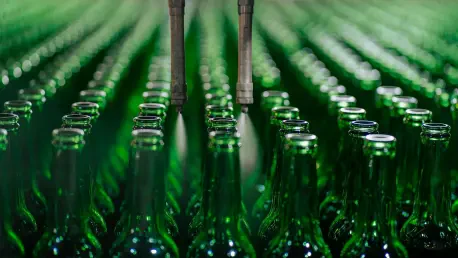

Precision is the heartbeat of the modern factory floor, where a fraction of a second in timing can mean the difference between a perfect pour and a shattered glass catastrophe. In the high-stakes world of industrial bottling, a single minute of downtime or a slight calibration error can result in thousands of wasted units. While manufacturers have long used digital models to monitor their lines, a new class of “agentic” digital twins is moving beyond mere observation. These systems do not just reflect what is happening on the factory floor; they think, reason, and act. By slashing simulation times from several hours to under five minutes, this technology is turning what used to be reactive troubleshooting into proactive, real-time optimization.
Breaking the Speed Barrier in Beverage Production
The demand for speed in the beverage sector has historically hit a ceiling defined by human response times and the limits of static software. When a valve misfires or a liquid’s viscosity changes due to ambient temperature, the delay between detecting the issue and implementing a fix often results in significant product loss. Agentic digital twins address this by integrating artificial intelligence that functions as a continuous, digital expert presence.
Rather than providing a historical report of what went wrong, these systems forecast potential failures before they occur. By simulating millions of variables in a virtual environment that operates in parallel with the physical line, they identify the exact moment a machine needs adjustment. This shift effectively eliminates the “speed barrier,” allowing lines to run at maximum capacity without the constant fear of cascading mechanical failures.
From Static Replicas to Reasoning Systems
Traditional digital twins have served as passive digital shadows, requiring human experts to interpret data and manually adjust machinery. However, the bottling industry is facing increased pressure to improve resource efficiency and reduce waste. This has led to the development of agentic digital twins—autonomous entities capable of making independent decisions. Unlike their predecessors, these systems use built-in reasoning to trigger workflows and adjust parameters without waiting for human intervention, solving the data-to-action lag that has historically bottlenecked production.
The transition to reasoning systems marks a fundamental change in how factory operators interact with their equipment. Instead of acting as the primary decision-makers for every minor calibration, humans now oversee a fleet of autonomous agents that manage the minutiae of the production process. This autonomy ensures that the bottling line remains optimized even during shifts in environmental conditions or changes in product specifications, maintaining a level of consistency that was previously unattainable.
The Technical Engine: OpenUSD and High-Fidelity Physics
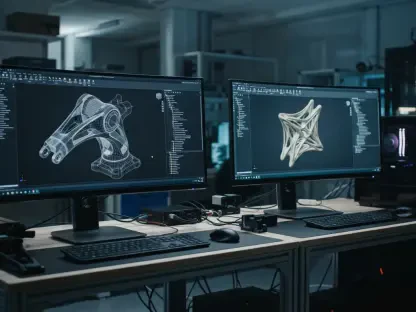
The transformation of bottling lines relies on a sophisticated stack of technology that merges the virtual and physical worlds with extreme precision. Utilizing the NVIDIA Omniverse and the OpenUSD framework, developers create physically accurate 3D environments where gravity, friction, and fluid dynamics behave exactly as they do in reality. This allows for the modeling of complex fluid dynamics, including filling speed, pressure, and turbulence, to ensure product consistency across every bottle.
To handle the massive computational requirements of these high-fidelity simulations, manufacturers utilize Microsoft Azure’s cloud infrastructure. This allows for the scaling of heavy workloads across global operations, ensuring that a facility in one part of the world can leverage the same processing power as a flagship plant. The result is a transition from hours-long simulations to near-instantaneous feedback loops, providing factory operators with the data they need to keep the line moving at peak performance.
Industrial Synergy: How Tech Giants Are Reshaping Krones
The shift toward agentic systems is driven by a strategic collaboration between Krones, Microsoft, and NVIDIA, alongside specialists like CADFEM and SoftServe. By combining Krones’ deep expertise in beverage production with cutting-edge AI and cloud computing, these partners moved high-precision physics simulations out of the lab and onto the production floor. This partnership demonstrates that the integration of autonomous AI is no longer a theoretical concept but a functional tool that is currently setting new benchmarks for precision engineering in the beverage sector.
This industrial synergy has allowed for the creation of a seamless ecosystem where hardware and software are no longer separate entities. Through this collaboration, Krones has been able to implement solutions that address specific bottling challenges, such as foam control and bottle stability at high speeds. These advancements prove that when domain expertise meets advanced computing power, the result is a massive leap in operational efficiency.
Bridging the Gap: Virtual Learning and Physical Execution
To successfully implement agentic digital twins, manufacturers follow a framework that aligns virtual insights with mechanical action. This begins by establishing a “Single Source of Truth” using high-fidelity 3D models that mirror every physical component. From there, the system runs autonomous learning cycles to identify the most efficient machine configurations for specific bottle types, automating the transfer of optimized data directly from the virtual environment to the physical bottling machinery.
The final stage of this integration involves monitoring real-time data to allow the agentic twin to self-correct for environmental variables like temperature or liquid viscosity. This closed-loop system ensured that the factory of yesterday evolved into the intelligent hub of today. As organizations look forward, the focus shifted toward universal adoption of these autonomous frameworks. Companies that prioritized the integration of reasoning-capable twins found themselves better positioned to handle market volatility and rising resource costs, effectively future-proofing their production lines against the unpredictable nature of global supply chains.