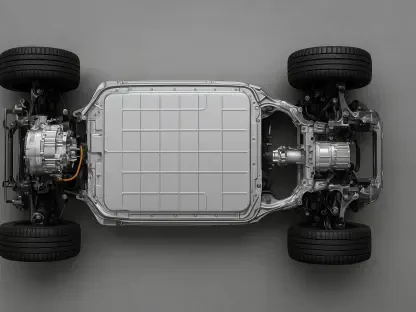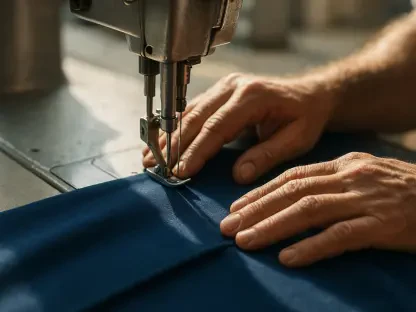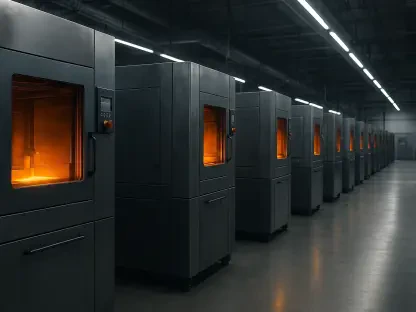
The shift toward using battery packs as structural members of a vehicle chassis makes the instant grab of pressure-sensitive tapes a critical advantage over slow-curing liquid glues. As manufacturers ramp up production from 2026 to 2028, the traditional metrics of adhesive performance are being rewritten to prioritize the needs of high-speed robotic systems. The ability of a tape to bond instantly allows for a continuous workflow, eliminating the wait times associated with chemical curing that create significant bottlenecks on the assembly floor. This evolution represents a fundamental change in how automotive engineers approach material selection, moving away from a siloed focus on chemical bond strength toward a more integrated strategy. In this new landscape, every component within the battery pack must be evaluated for its ability to support automated precision, ensuring that the entire manufacturing process remains lean and responsive to the increasing global demand for electric mobility solutions.
Proven Standards: Leveraging High-Volume Production Principles
Drawing inspiration from high-volume industrial labeling where machines produce millions of units with minimal human intervention provides a blueprint for the future of battery assembly. The core philosophy centers on consistency and the elimination of maintenance triggers that halt production. One of the most effective ways to optimize these lines is through the development of adhesives that do not leave residue on die-cutting tools or application machinery. When materials are engineered to be clean-cutting, the frequency of preventive maintenance decreases, allowing for extended production runs that maximize the efficiency of the robotic workforce. This approach mirrors the precision seen in the labeling industry, where even the smallest amount of adhesive ooze can lead to catastrophic equipment failure. By applying these rigorous standards to the automotive sector, manufacturers ensure that their assembly lines operate at peak capacity, maintaining the rapid pace required for modern vehicle production.
In addition to physical performance, the visibility of materials to automated vision systems is a cornerstone of modern manufacturing excellence. Robotic sensors and cameras must be able to verify the presence and exact placement of an adhesive component within milliseconds to maintain line speed and quality control. This requirement has led to the strategic use of pigmented adhesives or specialized films that provide high visual contrast against the metallic or composite surfaces of battery cells and enclosures. When a machine can easily detect the edges and orientation of a tape, it drastically reduces the likelihood of placement errors that could compromise the electrical insulation or structural integrity of the pack. This shift toward machine-readable materials ensures that automation software can perform real-time verification without slowing down the assembly process. Integrating optical characteristics into material design is a proactive step in bridging the gap between chemical engineering and digital factory automation.
Design Realities: Balancing Performance with Robotic Constraints
A significant pitfall in the design of EV battery systems is the tendency to over-specify adhesive properties, which can inadvertently complicate the automated handling of parts. Engineers often gravitate toward the highest possible bond strengths or maximum thicknesses, but these choices can lead to mechanical issues such as adhesive ooze during the high-speed conversion process. When an adhesive is too aggressive or thick for the application, it can gum up feed rollers and cause parts to stick together in the hopper, leading to costly downtime and increased scrap rates. The most effective strategies from 2026 to 2028 involve determining the actual functional requirements of the bond and then tailoring the tape construction to be as automation-friendly as possible. This balance ensures that the material performs its structural or dielectric duty without becoming a liability during the assembly phase. By focusing on the intersection of performance and processability, manufacturers can avoid the diminishing returns of overengineering.
The reality of the factory floor often differs significantly from the pristine conditions of a research laboratory, posing unique challenges for adhesive wetting and adhesion. EV battery components frequently utilize low-surface-energy plastics, silicone foams, and specialized thermal barriers that are notoriously difficult to bond with standard glues. Furthermore, surfaces may be covered in microscopic layers of stamping lubricants, dust, or other contaminants that can interfere with the chemical interface between the tape and the substrate. Effective adhesive design for the current era of manufacturing involves creating chemistries that are robust enough to wet out on these imperfect surfaces instantly. This capability eliminates the need for expensive and time-consuming surface treatments or secondary cleaning stations, which would otherwise add complexity and floor space to the assembly line. Designing for these factory-real conditions ensures that the bond remains reliable over the life of the vehicle while keeping the production process streamlined.
Geometric Integrity: Mastering Ductility and Handling Optimization
While technical data sheets often emphasize the high tensile strength and dielectric properties of rigid films like PET, these materials can present difficulties when applied to the complex geometries of a battery pack. In an automated environment, the ability of a tape to conform to sharp corners and irregular surfaces without lifting or flagging is often more critical than its raw breaking strength. Rigid materials are prone to splitting under the stress of rapid robotic application or when subjected to the expansion and contraction caused by thermal cycling in high-performance batteries. To solve this, adhesive constructions are increasingly designed with a focus on ductility and stress relaxation. These properties allow the tape to absorb residual stresses and maintain a permanent bond on non-flat surfaces over long periods. Prioritizing conformability ensures that the protective and structural functions of the adhesive remain intact, preventing failures that could arise from the physical demands of modern battery architectures.
The successful scaling of automated assembly often depends on the performance of components that are discarded during the process, specifically the release liners. The force required for a robotic arm to peel the liner from the adhesive must be precisely calibrated to prevent the carrier material from tearing or the motor from stalling. If the release force is inconsistent, it can cause the robot to hesitate or drop the part, leading to a complete halt of the production line. Advanced manufacturing techniques have also introduced zone coating, where the adhesive is applied only to the functional areas of the tape, leaving dry edges for the robot to grip. This innovation allows for cleaner handling and more accurate placement, as there is no risk of the robot’s grippers becoming contaminated with adhesive residue. These subtle engineering adjustments in the tape’s architecture are the unsung heroes that enable manufacturers to move from prototype speeds to the high-volume throughput required for the global transition to electric power.
Actionable Strategies: Implementing Predictive Modeling for Success
The integration of material science into the early stages of vehicle design proved to be the most effective way to optimize battery assembly lines. Manufacturers who treated adhesive selection as a primary engineering task rather than a secondary concern found that they could reduce total cycle times by as much as twenty percent. This success was achieved by involving adhesive specialists during the initial prototyping phase, allowing for the creation of customized solutions that addressed specific robotic constraints. Those who adopted this proactive approach avoided the costly “Band-Aid” fixes that often occurred when materials were chosen in isolation from the manufacturing environment. The industry recognized that the synergy between the chemical properties of a tape and the mechanical capabilities of the robot was the determining factor in production efficiency. By focusing on this relationship, engineers established a standard for reliability that supported the rapid rollout of new vehicle platforms from 2026 to the end of the decade.
Moving forward, the focus of adhesive design shifted toward predictive modeling and environmental aging tests conducted on actual component geometries rather than flat coupons. This transition allowed manufacturers to anticipate how materials would behave under the extreme thermal and mechanical stresses of real-world driving conditions before the first vehicle left the line. The implementation of digital twins for adhesive performance became a standard practice, enabling engineers to simulate the robotic application process and identify potential points of failure in a virtual environment. This shift toward data-driven material selection ensured that every assembly line was optimized for maximum throughput and minimal waste. The industry learned that the true value of an adhesive lay not just in how well it held a battery together, but in how effectively it served as a component of the broader robotic choreography. These insights laid the groundwork for a more resilient and scalable automotive manufacturing sector.