
Embedding artificial intelligence directly into manufacturing hardware digitizes the nuanced skill sets of master technicians to ensure operational continuity despite a tightening labor market. As the South Korean industrial sector navigates a profound demographic shift, the integration of these “AI brains” has moved from a speculative luxury to an essential survival mechanism for high-precision factories. This technological evolution involves the deployment of sophisticated cognitive models that act as the central nervous system for industrial machinery, allowing equipment to move beyond repetitive tasks toward autonomous problem-solving. By capturing the intangible intuition of a veteran workforce and translating it into algorithmic certainty, the nation is effectively building a bridge between its storied manufacturing past and a digitized future. This transition is particularly critical for sectors like semiconductor fabrication and battery production, where the slightest deviation in process control can result in catastrophic losses. The focus is no longer just on how many units a machine can produce, but on how intelligently that machine can manage the complexities of modern production environments without constant human oversight.
Implementing On-Device Intelligence for Precision
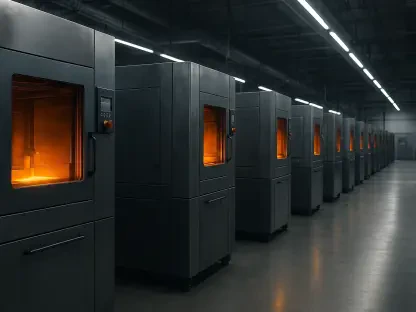
The core of this transformation lies in the development of specialized on-device AI models, such as the NENYA sVLA, which function independently of external cloud infrastructure. By embedding cognitive processing power directly into the local hardware—utilizing advanced Graphics Processing Units and dedicated Neural Processing Units—manufacturers can achieve a level of responsiveness that was previously impossible. In the high-stakes world of semiconductor manufacturing, where precision is measured in nanometers and operational windows are incredibly narrow, the latency inherent in cloud-based computing is a significant liability. These on-device “brains” synthesize data from a multitude of local sources, including high-speed cameras and environmental sensors, allowing the machinery to perceive and react to its surroundings in real-time. This localized approach ensures that the perception-judgment-action loop occurs within milliseconds, preventing defects before they manifest and maintaining the rigorous quality standards required in 2026.
Beyond the immediate benefits of reduced latency, the shift toward on-device intelligence addresses the critical requirement for data security and intellectual property protection. Manufacturing processes in South Korea often involve highly sensitive proprietary techniques that represent decades of research and development. Uploading these process details to third-party or foreign cloud platforms introduces unacceptable risks of data leakage and technological espionage. By keeping all data processing within the factory walls, on-device AI safeguards national industrial secrets while providing the autonomy necessary for equipment to diagnose its own faults and execute recovery procedures. This move toward a higher stage of robotization allows machinery to transition from being a mere tool into a self-optimizing agent. As these systems become more sophisticated, they are capable of identifying subtle mechanical wear or process deviations that might escape even a trained human eye, thereby ensuring that operational continuity is never compromised by external connectivity issues or security breaches.
Preserving Technical Expertise Through Digital Skill Transfer
South Korea is currently facing a dual threat of a dwindling youth population and the rapid retirement of its most experienced technical personnel. This “veteran” class of engineers possesses a vast wealth of unwritten knowledge—a specific intuition for how machines “feel” and react under different conditions. To prevent the erosion of this national expertise, tech innovators are using AI as a preservation tool, training models on the specific judgment patterns and response experiences of these master technicians. This process effectively digitizes the “know-how” of human experts and installs it permanently into the factory’s infrastructure. Instead of simply automating tasks, this approach captures the decision-making logic of a human professional, ensuring that even as the workforce fluctuates, the machines retain the highest possible standards of yield and safety. This digital transfer of skills is a proactive strategy to maintain industrial resilience in a landscape where labor is becoming increasingly scarce and expensive.
This methodology represents a human-centric transition in technology, where the AI serves as a bridge between generations rather than a direct replacement for human roles. By embedding the experience of a senior engineer into an AI model, a production line can maintain peak efficiency regardless of the experience level of the on-site staff. This ensures a consistent level of operational excellence across multiple shifts and geographical locations, effectively standardizing the highest possible level of expertise across the entire organization. In the context of 2026, this technology has become a vital component of future-proofing the industrial base, allowing South Korean firms to remain competitive against global rivals with larger labor pools. The goal is to create a seamless environment where the technical mastery of the past is fused with the automated precision of the current era, creating a self-sustaining ecosystem of industrial intelligence that can adapt to changing market demands without a drop in production quality.
Evolving from Hazard Detection to Autonomous Operation
The evolution of industrial AI in South Korea began with a concentrated focus on safety monitoring, largely driven by the implementation of the Serious Accidents Punishment Act. Initially, these AI systems were designed to identify hazardous behaviors and environmental risks on the factory floor, using computer vision and sensor data to prevent workplace injuries in real-time. However, researchers soon realized that the underlying cognitive architecture required to identify a safety hazard is fundamentally identical to the logic needed to operate complex machinery. Both processes require a continuous loop of perceiving the environment, making a judgment based on that perception, and executing a specific action. By leveraging the massive datasets accumulated through safety applications, developers have been able to refine these models for use in industrial control. This transition from hazard detection to active machine management has opened new frontiers for factory automation, allowing for more holistic and integrated management of the production environment.
This synergy between safety and productivity demonstrates that these two elements are essentially two sides of the same operational coin. When an AI system is capable of perceiving the nuances of a factory floor to avoid accidents, it is also uniquely equipped to optimize machine movements for maximum efficiency and yield. This unified understanding has led to the creation of standardized AI engines that can be integrated across a wide variety of equipment types, from robotic arms to precision measurement instruments. In the current industrial landscape of 2026, the distinction between a dedicated safety tool and an operational controller is rapidly disappearing. Instead, a singular, comprehensive AI brain manages both the health of the machinery and the safety of the human workers. This integration simplifies the technological stack within a factory, reducing the complexity of maintenance and allowing for a more streamlined approach to scaling AI capabilities across different production lines and industries.
Securing Industrial Sovereignty and Global Standards
The strategic deployment of manufacturing AI is not merely a technical endeavor; it is a critical component of South Korea’s national sovereignty. By developing domestic industrial AI standards, the nation can avoid technological dependency on foreign tech giants whose general-purpose models often lack the specific nuance required for high-tech manufacturing. South Korea possesses a unique advantage in this global race: access to massive quantities of high-quality, high-precision field data from its world-leading electronics and secondary battery sectors. By leveraging this data, domestic firms can create “Precision AI” models that are specifically tuned to the demands of advanced production. This focus on specialized excellence allows South Korean equipment manufacturers to offer superior products on the global market, moving beyond selling hardware to providing intelligent systems that include long-term licensing and fine-tuning services. This business model ensures a recurring revenue stream while keeping the nation at the forefront of industrial innovation.
As the industry progresses from 2026 toward 2028, the establishment of these standards will likely dictate the global competitive landscape. Relying on external AI platforms presents significant risks, ranging from sudden shifts in foreign trade policy to the potential for proprietary data being used to train a competitor’s model. By owning the full stack of industrial intelligence—from the data to the on-device engine—South Korean manufacturers ensure their independence and security. This self-reliance is coupled with a collaborative growth strategy where AI firms work with equipment makers from the design stage to ensure the AI engine is a core, inseparable component of the machinery. This deep integration is expected to significantly boost the export potential of South Korean industrial equipment, as international clients increasingly seek out autonomous solutions that can solve their own labor and efficiency challenges. Ultimately, the success of these AI brains will determine the long-term health and stability of the national manufacturing economy.
Actionable Insights for Industrial Transformation
The transition to AI-integrated manufacturing has provided a clear roadmap for organizations seeking to maintain a competitive advantage in a volatile global market. To successfully implement these technologies, stakeholders focused on the integration of on-device processing to bypass the limitations of cloud connectivity, ensuring both real-time performance and data security. It became evident that the most successful implementations were those that treated AI not as a peripheral upgrade, but as a core architectural component of the machinery itself. Manufacturers prioritized the digitization of “know-how” by creating collaborative environments where veteran engineers and AI developers worked in tandem to map human intuition into algorithmic frameworks. This proactive approach to skill transfer mitigated the risks associated with an aging workforce and established a new standard for operational continuity. The integration of safety and control functions into a single cognitive loop also proved to be a decisive factor in reducing operational complexity and improving overall factory efficiency.
Looking forward, the industry must continue to advocate for the standardization of industrial AI protocols to ensure interoperability across different production stages. Companies that adopted a licensing model for their AI engines found greater success in scaling their technology, as it allowed for continuous updates and fine-tuning based on live field data. This model not only provided a sustainable revenue stream but also ensured that the machinery remained at the cutting edge of technological capability throughout its lifecycle. Furthermore, the commitment to national technological sovereignty helped shield the sector from geopolitical uncertainties, emphasizing the importance of domestic development in critical tech sectors. By focusing on “Precision AI” and leveraging the unique data assets inherent in South Korea’s high-tech industries, the manufacturing sector has set a global benchmark for autonomous production. The integration of AI brains has transitioned from a defensive strategy against demographic decline into an offensive tool for global market leadership, providing a robust template for other industrial nations to follow.