
The unprecedented convergence of geopolitical tensions in the Strait of Hormuz and soaring domestic diesel costs has shattered the long-standing illusion of Australia’s invulnerable food security infrastructure. Historically, the nation relied on a stable, if fragmented, network of third-party providers and decentralized warehouses to move products across its vast geography. However, the rising cost of fuel and the increasing frequency of supply chain interruptions have made these old models unsustainable for long-term survival. As we move through 2026, the focus has pivoted toward deep structural changes that prioritize resilience over mere operational throughput. This transition requires a fundamental shift in perspective, where the supply chain is no longer viewed as an unavoidable overhead expense but as a strategic asset capable of absorbing global shocks. By integrating advanced automation and consolidating physical assets, companies are successfully insulating themselves from the volatile external environment that once threatened the core of Australia’s domestic food availability.
Navigating the Elements of Global Volatility
The Diesel Crisis: Energy and Fuel Volatility
Diesel remains the lifeblood of the Australian agricultural and logistics sectors, powering everything from the heavy machinery used in harvest to the refrigerated trucks that populate the nation’s highways. The current volatility in global oil markets has created a persistent inflationary pressure that compounds at every single node of the food production cycle. When the price of diesel spikes, it is not merely a transport issue; it is a cost increase for the farmer who tilled the soil and the processor who maintains cold storage environments. This ripple effect has forced distributors to reckon with a reality where freight is no longer a manageable variable but a significant risk to bottom-line stability. Because the Australian grid and transport network are so heavily reliant on this specific fuel source, the lack of price predictability has made traditional budgeting nearly impossible for smaller operators. Consequently, the industry is seeing a rapid move toward strategies that minimize the total number of kilometers traveled by any single pallet of food.
The ongoing instability in major maritime corridors has exacerbated these domestic concerns, leading to a domestic fuel market that reacts violently to international political shifts. For food producers, this means that the “freight penalty”—the inherent cost of moving goods across long distances—has reached a breaking point where it can consume the entire profit margin of a shipment. In response, forward-thinking enterprises are investing in predictive analytics and route optimization, though these software solutions are increasingly seen as secondary to the physical restructuring of the network. The objective is now centered on removing the need for long-haul transport altogether by rethinking where products are stored and how they are handled. By reducing the reliance on a fuel-intensive logistics model, the industry is attempting to decouple food prices from the whims of global energy markets. This shift is critical because any sustained increase in logistics costs is eventually passed to the consumer, further stressing the cost-of-living index during an already challenging economic period.
Input Scarcity: Fertilizer and Agricultural Supplies
Beyond the immediate concerns of fuel, the Australian agricultural sector is grappling with a profound scarcity of fertilizers and essential chemical inputs that are vital for maintaining high crop yields. Much of this shortage stems from shifting global trade alliances and the disruption of traditional manufacturing hubs, which has left Australian farmers competing for a dwindling supply of high-quality soil nutrients. This scarcity creates a direct threat to food security, as lower yields mean less surplus for the domestic market and higher prices for the raw materials that enter the food processing stage. The inability to secure reliable quantities of fertilizer at a stable price has forced many producers to scale back operations or switch to less productive alternatives, which in turn creates gaps in the supply chain that are difficult to fill once they emerge. This scarcity is a stark reminder that food security begins long before a product enters a warehouse or a supermarket shelf.
The strategic response to this input volatility has been a move toward precision agriculture and more efficient storage of agricultural outputs to prevent waste. When inputs are expensive and difficult to acquire, every kilogram of produce becomes significantly more valuable, making the efficiency of the post-harvest supply chain even more critical. There is a growing recognition that the industry cannot simply produce its way out of this crisis without also improving the way those products are handled once they leave the farm. This has led to an increased focus on high-density storage solutions that can keep produce in optimal conditions for longer periods, allowing for a more controlled release into the market. By stabilizing the flow of goods from the farm to the processor, the industry can better manage the fluctuations in production caused by input shortages. This level of coordination requires a sophisticated digital and physical infrastructure that links agricultural production directly with modern distribution hubs.
Strategic Shifts: Distribution and Design
Site Consolidation: Reducing the Freight Penalty
The transition from operating a supply chain to actively designing one has become the defining characteristic of successful food and beverage companies in 2026. The traditional model of using multiple third-party logistics providers and a scattered network of decentralized warehouses has proven too fragile for the current high-cost environment. Industry leaders are now pursuing a strategy of site consolidation, where they move operations into fewer, significantly larger, and more technologically advanced distribution centers. Ideally, these hubs are co-located directly with manufacturing and processing facilities to eliminate the need for inter-facility trucking. This approach removes the “freight penalty” by ensuring that once a product is manufactured, it is immediately placed into a high-density storage environment without ever touching a public road. This consolidation reduces the number of “touches” per item, which minimizes the risk of damage and significantly lowers the operational labor requirements for the business.
Co-location is not just an efficiency play; it is a defensive move against the rising costs of energy and labor that have plagued the sector. By centralizing operations, companies can justify the high capital expenditure required for advanced automation systems that would be too expensive to implement across a dozen smaller sites. These consolidated hubs act as the nerve centers of the supply chain, providing a level of visibility and control that was previously unattainable. From a sustainability perspective, reducing the number of heavy vehicle movements is also a primary driver, as it aligns corporate goals with the broader national objective of reducing the carbon footprint of the freight industry. The resulting infrastructure is more resilient because it is less dependent on the availability of external transport providers and more capable of scaling operations up or down in response to real-time market demand. This model is rapidly becoming the gold standard for any company looking to maintain a competitive edge in a volatile market.
Automation Success: Lessons From Industry Leaders
The success of major players like Asahi Beverages and Diageo provides a clear roadmap for how automation can transform a legacy supply chain into a modern powerhouse. Asahi’s investment in a centralized, automated distribution center at Heathwood in Queensland serves as a prime example of the productivity gains possible through consolidation. By bringing several disparate operations under a single roof, the company was able to eliminate thousands of truck movements that were previously required to move stock between warehouses. This move resulted in a documented 250% gain in productivity, a figure that has only become more significant as the cost of diesel and manual labor has continued to rise. The ability to fulfill orders more quickly and with higher accuracy has allowed these companies to better serve their retail partners while simultaneously reducing their internal operational overhead. These results demonstrate that the initial high cost of automation is quickly offset by the long-term savings generated by efficiency.
Similarly, the strategic move by Diageo to consolidate its spirits distribution into a single, highly automated facility has proven to be a visionary decision. By reducing the complexity of its logistics network years ago, the company entered the current period of volatility with a streamlined operation that is far less susceptible to transport disruptions. Every kilometer of freight that was eliminated during the design phase of their facility now represents a significant cost saving in the context of 2026 fuel prices. These case studies highlight a fundamental truth in modern logistics: those who invested in their infrastructure during periods of relative stability are now reaping the rewards of their foresight. The gap between these market leaders and those who continue to rely on fragmented, manual systems is widening every day. For the laggards, the challenge is no longer just about improving efficiency; it is about catching up to a standard of resilience that has already been set by their more innovative competitors.
Automation: A Tool for Agricultural Resilience
Export Agility: Centralized Processing and Storage
Teys Australia has demonstrated the transformative power of automation within the meat processing industry by establishing a $100 million centralized aggregation facility near the Port of Brisbane. Previously, the company operated a fragmented model where multiple processing plants managed their own independent storage and shipping schedules, leading to inefficiencies and longer lead times for international customers. The new automated system, which utilizes a 20-meter-high storage and order build system, allows Teys to handle seven million cartons annually with unprecedented precision. This centralized approach enables the company to build export pallets using products from multiple processing sites simultaneously, providing an agility that decentralized models cannot match. By streamlining the path from the processing plant to the shipping container, the facility has reduced export delivery times by a full week, giving Australian beef a significant competitive advantage in global markets.
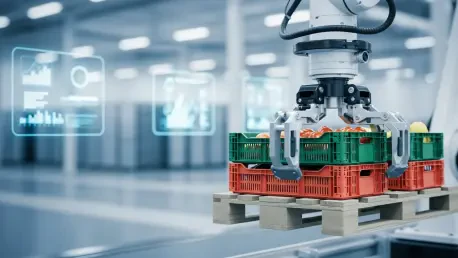
This level of automation also addresses the chronic labor shortages that have historically hampered the growth of the Australian agricultural processing sector. By replacing manual palletizing and sorting with high-speed robotic systems, Teys has significantly reduced its reliance on seasonal labor while improving the safety and consistency of its operations. The automated storage and retrieval system ensures that inventory is managed with a “first-in, first-out” precision that is difficult to maintain in a manual environment, especially at such a high volume. This technological foundation allows the company to respond rapidly to shifts in global demand or sudden changes in shipping schedules, which are common in the current geopolitical climate. The facility serves as a blueprint for how other agricultural sectors can consolidate their volume to achieve the scale necessary for automation, ultimately securing the long-term viability of Australia’s primary exports while strengthening domestic supply.
Adapting to Change: Inventory Density and Consumer Behavior
The Australian consumer landscape has undergone a significant shift as the cost-of-living crisis drives more households toward frozen and long-life products. This change in purchasing behavior requires retailers and distributors to maintain larger volumes of inventory for longer periods, placing a premium on warehouse space and inventory density. Automation plays a critical role here by allowing companies to build “up” rather than “out,” utilizing high-bay storage systems that maximize the capacity of a given land footprint. By increasing the density of their storage, businesses can hold more stock in locations that are closer to major population centers, further reducing the distance that goods must travel to reach the end consumer. This capability is essential for managing the increased complexity of modern inventory, where a wider variety of temperature-controlled and shelf-stable products must be handled with extreme care and accuracy.
Furthermore, the speed and flexibility provided by automated systems allow companies to pivot their inventory strategies in real-time as consumer trends evolve. In a manual warehouse, shifting a large portion of the inventory from fresh to frozen products would be a slow and labor-intensive process, but an automated system can reconfigure its picking and storage logic almost instantly. This responsiveness is vital for maintaining food security, as it ensures that the supply chain can adapt to sudden spikes in demand for specific product categories without causing bottlenecks or shortages. The integration of sophisticated warehouse management software with robotic hardware creates a system that is both robust and agile. As we look toward the end of the decade, the ability to manage high-density inventory with minimal human intervention will be the primary factor that determines which companies can thrive in an increasingly unpredictable and expensive retail environment.
Strategic Future of Food Infrastructure
The industry successfully navigated the transition toward a more resilient food supply chain by prioritizing structural redesign over incremental operational improvements. Businesses that moved away from fragmented, transport-dependent models in favor of centralized, automated hubs achieved a level of stability that was previously thought impossible. These companies effectively decoupled their pricing and delivery capabilities from the extreme volatility of the global diesel market, ensuring that essential goods remained accessible even during periods of international conflict. The move toward co-location and high-density storage not only protected profit margins but also significantly reduced the national freight penalty that had long plagued Australian commerce. By the middle of the decade, the evidence was clear: those who treated their supply chain as a strategic asset were the ones who survived the “perfect storm.”
The path forward required a renewed focus on integrating these technological advances across the entire agricultural and retail spectrum. Policymakers and industry leaders recognized that food security was no longer just about farming output; it was about the efficiency of the infrastructure that supported it. Future considerations must now center on the expansion of these automated networks into regional hubs to further shorten the distance between production and consumption. The successful implementation of large-scale automation at facilities like Teys and Asahi proved that the capital investment was justified by the resulting resilience and productivity gains. The lessons learned during this period of transition provided a definitive blueprint for securing Australia’s food supply for the next decade, proving that technological innovation is the most effective defense against global economic instability.