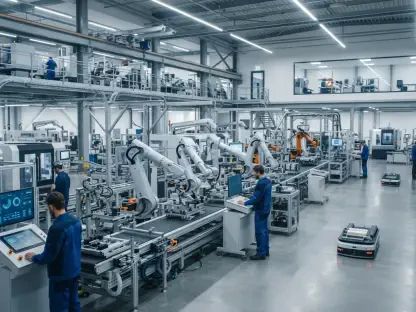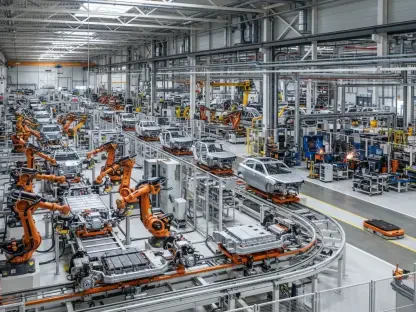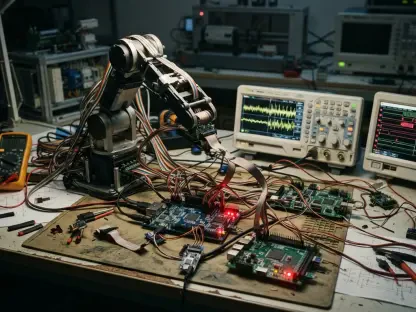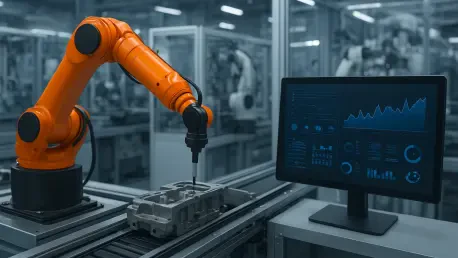

Industrial Internet of Things sensors now capture granular data such as vibration and pressure to bridge the gap between process signals and corrective responses. This shift signifies the move from traditional quality control, which often acted as a post-production filter, toward a more integrated and proactive management style. In the past, companies relied heavily on checking finished products to identify errors, a strategy that essentially documented failures rather than preventing them. This reactive approach led to significant financial losses as defective items absorbed labor, energy, and material costs before being scrapped. By 2026, the focus has moved toward monitoring the underlying variables that determine product quality. By analyzing the behavior of machinery and environmental factors during the production cycle, operators can intervene before a single non-conforming part is created. This transition converts quality from a final inspection hurdle into a core operational strategy.
Statistical Foundations: Managing Variation and Stability
Statistical Process Control (SPC) serves as the primary engine for this modernization by providing a mathematical framework to interpret factory data. It allows engineers to distinguish between common-cause variation, which is the inherent noise in any stable system, and special-cause variation, which indicates a specific anomaly. When a system only exhibits common-cause variation, it is considered stable and predictable, allowing management to focus on long-term improvements rather than chasing phantom errors. However, when special-cause variation appears, it acts as an immediate signal that something in the process has changed, such as a dull cutting tool or a shift in the chemical composition of a raw material. By recognizing these patterns early, manufacturers avoid the common mistake of over-adjusting machines when they are actually performing within their normal range. This data-driven clarity ensures that every intervention is necessary and based on evidence.
Closely linked to stability is the concept of process capability, which measures whether a stable process can meet the required design specifications. A machine might be running consistently, but if its natural variation exceeds the allowable tolerances of the product, the process is considered incapable. Modern data-driven quality control emphasizes that no amount of inspection can fix an incapable process; instead, it requires a fundamental upgrade to the hardware, tooling, or environment. Through capability analysis, manufacturers obtain a realistic view of their equipment’s performance limits. This allows for better production planning and avoids the frustration of trying to produce high-precision parts on aging or unsuitable machinery. When facilities use data to align their process capabilities with their design requirements, the likelihood of producing defects drops toward zero. This alignment is essential for maintaining high-yield production in industries with thin margins.
Technological Ecosystems: Connecting Sensors and Software
The deployment of high-frequency sensors across the manufacturing floor has created a level of transparency that was previously unattainable. These sensors do more than just record simple temperatures; they capture complex data streams that represent the physical health of the machinery. This information is typically funneled into Manufacturing Execution Systems or Enterprise Resource Planning platforms, where it is cross-referenced with production schedules and material logs. This connectivity enables a predictive maintenance model where maintenance is performed based on actual wear and tear rather than a fixed calendar date. For example, if a sensor detects a specific frequency of vibration in a spindle, the system can automatically schedule a repair before the part quality begins to degrade. This shift from preventive to predictive maintenance ensures that the machinery is always in peak condition. It also reduces unplanned downtime, which is often one of the most significant costs in a modern factory.
Beyond mechanical monitoring, advanced vision systems and machine learning algorithms have revolutionized the inspection process by acting as an upstream feedback loop. Instead of simply using cameras to reject flawed items, these systems provide precise data regarding where and how the defects occurred. This information is fed back into the earlier stages of the production process, allowing for automated or manual adjustments to the assembly parameters. If an AI-driven camera detects a trend in misaligned components, it can signal the robotic arm at the start of the line to adjust its grip or pressure. This creates a self-correcting manufacturing environment where the system learns from its own output in real-time. This level of integration ensures that the data gathered at the end of the line is used to optimize the beginning of the line. Consequently, the distinction between production and quality control begins to blur as they become parts of a single improvement cycle.
Strategic Implementation: Scaling Digital Quality Initiatives
Implementing a data-driven quality model requires a disciplined organizational culture that prioritizes evidence over intuition. Frameworks like Six Sigma and the DMAIC methodology provide the necessary structure for this transition. These methodologies ensure that when data reveals a problem, the response is systematic and focused on long-term resolution rather than a temporary fix. By following a standardized approach, teams can identify the root causes of defects and update process standards to prevent recurrence. This cultural shift is often more challenging than the technological one, as it requires personnel at all levels to become comfortable with data interpretation and statistical thinking. However, when the entire organization speaks the same language of improvement, the speed at which problems are solved increases dramatically. This alignment ensures that every digital tool is utilized to its full potential, turning raw data into actionable knowledge that drives overall success.
For many organizations, the most effective path toward modernization involved starting with targeted, scalable pilot projects. Rather than attempting to digitize an entire facility at once, manufacturers often focused on a single bottleneck or a workstation with high defect rates. By applying data-driven insights to these specific areas, they were able to demonstrate immediate value and secure buy-in from stakeholders. As these initial projects delivered measurable results, the digital footprint was gradually expanded to include more complex processes and entire production lines. This iterative approach allowed teams to learn the nuances of data management without being overwhelmed by the scale of the transition. Over time, the accumulated data created a comprehensive digital twin of the factory, providing a holistic view of the operation. This gradual expansion ensured that the infrastructure was robust and that the staff was well-trained to handle the increased complexity of a fully connected production environment.
Future Considerations: Actionable Pathways for Operations
Successful leaders in this field prioritized the democratization of data by providing frontline workers with intuitive dashboards and real-time alerts. They recognized that the value of information was highest when it was available to those who could take immediate action on the shop floor. By investing in training programs that emphasized both technical skills and statistical literacy, these companies empowered their workforce to lead the digital transformation. The transition focused on creating a transparent environment where data was not used for policing, but for collaborative problem-solving. Organizations that flourished were those that integrated their quality data directly into their supply chain management systems, ensuring that raw material variability was compensated for automatically. This holistic view allowed for a seamless flow of information between vendors and the floor. They also established clear protocols for data governance, ensuring that the information used was accurate, timely, and secure.
The focus shifted toward developing a long-term roadmap that balanced immediate efficiency gains with the need for future flexibility. Strategic planners identified key performance indicators that truly reflected process health rather than just output volume. They also explored the potential of edge computing to process data closer to the source, reducing latency in critical decision-making loops. By building modular systems, they ensured that new technologies could be integrated without disrupting existing workflows. The most effective strategies emphasized the importance of cross-functional teams, bringing together IT professionals and manufacturing engineers to bridge the gap between digital and physical systems. These teams worked together to refine the feedback loops that kept the production environment stable and competitive. Ultimately, the successful modernization of quality control depended on a commitment to learning and the willingness to discard outdated methods for empirical, data-backed strategies.