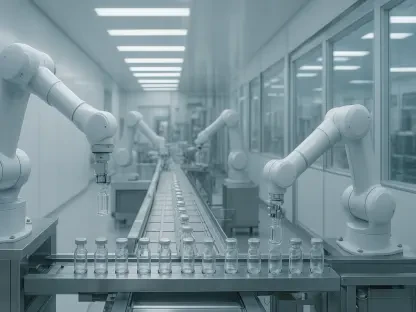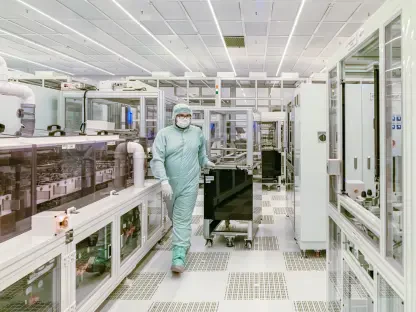

Industrial leaders are discovering that competitive advantage no longer originates solely from internal strategies but from benchmarking against external digital transformation standards. This realization has become a cornerstone for legacy manufacturers like Apator, a company with roots extending back to 1949, which has spent decades perfecting the art of metering and electronic systems production. In the current landscape of 2026, the transition from traditional, manual-heavy operations to a digitally integrated environment is no longer viewed as an optional luxury but as a survival imperative. The complexity of modern electronic components, characterized by miniaturized circuitry and multi-layered assembly requirements, has pushed human cognitive limits to a breaking point. Consequently, the narrative of industrial progress has shifted from simply increasing raw output to a more nuanced focus on building quality directly into every second of the manufacturing cycle. This evolution is driven by the understanding that a single defect can lead to catastrophic failures in the field, making the integration of artificial intelligence and automated vision systems a foundational necessity for any manufacturer aiming to maintain a competitive edge in a global market that demands absolute precision and transparency.
External Benchmarking: A Catalyst for Industrial Evolution
The journey toward comprehensive digital transformation often starts with the recognition that internal expertise, while valuable, can sometimes create a vacuum of innovation. Manufacturers who have operated successfully for decades may find themselves blinded by their own established routines, unable to see the revolutionary potential of emerging technologies. To break this cycle, forward-thinking organizations have turned toward active benchmarking, reaching out to other industry leaders to observe how they navigate the challenges of the fourth industrial revolution. For many, this process involved visiting high-tech facilities such as Fideltronik, where the real-world application of artificial intelligence was already yielding measurable results. These site visits served as a practical classroom, allowing engineering and operations teams to witness how vision-based systems could be integrated without disrupting existing production flows. This philosophy of intellectual humility—the willingness to admit that external benchmarks are essential for identifying new possibilities—has become a hallmark of the most successful industrial strategies in 2026.
Beyond the mere observation of hardware, this benchmarking process allowed companies to compare their internal methodologies with the best practices of their peers. It was not just about finding a vendor to supply cameras or software, but about understanding the strategic framework required to support such a transition. Observing technology in a live production environment provided clarity on how to manage the human-to-machine interface and how to handle the massive influx of data that accompanies automated inspection. This exposure helped leadership teams move beyond the hype surrounding artificial intelligence, transforming it from a mysterious concept into a practical tool for operational excellence. By focusing on how others addressed similar pain points—such as high product variability and the need for 100% inspection coverage—manufacturers were able to bypass common pitfalls and accelerate their own transformation timelines. This collaborative spirit within the manufacturing sector has created a rising tide that lifts all participants, fostering an environment where shared knowledge leads to collective technological advancement.
Identifying Key Challenges: The Problem-First Methodology
One of the most critical lessons learned in the modern industrial landscape is that technology should always follow a specific operational need rather than being implemented for its own sake. Many organizations have historically fallen into the trap of purchasing expensive equipment only to find that it does not address the actual bottlenecks in their production lines. To avoid this, a “problem-first” methodology has emerged as the standard approach. This involves a meticulous audit of the manufacturing floor to identify where human error is most likely to occur and where the costs of rework are highest. In the production of sensitive metering devices, for instance, the sheer number of components and the precision required for their placement create a high-risk environment. Even the most skilled operators can face challenges during a demanding eight-hour shift, where repetitive tasks naturally lead to fluctuations in concentration. By pinpointing these specific areas of vulnerability, manufacturers can justify the investment in AI as a targeted solution to a quantifiable problem rather than a speculative upgrade.
Economic viability remains a primary concern for any manufacturing facility, and the current economic climate of 2026 demands a high degree of fiscal responsibility. While full-scale robotic automation is a viable path for high-volume, low-variety production, many specialty electronics lines do not have the throughput to justify such massive capital expenditures. These lines often require a more flexible approach that can be integrated into existing manual or semi-automated workstations. Furthermore, the modern customer is more demanding than ever, frequently conducting audits that require documented proof of 100% inspection for every unit produced. Meeting these stringent quality mandates through manual labor alone is not only prohibitively expensive but also statistically impossible to achieve with perfect consistency. Therefore, the challenge was to find a solution that was fast, easy for engineers to manage, and capable of maintaining line speed without requiring a total overhaul of the factory’s physical layout. This focus on practical constraints ensured that the eventual adoption of AI was both strategically sound and operationally seamless.
The Digital Pair of Eyes: Vision Systems in Real-Time
The implementation of artificial intelligence as a “digital pair of eyes” has revolutionized the way quality is verified on the assembly line. These vision-based systems are positioned directly at the workstation, serving as a tireless assistant to the human operator. Unlike traditional quality control methods that rely on end-of-line inspections, which only identify errors after a product has been fully assembled, these AI systems provide immediate, real-time feedback during the assembly process itself. If a technician forgets to place a specific washer or incorrectly orients a circuit board, the system instantly flags the discrepancy. This allows for immediate correction, preventing the defect from becoming “buried” under subsequent components, which would make future rework much more difficult and costly. By catching errors at the source, the facility can maintain a much smoother production flow and significantly reduce the volume of scrap material generated by late-stage failures.
As these systems have matured, their capabilities have expanded far beyond simple presence-absence checks. Modern AI vision tools are now equipped to handle complex tasks such as reading QR codes, performing optical character recognition on serial numbers, and even verifying the color and texture of specific materials. This versatility is essential for handling the diverse range of products that move through a modern manufacturing plant. The software can be quickly trained to recognize new components, allowing engineers to update the system for new product variants without the need for extensive coding or specialized programming knowledge. This democratized access to advanced technology ensures that the quality control system remains as agile as the production lines it supports. The result is a robust, data-driven environment where the human element of assembly is enhanced by machine precision, fulfilling the most demanding customer requirements for total transparency and reliability in every single unit shipped from the factory.
Organizational Adaptation: Navigating the Pilot Phase
Transitioning from a promising technological concept to an integrated factory-wide system requires a disciplined and data-driven pilot program. In the early stages of adoption, many companies chose to install the vision technology at a limited number of workstations—often starting with as few as seven key points of inspection. This cautious approach allowed the organization to observe how different teams and shifts interacted with the new tools in a real-world setting. During this year-long observation period, it became clear that the technology was not just a hardware installation but a catalyst for organizational change. Different teams adopted the technology at varying speeds, highlighting the need for standardized training and clear operational protocols. By focusing on a small subset of production lines, engineers were able to fine-tune the system’s sensitivity, ensuring that it provided accurate feedback without generating excessive false alarms that could frustrate the workforce.
The success of the pilot phase is often measured by the transition of the technology from a management-led initiative to a bottom-up demand from the production floor. A significant turning point in the digital transformation journey occurs when production managers and floor supervisors begin to propose new applications for the AI cameras based on their daily observations of process gaps. This indicates that the technology has earned the trust of those who are most affected by its implementation. Once the value of the “digital assistant” was proven in terms of reduced rework and smoother audits, the demand for expansion across other lines grew organically. This organic growth is much more sustainable than a forced, top-down rollout, as it ensures that the people using the system every day are fully invested in its success. By the end of the pilot period, the organization had not only validated the technical capabilities of the AI but had also identified the key personnel who would serve as champions for the technology’s future standardization across the entire enterprise.
Empowering the Workforce: Redefining Human-Machine Synergy
The psychological impact of artificial intelligence on the manufacturing workforce is a topic of significant discussion, and the results from 2026 indicate a overwhelmingly positive shift. Rather than the feared displacement of human labor, the integration of vision systems has led to a noticeable reduction in workplace stress and employee burnout. In a traditional high-precision environment, the pressure to maintain perfect quality throughout a long shift can be mentally exhausting. Operators are constantly aware that a single momentary lapse in concentration could lead to a customer complaint or a costly line stoppage. By introducing an AI-driven safety net, the organization provides workers with a layer of security that allows them to focus on their tasks with greater confidence. The system does not replace their skill; it validates it. This shift from a high-pressure environment to one of supported precision has been instrumental in improving overall morale and reducing the turnover rate in high-intensity production areas.
Furthermore, the implementation of AI has fundamentally changed the culture of quality control from one of “policing” to one of “assistance.” In the past, quality inspectors were often viewed as external judges whose primary role was to find mistakes and assign blame. With the new vision systems, the feedback is personal and immediate, turning the inspection process into a tool for the operator’s own success. The system assists the worker in achieving a perfect build every time, fostering a sense of professional pride and accomplishment. For engineers and quality specialists, this automation of repetitive visual checks frees them from the constant cycle of “firefighting” recurring assembly issues. Instead, they can dedicate their time to high-value tasks such as process optimization, data analysis, and the design of more efficient production workflows. This evolution of roles ensures that human expertise is applied where it is most effective—solving complex problems and driving innovation—while the machine handles the relentless, repetitive task of constant monitoring.
Data Intelligence: From Error Correction to Strategic Insight
The long-term value of artificial intelligence in quality control lies in its ability to transform the factory floor into a rich source of manufacturing intelligence. Every interaction between the vision system and the product creates a digital footprint, resulting in a comprehensive record of the assembly process for every unit. This level of traceability is invaluable in 2026, where manufacturers are often required to reconstruct the exact conditions under which a product was built months or even years after it left the facility. By accessing this digital archive, management can identify who performed the assembly, which components were used, and what corrections were made in real-time. This capability not only simplifies the process of responding to field issues but also provides a powerful tool for continuous improvement. The ability to look back at the historical data of a specific product line allows for the identification of subtle trends that would be invisible to the naked eye, such as a slight increase in errors during a specific shift or a recurring issue with a particular component batch.
Aggregated data from across the factory enables a transition from reactive to proactive management. Instead of waiting for a defect to reach a customer or a testing station, leaders can analyze the data to identify systemic issues before they escalate into major problems. For example, if the vision system consistently flags a specific component as being difficult to seat, engineers can investigate whether the part’s design or the assembly fixture needs to be modified. This data-driven approach supports the principles of Kaizen and other continuous improvement methodologies by providing empirical evidence to guide decision-making. In this environment, the factory becomes a learning organism, constantly refining its processes based on a steady stream of real-world performance data. This shift from simple inspection to deep data intelligence ensures that the organization is not just fixing errors, but is actively evolving toward a state of higher efficiency and lower waste, securing its place in a highly competitive global economy.
Strategic Partnerships: Building Value through Co-Evolution
The relationship between a manufacturing entity and its technology provider has evolved from a traditional vendor-client transaction into a strategic partnership defined by co-evolution. Successful digital transformation requires a provider who is willing to step out of the laboratory and into the “wild” of the production floor. Real-world manufacturing environments are messy, characterized by varying lighting conditions, dust, and the unpredictable nature of human movement. A vision system that works perfectly in a controlled demo may struggle in the heat and vibration of a working factory. Therefore, the most effective partnerships involve a constant loop of feedback and technical adjustment. Technology providers who spend time understanding the nuances of the manufacturer’s specific processes can tailor their software to meet unique needs, such as adding specialized features for optical character recognition or integrating with existing enterprise resource planning systems. This collaborative approach ensures that the resulting solution is not a generic tool but a customized engine for growth.
This model of partnership also allows for the development of new features that might not have been part of the original product roadmap. When a manufacturer identifies a new challenge, such as the need to verify complex cable routing or the presence of specific safety markings, the technology partner can work alongside them to develop and test new algorithms in a live environment. This rapid prototyping and iteration process accelerate the pace of innovation for both parties. For the manufacturer, it means having a system that is always at the cutting edge of what is possible. For the technology provider, it offers a wealth of real-world data and use cases that can be used to improve their core product. In 2026, the strength of these partnerships has become a key differentiator for companies looking to lead the market. By working in a state of mutual growth and continuous communication, manufacturers and tech firms can navigate the complexities of the digital age together, ensuring that the technology remains a flexible and powerful asset for years to come.
Future Implementations: Actionable Strategies for Quality Leaders
The strategic implementation of artificial intelligence at the facility achieved several critical milestones that redefined the standard for quality management. Leaders recognized that the most significant hurdles to transformation were often rooted in organizational culture rather than technical limitations. The transition demonstrated that providing production teams with the autonomy to experiment with digital tools fostered a deep sense of ownership, which in turn accelerated the adoption process across multiple departments. The findings suggested that companies focusing on the underlying “why” of their quality challenges—rather than just the “how” of the technology—achieved a more sustainable and rapid return on investment. This historical perspective shifted the focus from short-term fixes to a long-term strategy of building a resilient, data-informed infrastructure. The success of the pilot programs proved that even small, targeted investments in vision technology could yield disproportionate benefits in terms of rework reduction and customer satisfaction, provided they were supported by a clear vision for organizational change.
Actionable steps for organizations looking to replicate this success involved a thorough audit of current inspection points to identify high-fatigue tasks that would benefit most from digital assistance. The teams discovered that establishing a baseline for digital traceability was an essential first step before attempting to scale the technology across the entire enterprise. It was recommended that quality leaders prioritize partnerships with providers who offer flexible, modular solutions that can grow alongside the company’s needs. Furthermore, the integration of human-centric design in the AI interface proved to be a deciding factor in worker acceptance, suggesting that future developments should prioritize ease of use and immediate feedback loops. Ultimately, the partnership model confirmed that the most resilient manufacturing systems were those built in a collaborative environment where feedback remained constant and every employee felt empowered by the technology. By looking back at these successes, industry leaders can now move forward with a clear roadmap for integrating machine intelligence into the heart of their production strategies.