
The rapid evolution of autonomous systems has reached a critical juncture where the digital sophistication of artificial intelligence must be matched by the absolute physical reliability of the hardware it controls. As the global manufacturing landscape transitions deeper into the era of Industry 4.0, the reliance on high-speed, high-precision components has never been more pronounced than it is today. While software algorithms dictate the path and purpose of a robotic arm, the physical execution of those commands rests entirely on the quality of the mechanical assemblies within the machine. Swiss CNC machining has emerged as the definitive solution for bridging this gap, providing the intricate and high-tolerance parts that allow modern robotics to function with pinpoint accuracy. This specialized machining process serves as the vital mechanical backbone of automation, ensuring that the hardware can withstand the rigors of continuous operation while maintaining the delicate balance required for microscopic tasks.
Mechanical Stability: The Advantage of Swiss Engineering
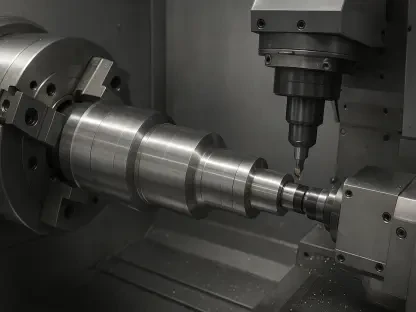
Mechanical stability remains the primary challenge in high-speed robotics, and Swiss-type lathes provide a unique advantage through their innovative use of a guide bushing to support the workpiece. Unlike traditional CNC machines where the part is held away from the tooling, Swiss machining supports the material directly next to the cutting edge, which drastically reduces deflection and vibration during the fabrication process. This structural integrity is essential for creating components with extreme dimensional accuracy, often reaching tolerances within a few microns. For the robotics industry, this means that internal gears, pins, and hinges can be produced with a level of surface finish that virtually eliminates the need for secondary polishing or grinding. When a robot must perform thousands of repetitive cycles per hour, even a microscopic variation in part geometry can lead to catastrophic calibration drift. By utilizing the inherent stability of the Swiss machining design, manufacturers ensure that every component meets the highest standards.
The ongoing trend toward miniaturization across various industrial sectors has placed immense pressure on manufacturing processes to produce smaller, more complex parts without compromising strength. As robots are designed to be more compact for specialized applications in surgical rooms or micro-electronic assembly lines, the demand for tiny mechanical parts has grown exponentially. Swiss machining is uniquely suited for this task, as it can handle small-diameter workpieces while performing multiple operations simultaneously, such as drilling, milling, and threading. This capability allows engineers to consolidate features into a single, tiny component, reducing the overall weight and footprint of the robotic system. Furthermore, the repeatability of the Swiss process ensures that massive production runs of these miniature parts remain identical, which is a critical requirement for scaling automation deployments across global supply chains. The ability to manufacture these complex geometries at a micro-scale allows for the creation of agile, high-precision robots.
Fluid Motion: Precision Shafts and Sensory Hardware
Fluid and accurate motion is the defining characteristic of a high-performance robot, and this functionality relies heavily on the quality of its internal joints and load-bearing supports. Precision shafts, bushings, and sleeves produced via Swiss machining act as the structural framework that facilitates smooth movement in multi-axis arms. These parts must be perfectly concentric and free of surface imperfections to prevent mechanical play, which is the tiny amount of looseness that can cause jerky movements or positioning errors. In industrial settings like automotive welding or delicate electronic picking, even a fraction of a millimeter of play can result in damaged products or system downtime. By implementing Swiss-machined components, engineers can minimize friction and wear within these mechanical assemblies, extending the operational lifespan of the robot. This durability is particularly important in high-cycle environments where machines run twenty-four hours a day, as it reduces the frequency of maintenance.
Modern automation systems depend on an intricate network of sensors and high-speed data connectivity to perceive their environment and communicate with central control units. Swiss machining plays a pivotal role in this ecosystem by producing the high-precision housings and specialized threaded fittings required for advanced machine vision cameras and tactile sensors. These components must provide a robust protective barrier for sensitive internal electronics while allowing for precise alignment with external lenses or probes. Additionally, the process is essential for the production of high-quality electrical connectors and terminal pins that are necessary for the Industrial Internet of Things. As robots become more data-centric, the reliability of these physical connections determines the speed and accuracy of the information flow between the hardware and the software. By ensuring that every pin and connector is manufactured to exact specifications, Swiss machining prevents signal loss and ensures that the facility’s digital infrastructure remains in sync.
Strategic Implementation: Materials and Collaborative Design
Environmental resilience is a critical factor for robots operating in demanding conditions, ranging from extreme temperature fluctuations in aerospace to corrosive chemical exposure in pharmaceutical labs. Swiss machining supports a vast array of materials, allowing engineers to select the most appropriate alloys for specific environmental challenges without sacrificing machining precision. For instance, the use of corrosion-resistant stainless steel and high-strength titanium is common for robots used in medical surgeries or food processing, where hygiene and durability are paramount. Alternatively, lightweight aluminum and high-conductivity copper alloys are often utilized for mobile robotics and heat-sensitive electronics to optimize power efficiency and thermal management. This material versatility ensures that the robotic hardware can withstand continuous mechanical stress and chemical exposure over long periods. By matching the right material with the high-precision capabilities of Swiss lathes, manufacturers can produce hardware that remains efficient.
The relationship between the robotics industry and precision machining providers has evolved into a strategic collaboration that goes beyond the simple exchange of parts for payment. Designing the mechanical body of a modern robot requires a deep understanding of design-for-manufacturability, where engineers and machinists work together to optimize part geometries for efficiency and performance. This collaboration is increasingly supported by digital innovations such as digital twins and predictive maintenance models, which allow manufacturers to simulate the behavior of a part before it is even produced. By integrating Swiss machining with these digital tools, companies can identify potential failure points or areas for weight reduction early in the development cycle. This proactive approach ensures that the transition from a digital blueprint to a physical machine is seamless and cost-effective. As artificial intelligence continues to advance, the synergy between software design and high-precision mechanical engineering remains the cornerstone of autonomous progress.
Actionable Strategies: Future of Precision Automation
Scalability in the robotics industry requires the ability to transition from a prototype to high-volume production without any loss in mechanical quality or operational consistency. Swiss machining offers a significant advantage in this area due to its ability to perform high-speed, lights-out manufacturing where machines run autonomously for extended periods. This level of automation within the machining process itself mirrors the robotics industry’s goals, allowing for the rapid production of complex components with minimal human intervention. Because the Swiss process handles multiple operations in a single setup, it reduces the complexity of the supply chain and minimizes the risk of errors that occur when parts are moved between different machines. For companies looking to deploy large fleets of autonomous robots, this efficiency is vital for maintaining competitive lead times and controlling production costs. The precision-to-cost ratio offered by Swiss machining ensures that high-end automation technology remains accessible.
The successful integration of high-precision components established a new benchmark for robotic performance across various industrial sectors. It was determined that manufacturers who prioritized Swiss machining early in the design cycle achieved significantly lower maintenance costs and higher operational uptime. These organizations focused on several actionable strategies, such as the implementation of digital twin simulations to predict part wear before fabrication began. Furthermore, the selection of advanced alloys like titanium and specialized stainless steel provided the necessary durability for extreme environments. Industry experts recommended that future projects maintain a close collaboration between software engineers and precision machinists to ensure that hardware capabilities continued to evolve alongside artificial intelligence. By standardizing these high-tolerance manufacturing processes, the robotics community ensured that autonomous systems remained reliable, scalable, and capable of meeting the complex challenges of the coming decade.