
The convergence of deep learning and computational physics has fundamentally altered the pace of hardware development, allowing engineers to bypass the grueling weeks traditionally reserved for high-fidelity numerical simulations. In 2026, the widespread adoption of physics-informed neural networks has shifted the paradigm from purely data-driven models to those that respect the fundamental laws of thermodynamics and fluid mechanics. This transition is not merely a matter of speed; it represents a qualitative leap in how complex systems are conceptualized and optimized before a physical prototype exists. Engineering teams are currently integrating surrogate models that predict thermal stress or structural failure with unprecedented accuracy. The result is a dramatic reduction in the trial and error phase, where expensive physical iterations are replaced by millions of virtual experiments. This evolution marks the end of the traditional silo between software and physical engineering.
Integrating Neural Networks Into Fundamental Physical Constraints
The primary technical hurdle in traditional engineering has always been the immense computational cost of solving partial differential equations for complex geometries. Physics-informed neural networks have emerged as a robust solution by incorporating these equations directly into the loss function of the model, ensuring that the AI does not suggest physically impossible solutions. This approach allows the network to learn from a sparse set of data points while still adhering to the conservation of energy and mass. In the aerospace sector, this has revolutionized the design of turbine blades, where subtle changes in airflow can lead to catastrophic failure. By using AI to approximate the fluid dynamics, engineers can explore thousands of design variations in the time it once took to run a single conventional simulation. The precision offered by these models has narrowed the gap between virtual predictions and physical reality, fostering a new level of confidence in digital-first development.
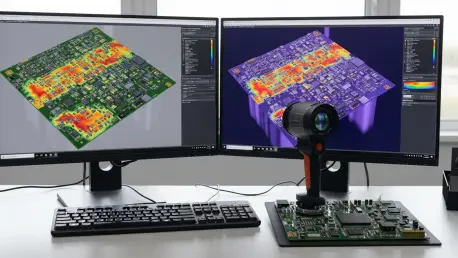
Beyond individual component design, AI-driven physics has enabled the simulation of entire systems, such as the thermal management of hyper-scale data centers or the propulsion systems of electric aircraft. These large-scale simulations were once the exclusive domain of supercomputers, but the efficiency of neural surrogates has democratized access to high-fidelity modeling. Smaller hardware startups can now perform sophisticated stress tests and thermal analyses on standard workstations, leveling the playing field against established industry giants. This democratization is fueling a surge in specialized hardware innovation, particularly in the realm of edge computing and IoT devices where space and power constraints are most severe. The ability to model how heat dissipates through a densely packed circuit board in real-time has led to more compact and powerful electronics. Moreover, these models are increasingly used to predict long-term degradation of materials, providing a clearer picture of reliability.
Engineering leaders recognized that the siloed approach to simulation was the primary bottleneck in their innovation pipelines. They successfully integrated AI-driven physics into every stage of the product lifecycle, from initial concept to predictive maintenance. This transformation required a fundamental shift in workforce training, where mechanical engineers became proficient in neural architecture design and data scientists mastered classical mechanics. Those who moved quickly to adopt these hybrid workflows realized significant cost savings and brought products to market in months rather than years. Looking forward, the focus shifted toward autonomous laboratories where AI not only simulated outcomes but also controlled the fabrication equipment to test results in real-time. For organizations seeking to lead, the primary takeaway was the necessity of investing in unified data platforms that could bridge physical and virtual domains. Embracing this synergy became the only viable path for sustaining growth in a hardware market.