
Modern industrial food production facilities currently process thousands of units every single minute, yet maintaining consistent quality remains a significant challenge due to the natural variability found in biological raw ingredients. While traditional automation excelled at repetitive tasks involving rigid components, the food sector deals with fluctuating moisture levels, varying protein content, and unpredictable shapes that defy standard mechanical logic. Consequently, manufacturers have often faced high rates of product rejection and significant waste, as legacy systems fail to adapt to these organic shifts in real time. The integration of artificial intelligence into the production line represents a definitive break from these historical limitations, offering a path toward a more resilient and precise manufacturing environment. By utilizing advanced neural networks, facilities are now capable of interpreting complex sensory data at speeds that far exceed human capacity. This shift is a total reimagining of the food processing ecosystem.
Integrated Monitoring: Transitioning to Real-Time Infrastructure
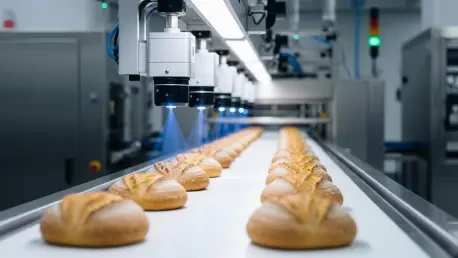
High-resolution inline inspection has become part of a triple-threat approach to defensive quality monitoring, replacing the older model of periodic manual sampling with constant surveillance. These systems utilize multispectral imaging and advanced laser sensors to scan every item on the conveyor belt, identifying foreign materials or structural defects that are invisible to the naked eye. Because these AI models are trained on millions of data points representing both ideal and defective products, they can make split-second decisions to divert sub-par items before they reach the packaging stage. This level of granular oversight ensures that food safety standards are met with a degree of precision that was previously impossible in high-throughput environments. Furthermore, the data collected during this inspection provides a constant stream of intelligence used to diagnose systemic issues. By maintaining this loop, facilities can drastically reduce the likelihood of costly recalls.
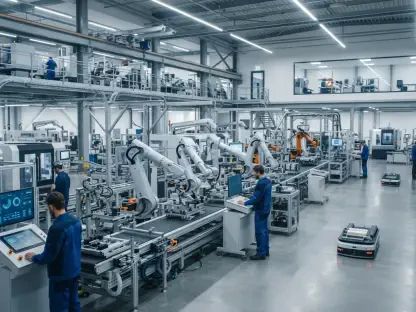
The real power of modern monitoring frameworks lies in their ability to centralize disparate data streams into a unified operational view, allowing for unprecedented facility-wide coordination. Instead of viewing the oven, the mixer, and the sorter as isolated units, managers now utilize integrated platforms that synchronize these components through a shared intelligence layer. When a sensor at the beginning of the line detects a slight increase in grain moisture, the system automatically communicates this change to the processing units downstream. This connectivity allows for immediate adjustments to cook times or hydration levels, preventing a minor deviation from cascading into a batch failure. By removing the silos between different stages of production, artificial intelligence facilitates a holistic approach to quality management that prioritizes system stability. This technological cohesion is essential for maintaining brand reputation and meeting the transparency requirements of modern consumers and regulators.
Precision Calibration: Bridging the Gap in Biological Processing
The persistent “fixed setting” problem has long been a primary driver of inefficiency within the food processing industry, leading to massive amounts of preventable organic waste. In conventional setups, machinery is often calibrated to a static average, which works perfectly for a theoretical ideal but fails when faced with the reality of agricultural diversity. If a shipment of potatoes has a higher sugar content than the previous batch, a static fryer setting might produce burnt chips, leading to the disposal of thousands of pounds of product. Human operators, despite their expertise, cannot always detect these subtle chemical or physical shifts quickly enough to prevent errors on a fast-moving line. The introduction of adaptive control systems addresses this by allowing machines to recalibrate their internal parameters dynamically based on the specific attributes of the raw material currently in process. This transition represents a fundamental change in how manufacturers handle the inherent unpredictability of nature.
Predictive management serves as the cornerstone of this new operational paradigm, enabling manufacturers to address potential quality issues before they manifest as physical defects. By utilizing machine learning algorithms that analyze historical production data alongside real-time sensor inputs, systems can forecast when a process is beginning to drift away from its optimal state. This foresight allows for preemptive corrections, such as fine-tuning a cooling tunnel’s temperature or adjusting the speed of a slicing blade, without halting the production line. Such proactive measures not only preserve product quality but also extend the lifespan of the machinery by reducing mechanical stress. As these systems learn over time, their ability to anticipate variations becomes increasingly refined, resulting in a production environment that is both more stable and more energy-efficient. The reduction in downtime and waste contributes to a sustainable business model that can withstand the pressures of volatile material markets and rising costs.
Strategic Implementation: Assessing the Impact of Intelligent Systems
Global implementations of these technologies have already demonstrated significant improvements in both yield and efficiency across diverse sectors, from potato processing to industrial baking. In one instance, a major European vegetable processor reported a forty-five percent reduction in processing time after integrating real-time moisture monitoring and automated heat adjustment software. Similarly, industrial bakeries in North America have utilized AI-driven oven controls to increase their total output by six percent while simultaneously reducing their energy consumption per unit. These tangible results illustrate that the adoption of intelligent systems is no longer a theoretical exercise but a practical necessity for staying competitive in a global market. The scale of these improvements highlights the transformative potential of data-driven decision-making, as facilities move beyond traditional benchmarks. As more companies witness these gains, the push toward digital transformation in food manufacturing continues to gain momentum across the entire world.
Leading organizations prioritized the integration of modular AI architectures to ensure that their production lines remained adaptable to future technological shifts. These stakeholders invested in comprehensive staff training programs that focused on data literacy, enabling human operators to collaborate effectively with autonomous systems. The industry moved toward standardized data protocols, which simplified the process of upgrading legacy hardware with modern sensor arrays and edge computing capabilities. To maintain this progress, manufacturers adopted a phased implementation strategy that allowed them to validate performance on single lines before scaling to entire facilities. These steps reduced initial capital risk while proving the long-term value of a responsive manufacturing environment. By focusing on the intersection of human expertise and machine precision, the sector established a new standard for quality that addressed the complexities of the global supply chain. This provided a roadmap for achieving total transparency.