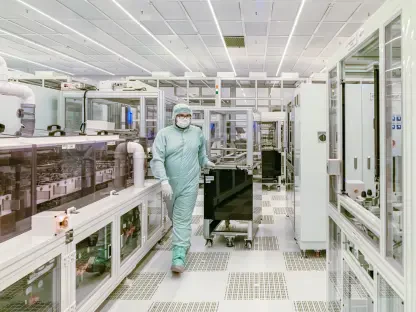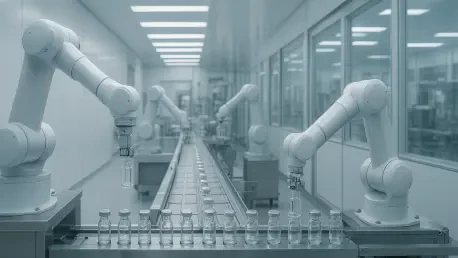

Quality by Design principles are realized through real-time monitoring that builds safety into the manufacturing process rather than testing it at the end. This fundamental shift marks the departure from traditional reactive batch testing, which often delayed product release by weeks, toward a model of continuous assurance. In the current landscape of 2026, the pharmaceutical sector is navigating a profound transformation, moving away from fragmented, legacy systems into the era of Pharma 4.0. This evolution represents more than a mere software upgrade; it is a holistic reimagining of the manufacturing floor as a fully interconnected digital ecosystem. Automation has ceased to be a simple mechanism for moving valves or turning motors; it has become the essential digital bedrock that supports complex biological processes and high-mix production schedules. By synthesizing manufacturing execution systems with real-time analytics, organizations are now able to meet the stringent demands for speed and regulatory precision that modern medicine requires. The move toward data-driven decision-making ensures that every action taken on the factory floor is backed by historical context and forward-looking insights, effectively closing the gap between laboratory development and full-scale commercialization.
The transition to a connected manufacturing environment has rendered the old model of isolated machinery obsolete. Historically, plants operated with “islands of automation” where a tablet press or a bioreactor functioned in a vacuum, generating data that remained trapped within that specific machine’s interface. In 2026, the demand for diverse product portfolios and personalized therapies, such as CAR-T cell treatments, requires a level of agility that these silos cannot provide. A modern automation framework facilitates a seamless flow of information across engineering, quality assurance, and maintenance departments, creating a unified narrative of the production lifecycle. This connectivity eliminates the risks associated with manual data entry and fragmented information, allowing stakeholders to gain real-time visibility into every stage of the process. As the industry moves forward, the focus remains on standardizing how data is collected and utilized, providing a cohesive interface that helps operational teams detect process drifts long before they manifest as significant deviations or batch failures. This strategic approach ensures that manufacturers can adapt to market shifts while maintaining the highest possible safety standards.
Establishing the Core Pillars of Manufacturing Excellence
Ensuring Process Stability and Operational Visibility
A fundamental requirement for any pharmaceutical plant is consistency, which is why reliable process automation is considered the first pillar of Pharma 4.0. Modern platforms utilize high-availability architectures, including redundant controllers and automated failover systems, to ensure that production never stops unexpectedly due to a technical glitch. Because even a minor system failure can ruin a batch of life-saving medicine, these robust frameworks are essential for minimizing operational risk and financial loss. They ensure that every physical action on the factory floor is accurately captured as digital data, creating a reliable foundation for future review and optimization. This architectural stability allows engineers to focus on process improvement rather than troubleshooting basic hardware failures. By maintaining a high-availability environment, manufacturers guarantee that the digital thread remains unbroken, which is a critical requirement for maintaining the data integrity that regulatory agencies demand.
Beyond basic control, modern automation provides unprecedented operational visibility through centralized monitoring and advanced supervisory platforms. These systems gather real-time data on temperature, pressure, flow rates, and humidity into easy-to-read dashboards that provide a comprehensive view of the facility’s health. This creates a “common operational picture” that allows different teams—from production to maintenance—to collaborate more effectively and make decisions based on the same set of facts. Instead of reacting to alarms after a threshold has been crossed, operators can monitor trends and intervene early if a process begins to drift toward its upper or lower limits. This proactive approach shifts the organizational culture from one of “firefighting” to one of strategic prevention, where issues are resolved before they impact product quality. Furthermore, the transparency provided by these dashboards simplifies the reporting process, as quality teams can verify that all parameters remained within the validated state throughout the entire production run.
Leveraging Data Historians for Actionable Intelligence
The transition from simply collecting raw data to generating actionable intelligence is facilitated by advanced manufacturing historians. These systems act as secure, tamper-proof repositories that record every event occurring during production, from the slightest temperature variation to the precise moment a valve was opened. In the high-stakes world of pharmaceutical manufacturing, having a chronological, unalterable record of events is non-negotiable for compliance. When a deviation occurs, engineers no longer have to rely on anecdotal evidence or incomplete paper logs; they can consult the historian to identify the exact conditions that led to the issue. This evidence-based root cause analysis significantly shortens investigation timelines, moving from weeks of manual research to hours of data-driven investigation. By providing a clear picture of what happened and why, historians ensure that corrective and preventive actions are based on reality rather than assumptions.
Moreover, the use of historical data allows for a level of continuous improvement that was previously impossible. By analyzing data across hundreds of batches produced between 2026 and 2028, manufacturers can identify subtle patterns that indicate equipment wear or process inefficiencies. This longitudinal analysis helps in identifying the “golden batch”—the ideal set of parameters that consistently results in the highest yield and quality. Once this profile is established, the automation system can use it as a benchmark for all future production, alerting operators the moment a current batch deviates from the ideal path. This capability transforms the data historian from a passive storage tool into an active driver of operational excellence. It allows companies to move beyond basic compliance and toward a model of competitive advantage where data is used to optimize every aspect of the facility, from energy consumption to raw material usage, ultimately reducing costs while improving patient outcomes.
Building a Resilient Digital Infrastructure
Bridging the Gap: Integrating IT and OT
As manufacturing becomes increasingly digital, the infrastructure supporting it—such as servers, networks, and storage—becomes just as vital as the chemical processes themselves. The convergence of Information Technology (IT) and Operational Technology (OT) is a key requirement for a resilient manufacturing environment. Historically, these two departments operated in separate spheres, often with different priorities and communication protocols. However, in the current era, the wall between the office and the factory floor has dissolved. Utilizing virtualized server infrastructure allows companies to scale their operations easily and recover quickly from hardware failures without the need for extensive physical intervention. This digital foundation ensures that software updates and system maintenance do not disrupt the continuous flow of production. By centralizing the management of these resources, manufacturers can achieve a higher level of reliability and lower total cost of ownership for their digital assets.
This integration also enables a more flexible approach to resource management, where computing power can be shifted to the areas where it is most needed during peak production periods. Virtualization provides a layer of abstraction that protects the manufacturing software from the underlying hardware, meaning that a server failure no longer results in a production shutdown. Instead, the virtual machines can be automatically moved to a healthy host, maintaining the continuity of the control system. Furthermore, this unified infrastructure supports the deployment of advanced analytics and reporting tools that require high-speed access to both operational and business data. By bridging the gap between IT and OT, pharmaceutical companies can ensure that their digital backbone is as robust as their physical production lines. This synergy is essential for supporting the high-speed data transfers required for real-time monitoring and the complex calculations involved in modern process control.
Prioritizing Cybersecurity: Protecting the Digital Supply Chain
Connectivity brings many advantages, but it also introduces potential cybersecurity threats as manufacturing systems are no longer isolated from the internet. A modern automation strategy must incorporate robust encryption, strictly controlled user access, and comprehensive network segmentation. By isolating critical production networks from general office networks and the public web, manufacturers can protect the integrity of their processes from external actors and internal mistakes. These security measures are non-negotiable for maintaining the trust of regulatory bodies and ensuring the safety of the pharmaceutical supply chain. In an age where data is as valuable as the physical product, a breach could lead not only to the theft of intellectual property but also to the dangerous manipulation of batch recipes. Therefore, cybersecurity must be treated as a core component of the manufacturing process rather than an afterthought.
Furthermore, the implementation of multi-factor authentication and detailed audit trails ensures that every change made to the system is authorized and documented. This level of control is essential for meeting the requirements of FDA 21 CFR Part 11 and other global standards regarding electronic records and signatures. Network integrity also involves the use of advanced monitoring tools that can detect unusual traffic patterns or unauthorized attempts to access sensitive controllers. In 2026, the focus has shifted toward a “Zero Trust” architecture, where no device or user is automatically trusted, regardless of their location on the network. This rigorous approach to security ensures that the automation foundation remains a safe environment for innovation. By investing in resilient security protocols, pharmaceutical manufacturers can confidently embrace the benefits of connectivity and remote monitoring without compromising the safety or efficacy of the medications they produce for the global population.
Navigating the Path to Digital Maturity
Step 1: Following the Three Stages of Evolution
Digital maturity in the pharmaceutical sector is an incremental process that typically follows three distinct stages: data collection, operational understanding, and predictive intelligence. In the first stage, a firm must establish a reliable system to capture high-quality, high-resolution data from every sensor, actuator, and instrument on the floor. This involves standardizing protocols to ensure that data from different vendors can be aggregated into a single, cohesive stream. Without this fundamental layer of “trusted data,” any subsequent attempts at analysis will be flawed. Once the data collection layer is solidified, the focus shifts to the second stage: operational understanding. This is where raw numbers are converted into meaningful insights by contextualizing them within the framework of the specific batch, operator, and equipment state. This allows teams to understand not just what is happening, but why it is happening in real-time.
The final and most advanced stage is the transition to predictive intelligence, where the organization uses sophisticated tools to forecast outcomes before they occur. At this level of maturity, the automation system can predict the likelihood of a batch failure or a pump breakdown several days in advance based on subtle changes in vibration or pressure. This allows the facility to move away from fixed maintenance schedules toward a “condition-based” model, where interventions are only performed when necessary. This evolution requires a deep commitment to data integrity and a willingness to move beyond traditional manufacturing mindsets. Each stage builds upon the previous one, creating a ladder of capability that leads to a more resilient and efficient operation. By following this structured path, pharmaceutical companies can avoid the pitfalls of “technology for technology’s sake” and ensure that every digital investment delivers tangible value in terms of yield, quality, and compliance.
Step 2: Enhancing Performance via IIoT and eBPR
Once a solid automation foundation is in place, manufacturers can integrate the Industrial Internet of Things (IIoT) to monitor auxiliary systems like utilities, HVAC units, and ambient environmental sensors. This extension of connectivity allows for holistic asset health monitoring, where the entire facility—not just the primary production line—is treated as a single, living organism. For instance, an IIoT-connected vibration sensor on a chilled water pump can identify a failing bearing weeks before it causes a temperature spike in a sensitive bioreactor. This allows maintenance teams to schedule repairs during planned downtime, preventing the catastrophic loss of a batch. By bringing these auxiliary systems into the primary digital ecosystem, companies can achieve a higher level of operational uptime and reduce the total cost of facility management.
Additionally, the move to Electronic Batch Production Records (eBPR) represents a major leap forward in both efficiency and compliance. Traditional paper-based logs are notoriously prone to transcription errors, illegible handwriting, and missing signatures, all of which can delay batch release and trigger regulatory citations. eBPR systems eliminate these issues by capturing data directly from the control system in real-time. This ensures total accuracy and provides a “review by exception” capability, where quality teams only need to investigate the parameters that fell outside of the validated range. This streamlined process significantly speeds up the release of products to the market, which is particularly critical for life-saving therapies with short shelf lives. By replacing manual documentation with an automated digital record, manufacturers can guarantee that their data is complete, consistent, and ready for audit at a moment’s notice, thereby strengthening their overall compliance posture.
Step 3: Driving Optimization With Artificial Intelligence
Artificial Intelligence (AI) serves as the ultimate capability enhancer in the Pharma 4.0 ecosystem, identifying complex patterns in production data that human operators might miss. Machine learning algorithms can analyze thousands of variables simultaneously to determine the subtle interactions between temperature, raw material purity, and mixing speed that lead to the highest product quality. For example, AI can compare the current performance of a batch against a “golden batch” profile in real-time, making micro-adjustments to the process to ensure consistency. This level of optimization allows for higher yields and a reduction in the use of expensive reagents and energy. However, it is essential to remember that AI is only as effective as the data it processes; it requires a robust, high-integrity automation foundation to function correctly.
Beyond process optimization, AI is also transforming the way regulatory compliance is managed. Natural language processing tools can be used to search through years of historical data to quickly retrieve the information needed for an audit or a deviation investigation. This reduces the administrative burden on engineers and quality staff, allowing them to focus on high-value tasks rather than manual data retrieval. Furthermore, AI-driven predictive modeling can help companies simulate new manufacturing processes in a digital environment before they are implemented on the physical floor. This “digital twin” approach reduces the risk associated with scaling up new drugs and allows for more rapid innovation. By integrating AI into the core automation framework, pharmaceutical manufacturers can transform their operations into intelligent, self-optimizing environments that are capable of meeting the complex challenges of the 2026 market and beyond.
Strategic Benefits of an Integrated Foundation
Enhancing Agility: Responding to a Dynamic Market
An integrated automation framework provides the agility needed to bring new therapies to market faster than ever before. When production lines are fully digitalized, switching between different product recipes becomes a much smoother and faster process, requiring minimal physical reconfiguration and reducing downtime. This flexibility allows companies to respond quickly to sudden changes in market demand or interruptions in the global supply chain, such as those seen in the 2026 to 2027 period. For manufacturers of generic medicines or contract development and manufacturing organizations (CDMOs), the ability to handle frequent changeovers without sacrificing quality is a significant competitive advantage. This agility is powered by modular automation software that can be easily updated or reconfigured to accommodate new equipment or process steps.
Furthermore, the resilience built into high-availability systems ensures that manufacturers can maintain continuity even when faced with unexpected equipment challenges. By having a digital infrastructure that supports remote monitoring and diagnostics, technical experts can troubleshoot issues from anywhere in the world, reducing the need for on-site visits and speeding up the resolution process. This level of connectivity also enables better coordination with suppliers and logistics partners, as production data can be shared in real-time to optimize the delivery of raw materials and the distribution of finished products. Ultimately, the goal of an agile manufacturing foundation is to create a responsive organization that can pivot its operations in real-time to meet the needs of patients, regardless of the external pressures it may face.
Part 2. Quality by Design: Building Safety into the Process
The implementation of a “Quality by Design” philosophy is perhaps the most significant strategic benefit of the Pharma 4.0 movement. In this model, quality is built into the manufacturing process through continuous monitoring and control rather than being verified through end-of-line testing. By using sensors and automated feedback loops, the system can make immediate adjustments if a process starts to move away from its ideal state. This ensures that every unit of medicine produced meets the required specifications, which reduces waste and minimizes the risk of a product recall. This shift toward “right first time” manufacturing is essential for reducing the high costs associated with pharmaceutical production and for ensuring that patients always have access to the medications they need.
Continuous real-time monitoring also provides a higher level of regulatory assurance than traditional batch testing. Instead of relying on a small sample of the finished product, manufacturers can provide a complete digital record showing that every second of the production run remained within the validated parameters. This wealth of data allows for more transparent communication with regulatory bodies like the FDA or the EMA, as it demonstrates a deep understanding and control of the manufacturing process. By focusing on the process itself, manufacturers can guarantee the safety and efficacy of their medicines with much greater confidence. This approach not only improves the bottom line by reducing the number of rejected batches but also enhances the reputation of the company as a leader in technical excellence and patient safety.
Future Considerations: The Path to Technical Excellence
The journey toward a fully realized Pharma 4.0 ecosystem was not an overnight achievement but a sustained effort that required a fundamental shift in how technology is valued within the industry. By 2026, the most successful organizations have already moved beyond the initial implementation phase and are now focusing on the long-term maturity of their digital assets. They have treated automation not as a one-time capital expense but as a strategic asset that requires continuous refinement and investment. This commitment has allowed them to transform their facilities into intelligent, adaptive environments where data flows freely between the factory floor and the executive suite. The primary takeaway for the industry is that technical excellence is not a destination; it is an ongoing process of aligning digital capabilities with business goals and patient needs.
Moving forward, the focus must remain on the integration of human expertise with automated systems. While AI and IIoT provide the tools for optimization, the insight of experienced engineers and quality professionals remains the most valuable asset in any pharmaceutical operation. The next steps for the industry involve further standardizing data formats to improve interoperability between different sites and vendors, as well as investing in the digital literacy of the workforce. By building a foundation rooted in reliable process control, secure infrastructure, and actionable intelligence, pharmaceutical manufacturers have set the stage for a new era of medicine. This evolution ultimately serves the global population by ensuring that the production of high-quality, life-saving drugs is more efficient, more reliable, and more responsive to the challenges of the modern world.