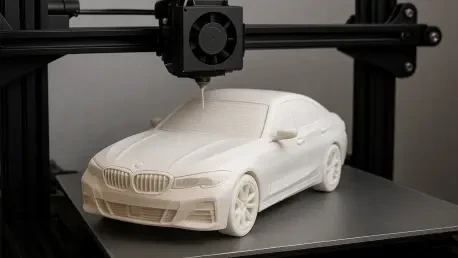

The development of the upcoming “Neue Klasse” electric vehicle series relies on 3D-printed components for functional validation in crash tests and drive system development. This shift marks a definitive departure from the days when additive manufacturing was reserved solely for aesthetic mockups or high-cost racing niche applications. By treating 3D printing with the same rigor as traditional casting or high-precision machining, the BMW Group has successfully established a fully integrated, industrial-scale production ecosystem. Central to this transformation is a sophisticated infrastructure that bridges the gap between laboratory research and the rapid-fire demands of a global assembly line. The transition into this era of maturity is not merely about having better machines; it is about redefining the very architecture of automotive manufacturing. By embedding digital agility into every stage of the lifecycle, the company is ensuring that additive processes are no longer peripheral but rather a primary driver of modern excellence.
Establishing the Hub: Centralized and Distributed Networks
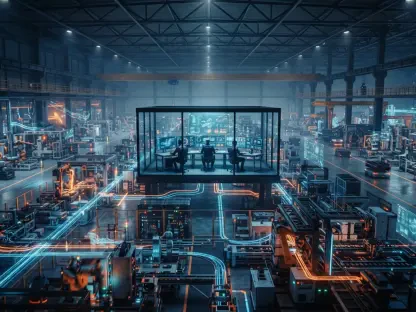
The Additive Manufacturing Campus serves as the primary pacesetter for worldwide operations, having already facilitated the production of more than 1.6 million parts. It operates on a dual model that combines centralized expertise in Munich with decentralized execution at individual vehicle plants across the globe. While the campus handles complex research and high-volume production tasks, local plants utilize 3D printing to manufacture their own tools and production aids on an immediate, as-needed basis. This approach allows the organization to maintain exceptionally strict quality standards while simultaneously empowering local facilities to solve operational challenges without relying on external suppliers. This structural flexibility ensures that the benefits of additive technology are felt at every level of the production chain, from the smallest assembly fixture to the most complex engine components.
Beyond the hardware and production quotas, the campus is dedicated to the human element of industrialization through comprehensive employee training programs. By housing research, education, and production under a single roof, the company ensures that its workforce is equipped to handle the intricacies of the latest 3D printing systems. This internal knowledge transfer is vital for maintaining a seamless pipeline from conceptual design to the factory floor, preventing the technical bottlenecks that often plague large-scale industrial transitions. The result is a unified strategy where every plant has the potential to contribute to additive manufacturing goals, fostering a culture of continuous improvement. By investing in people as much as in printers, the company has created a resilient network capable of adapting to the rapid shifts in automotive demand and technological progress observed throughout 2026.
Digital Foundations: Automation and Open Interfaces
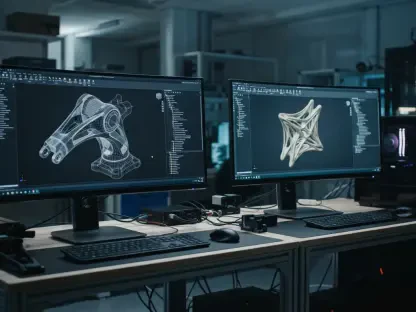
The strategy for scaling 3D printing rests heavily on the integration of automated process chains and sophisticated digital networking. By digitizing the entire workflow, the company minimizes the potential for human error and creates a “closed-loop” environment where design data flows directly into manufacturing systems without intermediate manual handling. This digital connectivity ensures that every printed part meets exact specifications, providing the process security necessary for high-stakes automotive production where safety is paramount. This level of automation is what allows the technology to transition from a laboratory setting to the high-speed environment of a modern assembly line. Furthermore, the use of advanced software for part identification and tracking ensures that every component is accounted for throughout the assembly process, enhancing overall transparency.
A major shift in the manufacturing approach is the move toward open-material systems and open software interfaces. Unlike proprietary setups that restrict manufacturers to specific vendors, open systems allow for the incorporation of a wider variety of materials and the implementation of technological updates more rapidly. This flexibility makes the production infrastructure future-proof and economically sustainable in an industry where material costs fluctuate. Furthermore, the development of systems with larger build volumes enables the production of massive, highly functional components that were previously impossible to print using conventional additive methods. These advancements expand the scope of what additive manufacturing can achieve, allowing for the consolidation of multiple parts into single, complex structures. This reduction in part count simplifies the supply chain and reduces the weight of the vehicle.
Heavy Metal Printing: The Rise of Wire Arc Systems
One of the most promising technological developments currently in use is Wire Arc Additive Manufacturing, commonly referred to as WAAM. This process is specifically designed for producing large-format metal components with high productivity, effectively bridging the gap between 3D printing and traditional heavy industrial workflows. The company has already integrated WAAM into its prototype development phase, using it to create robust parts for rigorous testing that must withstand extreme thermal and mechanical stress. This technology serves as a cornerstone of the roadmap to further industrialize metal printing for the next generation of vehicles. By utilizing a process that resembles automated welding, the system can deposit material at much higher rates than traditional powder-bed systems, making it ideal for substantial structural components that require both strength and scale.
The timeline for the implementation of WAAM highlights a disciplined approach to maturing new technologies before they reach the mass production stage. Intensive vehicle testing for components produced via this method is scheduled to continue through 2026, with the ultimate goal of integrating these parts into series production by 2027. This long-term commitment ensures that every component meets the company’s stringent safety and durability standards before being released to the public. By maturing WAAM to the point of series-readiness, the organization is positioning itself to revolutionize how large metal structures are designed and manufactured in the automotive sector. This evolution not only reduces the need for expensive tooling but also allows for rapid iterations during the final stages of vehicle development, ensuring that the highest performance standards are met.
Accelerating Progress: Neue Klasse and Production Aids
The adoption of additive manufacturing is fundamentally changing the vehicle development process, particularly for the electric vehicle lineup. Historically, engineers were limited by the need for expensive molds and tools, which often added months to development cycles and restricted the ability to make late-stage design changes. 3D printing removes these traditional constraints, allowing for unprecedented design freedom and the ability to produce functional parts for crash tests in a fraction of the time. This acceleration allows the company to validate new concepts and improve vehicle safety much earlier in the design phase than was previously possible. By shortening the feedback loop between design and testing, engineers can refine vehicle dynamics and occupant protection with a level of precision that traditional manufacturing methods simply cannot match.
In addition to vehicle parts, the technology is used to create production accessories such as specialized jigs and fixtures for assembly line workers. By printing these tools on-site, manufacturing plants can immediately respond to ergonomic or efficiency needs on the factory floor without waiting for external delivery. This decentralized capability reduces lead times and lessens the dependence on external supply chains for internal operational tools, which is crucial for maintaining steady production rates. The ability to print customized aids ensures that the manufacturing environment is as optimized and responsive as the vehicles being built. These tools are often designed with input from the workers themselves, leading to improvements in workplace safety and comfort. Such grassroots innovation is a direct result of making additive manufacturing tools accessible.
Strategic Steps: Industrial Maturity and Future Readiness
The successful scaling of additive manufacturing required a move away from isolated pilot projects toward a cohesive, company-wide industrial standard. It was determined that the most effective way to utilize 3D printing was to treat it as a complementary force to traditional methods rather than a total replacement. By focusing on high-value applications where geometry and weight savings provided the most benefit, the organization maximized its return on investment. This maturity was achieved by standardizing the digital interfaces between design software and the printing hardware, ensuring a seamless flow of information across different global sites. The transition proved that additive manufacturing could meet the rigorous uptime and quality requirements of a Tier-1 automotive producer. The resulting infrastructure now supports a more agile response to market changes and fluctuating consumer demands.
Looking ahead, the focus shifted toward enhancing the sustainability of the additive process by integrating recycled materials and reducing energy consumption during the printing cycle. The roadmap for 2027 involves the full integration of these matured technologies into the series production of large-scale structural metal parts. This progression suggested that companies seeking to emulate this success must prioritize a robust digital backbone and an open architecture to avoid vendor lock-in. Furthermore, the development of decentralized printing capabilities was identified as a key factor in mitigating global supply chain risks. By maintaining the ability to print critical components and production tools locally, the manufacturing network became significantly more resilient. These strategic choices ensured that the transition to electric mobility was supported by a manufacturing philosophy that was as innovative as the vehicles.