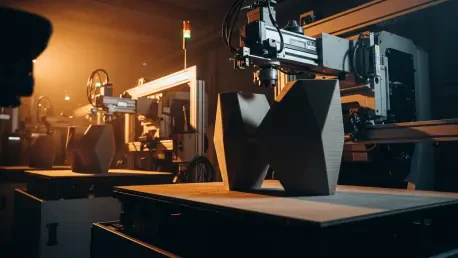

Traditional manufacturing systems frequently struggle with the inefficiencies of global logistics and the massive carbon footprint associated with shipping bulk furniture across oceans. To address these systemic issues, Haddy utilized a sophisticated integration of Siemens technology to create a localized, sustainable additive manufacturing model that prioritized speed and environmental responsibility. By moving production closer to the end consumer, the enterprise significantly reduced the reliance on long-haul transportation and the associated emissions. This shift was not merely about 3D printing furniture but about rethinking the entire supply chain through the lens of a circular economy. The use of advanced robotics enabled the creation of high-quality goods from recycled polymers, effectively turning waste streams into valuable assets. This approach ensured that every piece of furniture produced was both a functional object and a statement on the viability of distributed manufacturing in a modern industrial landscape.
Digital Integration: Leveraging the Siemens Ecosystem to Drive Change
The implementation of the Siemens Xcelerator portfolio served as the digital backbone for this ambitious scaling effort, allowing for a seamless transition from design to physical output. By utilizing digital twin technology, engineers simulated every aspect of the printing process in a virtual environment before a single drop of material was deposited. This predictive capability allowed the team to identify potential structural weaknesses or printing errors, which historically resulted in significant material waste and downtime. The precision offered by these digital tools meant that the physical execution on the factory floor was optimized for maximum efficiency and minimum energy consumption. Furthermore, the integration of advanced motion control systems ensured that the robotic arms could navigate complex geometries with unprecedented accuracy. This high level of digital sophistication transformed the manufacturing floor from a traditional assembly line into a dynamic environment where data informed every movement.
Beyond the simulation phase, the collaboration focused on the SINUMERIK One CNC system to orchestrate the complex interplay between hardware and software. This digital native control system provided the necessary computational power to handle the high-speed data processing required for large-scale additive manufacturing. By leveraging the open architecture of the Siemens ecosystem, the team customized their robotic cells to adapt to various material compositions, including high-performance recycled composites. This flexibility was crucial for scaling because it allowed the company to pivot production based on regional material availability or specific consumer demands without retooling the entire facility. The ability to monitor machine health and performance in real-time further enhanced the reliability of the system, ensuring that production remained consistent across multiple micro-factory locations. Consequently, the synergy between hardware and software created a framework that proved additive manufacturing could compete with traditional methods.
Successful adoption of this sustainable model required a fundamental shift in how manufacturers viewed material sourcing and regional distribution. It became clear that the integration of Siemens digital tools provided more than just operational efficiency; it offered a roadmap for businesses to decouple growth from environmental degradation. Stakeholders determined that investing in micro-factories equipped with automated recycled-polymer processing was the most viable path forward for reducing the global industrial carbon footprint. Leaders in the space advocated for the expansion of these localized hubs to empower regional economies while maintaining high standards of design and durability. The emphasis shifted toward creating modular systems that could be easily replicated in diverse geographic locations, ensuring that sustainable practices were not confined to a single pilot program. By focusing on the convergence of digital twins and recycled materials, the industry established a new standard for transparency and accountability.