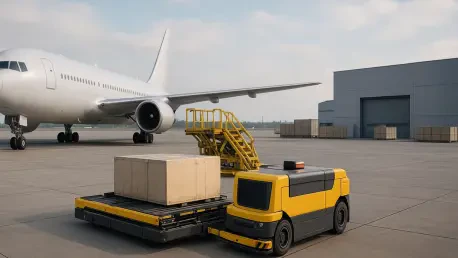

Every pallet entering the Leipzig/Halle facility undergoes an automated verification process involving barcode scanning and sensors for weight and dimensional conformity. This meticulous attention to detail is just one component of a transformative partnership between Jungheinrich and Deutsche Aircraft, which has established a state-of-the-art automated logistics center at the Leipzig/Halle Airport. Serving as the nerve center for the D328eco regional aircraft program, the facility represents a significant leap forward in the industrialization of aviation manufacturing. By merging two distinct automated systems under a centralized control architecture, the project sets a new standard for intralogistics in the aerospace sector. This collaboration is central to the Factory 4.0 initiative, which seeks to replace traditional, labor-intensive workflows with a digital, paperless, and carbon-neutral production ecosystem that can handle the complexities of modern aircraft assembly with unprecedented efficiency.
Technical Solutions: High-Precision Manufacturing
Maximizing Density: The PowerCube Solution
The PowerCube system stands out as a compact powerhouse for small-parts management, housing over 6,500 container locations within a mere 210 square meters. This remarkable density is achieved by utilizing 26 vertical levels, allowing the facility to exploit the full height of the warehouse while maintaining a small physical footprint. To manage this vertical labyrinth, 16 high-speed shuttles operate concurrently, retrieving and delivering bins to five ergonomic workstations designed for maximum picker productivity. The design philosophy focuses on extreme space efficiency, which is a critical requirement in airport-based logistics where real estate is at a premium. By condensing thousands of individual components into such a controlled environment, the system ensures that the assembly line remains stocked without the need for expansive, sprawling storage areas that would otherwise complicate the internal logistics flow and increase the time required for part retrieval.
Safety and intelligence are woven into the fabric of the PowerCube’s operational logic to protect both the facility and the sensitive aircraft components stored within. To safeguard against fire hazards, the storage area operates under a reduced-oxygen atmosphere, effectively eliminating the risk of combustion without damaging delicate electronic or mechanical parts. Furthermore, the system employs an intelligent algorithm to optimize the placement of goods based on their demand frequency. Fast-moving items are automatically prioritized and moved to the lower levels of the storage rack to decrease shuttle travel time and boost overall throughput. Conversely, less common components naturally migrate to the upper reaches of the system over time. This dynamic organization ensures that the most critical parts are always within reach, allowing for a fluid transition between storage and the assembly stations where technicians perform the final integration of aircraft systems.
Heavy Duty Automation: The AutoVNA Framework
Complementing the small-parts storage is the automated very narrow aisle warehouse, which is designed specifically for palletized goods and larger structural assemblies. This section features two automated EKX 516ka trucks that navigate through precisely defined corridors to manage 624 pallet locations. These vehicles operate with high precision, moving heavy loads through narrow aisles that would be difficult for manual operators to navigate at high speeds. Integrated conveyor technology links the receiving area directly to six specialized picking stations and the shipping department, creating a seamless loop for material movement. This setup eliminates the need for manual transport of bulky items across the warehouse floor, reducing the risk of transit damage and improving workplace safety. The coordination between the automated trucks and the conveyor system allows for a continuous flow of large components, which is essential for maintaining the production cadence required for modern aircraft.
The logistical precision of the AutoVNA system extends to the handling of oversized items that do not fit within standard pallet parameters. For these unique components, Jungheinrich provided 135 cantilever storage positions serviced by electric forklifts, ensuring that every part of the aircraft—regardless of its size—has a dedicated, tracked location. This hybrid approach to storage allows the facility to manage a diverse inventory ranging from tiny fasteners to large wing sections within a single, cohesive environment. Every movement is logged and verified, ensuring that the supply chain remains transparent and accountable at every stage of the manufacturing process. By integrating specialized pallet handling with flexible cantilever storage, the facility can support the wide variety of materials needed for the D328eco program, providing a robust foundation for the complex assembly tasks that take place daily within the hangar, while minimizing the potential for human error.
Seamless Integration: Industrial Scalability
Unified Digital Control: The WCS Architecture
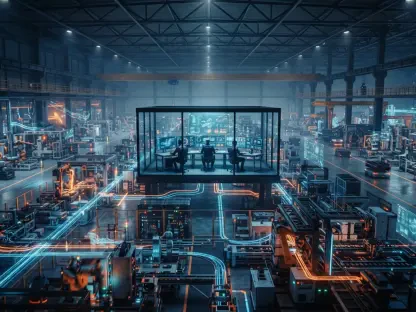
The backbone of the Leipzig/Halle facility is a “one control system” philosophy, where the Jungheinrich Warehouse Control System governs both the PowerCube and the AutoVNA warehouse. This unified digital brain serves as the coordinator for all transport movements, ensuring that small components and large assemblies arrive at the assembly line in a perfectly synchronized manner. By centralizing the management of these two distinct technologies, the facility avoids the data silos and communication lags that often plague complex industrial environments. The WCS provides real-time visibility into inventory levels and shuttle positions, allowing warehouse managers to monitor performance and make data-driven adjustments on the fly. This level of digital integration is vital for the Factory 4.0 framework, as it allows the logistics infrastructure to act as a responsive partner to the production team rather than a separate, disconnected entity that might otherwise cause delays.
Transitioning to a fully paperless environment has streamlined the material supply chain by eliminating the need for manual tracking and physical documentation. The digital infrastructure allows for the creation of pre-configured assembly kits, which are staged in dedicated preparation shafts for rapid access by technicians. When a specific set of components is required for a production step, the system automatically retrieves the necessary items from both the PowerCube and the AutoVNA racks, bringing them together at a single point of use. This process significantly reduces the time technicians spend searching for parts, allowing them to focus entirely on the assembly of the aircraft. By automating the kitting and delivery process, the system ensures that the right parts are always available at the right time, minimizing downtime and maximizing the efficiency of the workforce. This digital-first approach not only improves productivity but also contributes to the carbon-neutral goals of the project.
Scaling for the Future: Production Capacity and Growth
The automated infrastructure at the Leipzig/Halle Airport was built with long-term growth in mind, providing the flexibility needed to scale from initial startup phases toward high-volume manufacturing. Currently configured for two-shift operations, the logistics center possesses the inherent capacity to expand to a three-shift model as demand for the D328eco regional aircraft increases. This scalability is essential for meeting the target production rate of 48 aircraft per year, a goal that requires a logistics system capable of handling a massive increase in component throughput. The site is expected to employ between 250 and 350 people at full capacity, with automation serving to augment the human workforce by handling the most repetitive and physically demanding tasks. This balance between advanced technology and skilled labor ensures that the facility can maintain high quality standards while meeting the rigorous delivery schedules of the global aviation market.
Strategic implementation of these automated solutions demonstrated how regional aviation hubs could be transformed into centers of industrial excellence. By combining high-density storage with a unified digital control system, Jungheinrich and Deutsche Aircraft established a blueprint for resilient and sustainable manufacturing. The project proved that it was possible to minimize the physical footprint of a warehouse while significantly increasing its operational capacity and safety. Moving forward, industrial leaders should consider adopting similar “one control” architectures to reduce complexity in their supply chains. The success at the Leipzig/Halle facility suggested that the integration of automated small-parts handling with pallet-level robotics is a necessary step for any manufacturer looking to achieve Factory 4.0 standards. Future developments will likely focus on further refining these digital twins to provide even more granular control over the production environment and energy consumption.