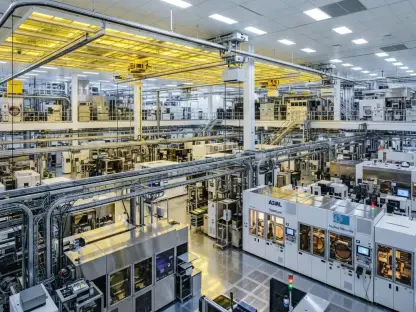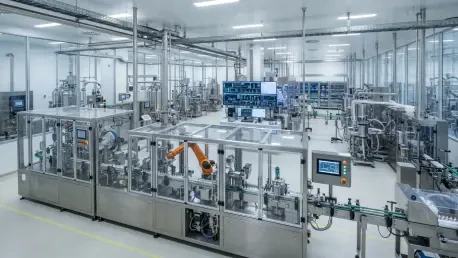

The pharmaceutical manufacturing sector is currently navigating an unprecedented intersection where biological complexity meets digital precision at a scale never before seen in human history. This shift toward a more connected and intelligent infrastructure is no longer a luxury but a fundamental necessity for life sciences manufacturers who face mounting pressure to accelerate product launches while maintaining rigorous quality standards. Industry data suggests that roughly 90% of organizations now view digital transformation as the cornerstone of their operational strategy. This urgency is reflected in the massive financial commitment currently observed across the globe, with the market for smart manufacturing technologies projected to expand from $17.7 billion in 2026 to more than $61 billion by 2033. This transition represents a departure from traditional siloed systems and toward a unified ecosystem where automation and real-time data serve as the primary drivers of innovation, ensuring that the next generation of medical treatments can be delivered with higher consistency.
Technological Integration: Bridging the Gap Between Design and Execution
Digital Twins and Real-Time Operational Intelligence
Leading the charge in this evolution are technology providers who focus on the seamless convergence of Information Technology and Operational Technology to eliminate existing bottlenecks in the production cycle. DXC Technology has been instrumental in this space by utilizing digital twins to provide real-time monitoring and predictive analysis of plant operations, which allows for adjustments before errors occur. By integrating AI-driven robotics into the manufacturing floor, these systems can streamline repetitive tasks and reduce the human error factor that often complicates high-stakes drug production. This technical maturity ensures that the gap between laboratory design and shop-floor execution is narrowed, creating a continuous feedback loop that enhances both yield and safety. Such implementations demonstrate that the future of the industry lies in the ability to create a virtual mirror of physical assets, allowing for simulation and optimization without interrupting flow.
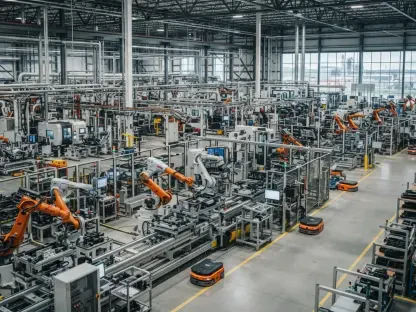
Rockwell Automation has further refined this digital architecture by combining sophisticated hardware with intelligent software suites to create a more responsive manufacturing environment. Their approach often involves the deployment of autonomous mobile robots that can navigate complex facility layouts to transport sensitive materials without manual intervention. These physical assets are managed through centralized platforms like the PharmaSuite Manufacturing Execution System, which provides a unified interface for controlling diverse production stages. By integrating these systems, manufacturers can achieve a higher level of visibility into their supply chains and internal processes, ensuring that every batch meets specific regulatory requirements. The synchronization of autonomous hardware and comprehensive software allows for a level of agility that was previously unattainable, enabling facilities to switch between different product lines with minimal downtime for handling the variety of specialized therapies.
Modular Frameworks and Automated Compliance Strategies
Siemens has taken a slightly different path by emphasizing the direct integration of execution software with advanced machinery to foster a more cohesive production environment. Recently, the focus has shifted toward AI-assisted design and modular weighing frameworks that allow for greater precision in the initial stages of drug formulation. By utilizing modular components, manufacturers can scale their operations up or down with relative ease, adapting to fluctuating market demands or the specific needs of niche patient populations. This modularity is supported by software that automates the verification process, ensuring that each component of the production line is operating within defined parameters at all times. Such technological advancements reduce the complexity of plant layouts and make it easier to maintain compliance in an increasingly scrutinized regulatory landscape. The result is a more resilient manufacturing base that ensures every dose produced is of the highest quality.
The strategic movement toward a connected manufacturing ecosystem required a focus on both data integrity and cybersecurity to protect sensitive intellectual property. Organizations that prioritized the integration of “Lab to Line” strategies addressed the manufacturing and control issues that historically delayed product launches. This transition involved investing in compliance-ready artificial intelligence and batch automation systems that adhered to strict regulatory standards. Moving forward, manufacturers needed to secure their digital infrastructure against the rising threat of cyberattacks while ensuring that raw data was converted into actionable insights. Success was achieved by those who viewed digital transformation as a holistic journey rather than a series of isolated technology upgrades. These leaders focused on creating a resilient framework that allowed for seamless data flow across all production stages, ultimately ensuring that high-quality medicines reached patients faster.