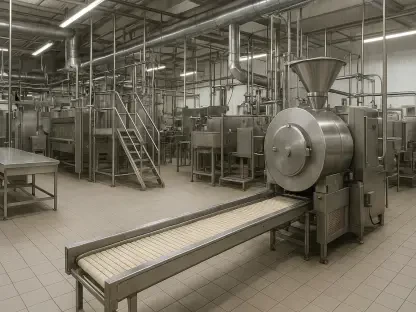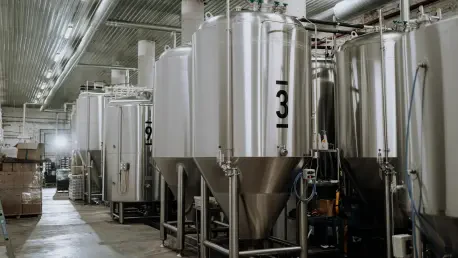

The relentless demand for instant availability in the global beverage market has pushed traditional manufacturing facilities to their absolute breaking points, forcing a radical shift toward total digital integration. At the forefront of this industrial evolution is the strategic partnership between Siemens and DrinkPAK, a leading North American contract manufacturer that has redefined the speed and scale of canned beverage production. Since its inception, DrinkPAK has rapidly expanded its operations, establishing a sophisticated network of facilities that handle both alcoholic and non-alcoholic products for major global brands. By integrating high-level automation at its state-of-the-art Fort Worth facility, the company achieves staggering production speeds of up to 3,000 cans per minute across multiple lines. This collaboration serves as a foundational blueprint for how Industry 4.0 technologies can be deployed to manage complex supply chains and massive manufacturing assets, ensuring that rapid growth is supported by a robust and reliable digital infrastructure that maintains consistency as the company scales across the United States.
Advanced Process Control and Manufacturing Consistency
To maintain the rigorous quality standards required by global beverage brands, DrinkPAK utilizes the Siemens BRAUMAT system as its primary process control technology. This specialized platform is specifically engineered for the beverage and brewing industry, providing a highly scalable framework for recipe-based production that ensures every batch is identical to the last. By automating the delicate processes of batching and filling, the facility significantly reduces the potential for human error while maximizing throughput. This level of precision is essential when managing a diverse portfolio of products, where the complexity of formulas for energy drinks, sodas, and canned cocktails requires flexible yet rigid adherence to specifications. The BRAUMAT system allows operators to switch between different recipes with minimal downtime, effectively turning a high-volume factory into a versatile production hub that can pivot according to market demand without sacrificing the integrity of the final product or wasting expensive raw ingredients.
Building upon this automated foundation, the “brains” of the Fort Worth facility consist of high-performance Siemens Programmable Logic Controllers (PLCs) and Human Machine Interfaces (HMIs). These components are responsible for managing the intricate logic and high-speed communication necessary to synchronize thousands of moving parts across the production floor. The HMIs provide plant personnel with real-time visibility into the health of the entire system, delivering diagnostic data and status updates that are critical for modern operations. This depth of information enables a transition from reactive repairs to predictive maintenance, allowing technical teams to identify and resolve potential mechanical or electrical issues before they escalate into unplanned downtime. By maintaining a continuous flow of production, DrinkPAK ensures that its massive manufacturing assets remain productive around the clock, leveraging data-driven insights to optimize every aspect of the filling and packaging process for maximum reliability and safety.
Resource Efficiency and Intelligent Warehouse Orchestration
Modern industrial facilities must address the dual challenges of high-output performance and environmental responsibility through sophisticated energy management systems. In the Fort Worth plant, Siemens has implemented a comprehensive power infrastructure featuring smart switchboards and granular metering systems. These tools allow DrinkPAK to monitor power consumption across the entire facility with extreme precision, identifying areas where energy usage can be optimized or reduced. In an era where energy costs and sustainability targets are increasingly influential in business strategy, this data-centric approach provides a significant competitive advantage. By balancing energy loads and reducing waste, the company not only lowers its operational expenses but also aligns its production methods with the sustainability goals of its global clients. This integration of power and automation demonstrates that environmental stewardship and industrial efficiency are no longer mutually exclusive but are instead deeply interconnected through the use of intelligent digital hardware.
The pursuit of efficiency extends beyond the production lines and into the complex world of intralogistics and warehouse management. DrinkPAK has collaborated with the E80 Group to deploy a fleet of Automatic Laser-Guided Vehicles (AGVs) that handle the movement of pallets and the loading of trucks without manual intervention. These autonomous machines are fully integrated into the Siemens digital ecosystem, utilizing Siemens PLCs to communicate seamlessly with the warehouse management software and the production equipment. This creates a unified digital environment where the speed of logistics matches the high-velocity output of the manufacturing lines, effectively eliminating the bottlenecks that often plague traditional warehouses. By automating the transition from the filling station to the delivery truck, DrinkPAK minimizes the risk of product damage and improves workplace safety, ensuring that the high-volume requirements of the market are met with a logistics system that is as agile and technologically advanced as the production process itself.
Financial Engineering and Scaling for Global Markets
High-tech digital transformation often requires significant capital investment, which can pose a barrier to rapid expansion for even the most successful companies. To address this challenge, Siemens Financial Services (SFS) provided tailored funding solutions that allowed DrinkPAK to access cutting-edge automation technology without the burden of prohibitive upfront costs. By aligning financial models with operational performance and long-term growth objectives, SFS enabled the company to scale its operations quickly across multiple locations, including the upcoming facility in Philadelphia scheduled for early 2027. This holistic approach, where the technology provider also serves as a strategic financial partner, ensures that the latest innovations in industrial AI and automation are accessible during critical growth phases. This synergy between financial flexibility and technological prowess allows DrinkPAK to dominate the North American beverage market by maintaining a lean balance sheet while operating some of the most advanced machinery in the entire food and beverage sector.
The partnership between these two organizations highlights a broader industrial trend toward the convergence of the physical and digital worlds through “Digital Twin” philosophies and standardized scalability. By utilizing a consistent hardware and software platform across all its sites, DrinkPAK can replicate its manufacturing successes in new regions with minimal friction and technical overhead. This standardization ensures that the same level of quality and efficiency is maintained whether a product is canned in California, Texas, or Pennsylvania. Furthermore, the data generated by these connected systems provides a wealth of information that can be used to simulate and optimize future production runs, leading to a virtuous cycle of continuous improvement. This integrated model of manufacturing represents a fundamental shift in how global brands approach production, moving away from fragmented systems toward a cohesive, data-driven strategy that prioritizes flexibility, speed, and sustainable growth in an increasingly competitive and fast-paced global marketplace.
The implementation of integrated automation and smart infrastructure at the DrinkPAK facility provided a definitive roadmap for manufacturers seeking to thrive in a high-demand environment. It was established that the combination of process control and automated logistics significantly reduced operational bottlenecks while enhancing product consistency. Stakeholders in the manufacturing sector should have prioritized the adoption of unified digital ecosystems to ensure that production data was utilized for both immediate troubleshooting and long-term strategic planning. Financial models that aligned capital expenditure with technology lifecycles proved essential for maintaining a competitive edge without compromising liquidity. Moving forward, the industry benefited from treating energy management as a core operational metric rather than an isolated utility cost. Ultimately, the success of this collaboration demonstrated that a holistic approach to automation, encompassing everything from the initial recipe to the final delivery, was the most effective way to secure a leadership position in the modern industrial landscape.