
In response to chronic labor shortages, the Metal Industries Research & Development Centre has introduced robots designed to reduce physical strain on healthcare workers. This initiative represents a milestone at the 2026 Taiwan Automation Intelligence and Robotics Show, signaling a definitive shift in the island’s industrial strategy. Taiwan transitioned from its traditional role as a hardware component manufacturer to a world-leading architect of integrated AI solutions. This transformation was spearheaded by the Ministry of Economic Affairs and the Industrial Technology Research Institute, which presented sixteen major technological breakthroughs. These innovations redefined machine-human interaction by merging precision engineering with advanced artificial intelligence. The nation’s strategic pivot focused on creating a high-value ecosystem capable of addressing global demographic crises. By concentrating on intelligence rather than just physical labor, the sector successfully positioned itself at the center of the international robotics market.
Part 1: Industrial Maturity and Patent Commercialization
The robotics sector in Taiwan reached a significant milestone known as the “harvest period,” where research and development translated into substantial economic maturity. Through the Smart Machinery 2.0 initiative, the country established a robust framework for intellectual property, securing nearly eighty-five patents in recent years. This intellectual foundation enabled over one hundred technology transfers to private enterprises, resulting in a derivative output value estimated at four hundred twenty-four million dollars. Such growth demonstrated that the transition toward AI-centric manufacturing was not merely theoretical but a viable commercial reality. By fostering a domestic environment where innovation was closely tied to market demand, Taiwan created a sustainable model for industrial growth. This phase of development underscored the importance of integrating software and hardware, ensuring that local firms remained competitive in a rapidly evolving global landscape characterized by high automation.
As domestic and international corporations increased their investment in the region, the focus shifted toward embedding complex AI algorithms directly into mechanical frameworks. This integration allowed for a new generation of smart machines that could adapt to varying industrial needs without extensive manual recalibration. The success of this approach was evident in the way domestic research institutes collaborated with local factories to pilot advanced automation systems. These partnerships reduced the risk for manufacturers while proving the efficacy of new robotic designs in real-world scenarios. Consequently, Taiwan emerged as a hub for industrial assets that were both high-performing and globally competitive. The ability to turn laboratory research into practical tools for the shop floor became a hallmark of the nation’s technological prowess. This strategy not only boosted the value of domestic exports but also attracted global tech leaders looking for sophisticated automation partners to solve complex production issues.
Part 2: Advancing Biomimetics and Autonomous Mobile Platforms
One of the most impressive technical achievements showcased was the development of the AI Dexterous Hand, which signaled a new era in biomimetic engineering. This modular five-fingered system was engineered to mirror the complex tactile movements of a human hand, featuring twenty degrees of freedom for unparalleled precision. Unlike older robotic grippers that relied on rigid, binary movements, this hand utilized continuous AI learning to adjust its grip based on the texture and weight of an object. Such sensitivity made it an ideal solution for delicate tasks in the electronics assembly and medical device sectors, where precision is paramount. The high durability of the system also ensured that it could withstand the rigors of a continuous production environment without losing accuracy. By achieving this level of dexterity, developers bridged the gap between human capability and mechanical efficiency, enabling robots to perform intricate assembly work that was once considered impossible for automated systems.
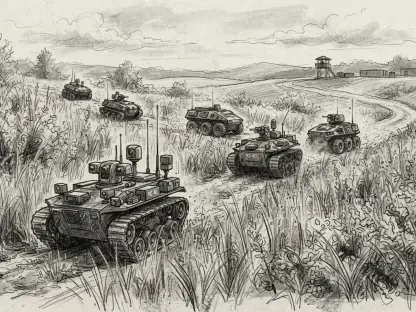
Innovation in mobility reached a peak with the Quadruped Robot R&D Platform, a collaborative effort involving major electronics firms like Compal and Inventec. These four-legged systems were designed to navigate hazardous and uneven terrains that traditional wheeled robots could not manage. The platform emphasized the creation of a ‘domesticated’ supply chain, where every essential component—from high-torque power modules to sophisticated navigation software—was produced locally. This self-reliance was critical for ensuring the security and reliability of robots used in high-risk applications such as disaster relief, firefighting, and industrial pipeline inspections. By controlling the entire manufacturing process, Taiwan ensured that its autonomous platforms met the highest standards of performance and safety. Furthermore, these robots served as versatile testing grounds for new sensor technologies and AI vision systems. This holistic approach to development allowed for rapid iteration, keeping the nation at the forefront of the global mobile robotics industry.
Part 3: Solving Labor Issues through Intelligent Automation
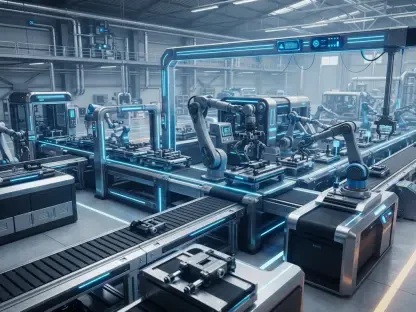
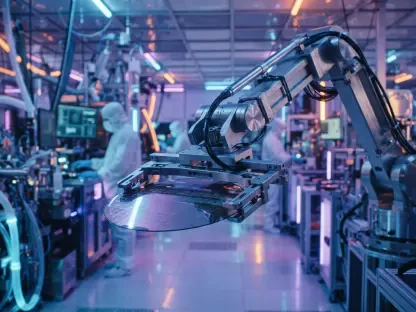
The manufacturing sector successfully leveraged advanced robotics to mitigate the impact of labor shortages, particularly in high-mix, low-volume production environments. Dual-arm collaborative robots equipped with dynamic path generation technology became a staple on modern assembly lines, allowing for a level of flexibility previously unseen. These machines utilized real-time sensor data to plan their own movements autonomously, which eliminated the need for time-consuming manual programming. This capability was projected to increase operational efficiency by approximately thirty-five percent, particularly in sectors like metal processing and semiconductor assembly. By removing the bottleneck of rigid automation, factories were able to switch between different product lines with minimal downtime. This shift toward intelligent, self-programming systems ensured that industrial productivity remained high despite the shrinking availability of skilled manual labor. It also allowed human workers to move into more creative and supervisory roles.
Automation also made deep inroads into the service industry, where labor-intensive tasks were transferred to sophisticated autonomous units. A prominent example was the smart table-cleaning robot, which was designed to navigate busy and unpredictable dining environments. Using advanced spatial mapping and AI visual recognition, these robots efficiently collected used tableware and managed waste disposal without human intervention. Implementing these solutions allowed hospitality businesses to reduce their labor costs by nearly sixty percent, a crucial advantage in a sector facing rising wages and staffing shortages. Moreover, these robots improved service speed and consistency, leading to higher customer satisfaction rates. The successful deployment of service robots provided a scalable model for other sectors, such as retail and logistics, that struggled to maintain operational standards in a digital economy. This trend highlighted a broader shift toward a service-oriented robotics market, where the focus moved from heavy machinery to agile automation.
Part 4: Healthcare Solutions and the Total Solution Ecosystem
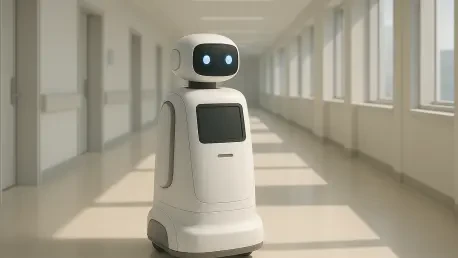
In the healthcare sector, robotics played a vital role in maintaining public health standards and supporting the medical workforce through automated sanitation. Disinfection robots, equipped with AI-driven voice interaction and autonomous navigation, were deployed to patrol hospital wards and surgical suites. These units achieved a consistent 99.9% stable antimicrobial rate, significantly outperforming manual cleaning protocols. By automating these routine but essential tasks, healthcare facilities reduced the incidence of hospital-acquired infections while lowering related labor costs by twenty percent. This allowed medical professionals to dedicate more time to critical patient care and complex diagnostic tasks rather than basic maintenance. The integration of AI voice interaction also facilitated better communication between the robots and hospital staff, making the technology more accessible and easier to manage in high-stress environments. This proactive approach to hygiene showcased how intelligent automation could serve as a force multiplier for a strained public health system.
The transition toward a total solution ecosystem was finalized by merging semiconductor dominance with advanced software development. This strategic move ensured that the entire robotics supply chain, from initial chip design to the final service module, remained anchored within a domestic technological framework. Industry leaders prioritized the integration of cross-sector expertise as a critical next step to sustain this growth. Stakeholders focused on refining AI visual recognition and 3D sensing to enhance patient care in nursing homes and long-term facilities. These advancements provided a stable foundation for a social safety net that protected both the elderly and the healthcare workers supporting them. The nation successfully shifted its perspective to view robotics as a holistic service rather than a collection of separate parts. Moving forward, the adoption of standardized AI communication protocols became the recommended solution for ensuring global interoperability. This era of development established a clear roadmap for other nations to follow.