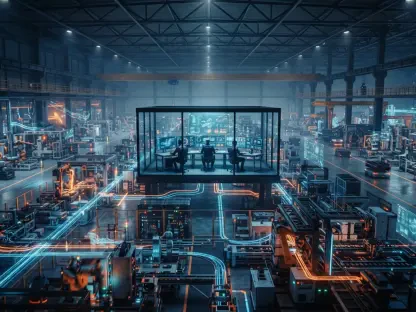

A significant portion of manufacturing expertise remains uncodified, existing only as the tribal knowledge of senior operators who can identify failures by sound. This reality has forced a strategic pivot in the industrial world, moving away from the broad fantasy of humanoid robots toward the practical implementation of narrow Physical AI. Rather than chasing general-purpose intelligence, modern manufacturers are focusing on specialized, task-specific tools that solve immediate operational hurdles. This transition represents a move from theoretical corporate initiatives to boots-on-the-ground applications that function at the edge of production to provide an immediate return on investment. The current shift is defined by a pragmatic realization: the most valuable AI is not the one that mimics human form, but the one that captures intuition and applies it with precision. By prioritizing these applications, companies are beginning to bridge the gap between legacy machinery and the future of digital manufacturing.
Securing Industrial Expertise and Efficiency
Capturing Tribal Knowledge: The Role of the Digital Apprentice
The manufacturing sector is currently navigating what many experts call a “silver tsunami,” a demographic shift where nearly one-third of the total workforce is now over the age of 55. This transition is not merely a statistical anomaly; it represents a looming existential crisis regarding the preservation of specialized skills that have been honed over decades. These senior operators possess an intuitive understanding of machinery—a sense of mechanical rhythm that younger employees often lack. When a veteran retires, they often take with them the ability to diagnose a faulty hydraulic line or an imbalanced rotor simply by feeling the vibration through the floor. The challenge for modern facility managers is to find a way to capture these ephemeral insights before they vanish from the shop floor entirely. This necessity has turned Physical AI from a luxury into a foundational requirement for any enterprise seeking to maintain its operational continuity and competitive edge.
As Physical AI becomes more integrated, these digital apprentices are being tasked with more than just observation; they are actively synthesizing diagnostic reasoning into accessible formats. For a new hire entering the workforce in 2026, the learning curve is steep, requiring years to master the nuances of complex machinery. However, by using AI co-pilots that have been trained on the tribal knowledge of senior staff, these workers can access step-by-step guidance that includes the sounds and feels that veterans use to troubleshoot. These systems utilize multimodal inputs—combining audio from high-fidelity microphones with haptic data from sensors—to provide a holistic view of machine health. This allows for the creation of interactive digital manuals that evolve in real-time, offering actionable advice grounded in decades of experience. By turning unwritten wisdom into a structured asset, manufacturers are preserving their history and accelerating time-to-competence for new staff.
Refining Production Edge: Implementing Localized Intelligence
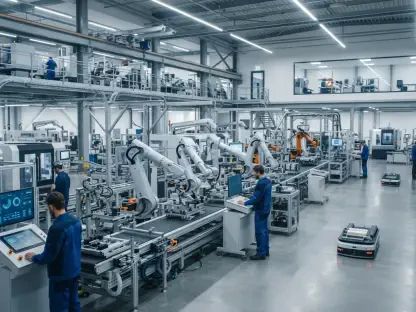
To achieve maximum efficiency on the shop floor, the industry has seen a move away from large, cloud-based AI models in favor of small, task-specific intelligence running at the edge. Processing data locally on sensors or high-speed cameras, rather than transmitting it to distant data centers, allows manufacturers to achieve the ultra-low latency required for high-stakes environments. In a modern assembly line, a delay of even a few milliseconds can be the difference between a successful weld and a costly scrap event. Edge AI minimizes these risks by making split-second decisions at the point of origin, ensuring that the machine logic is as close to the physical action as possible. This localized approach also enhances data security and reduces bandwidth costs, as only relevant anomalies are flagged for further review. By decoupling critical operations from the limitations of external networks, manufacturers have gained a level of reliability and autonomy that was previously unattainable.
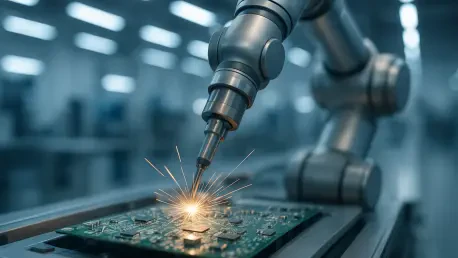
In the high-precision world of semiconductor manufacturing, the deployment of purpose-built defect detection systems provided a clear template for success. Unlike generalized visual models that struggle with the microscopic complexities of wafer production, specialized Physical AI tools were trained on industry-specific datasets to identify anomalies that occur only under specific cleanroom conditions. These systems effectively reduced customer return rates by identifying sub-visual cracks and contamination early in the fabrication process, saving millions in potential waste. This move toward specialization proved that the most effective AI is often the most focused one, designed to solve a single, difficult problem with near-perfect reliability. By concentrating on these narrow applications, manufacturers were able to achieve a level of precision that human inspection alone could never sustain. This deterministic approach ensured that every unit rolling off the line met the increasingly stringent quality standards.
Maintaining Performance and Scaling Growth
Sustaining Model Integrity: Managing the Living System
While predictive maintenance is frequently touted as a “set it and forget it” solution, the reality in 2026 reveals that these sophisticated models require constant human and machine collaboration to remain effective. Machine logic is never static; it is influenced by subtle changes in the production environment, such as variations in ambient temperature or the substitution of aftermarket parts. When an AI system is trained on historical data that no longer reflects the current state of the machinery, it begins to produce false negatives, missing critical warning signs that lead to failure. To combat this, leading manufacturers have adopted a philosophy that treats AI as a living system rather than a static tool. This involves the continuous monitoring of sensor accuracy and the implementation of automated feedback loops that alert engineers when a model’s predictive confidence drops. By maintaining this level of vigilance, companies ensure that their AI remains a reliable asset instead of a liability.
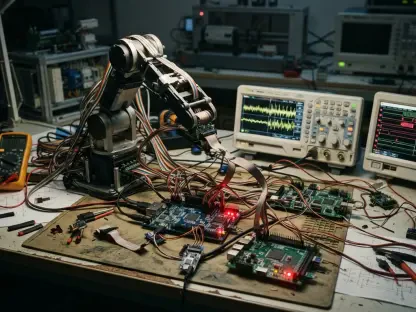
Successful manufacturers have begun to treat their AI installations as living organisms that require constant nourishment in the form of updated data and environmental context. This philosophy involves performing frequent recalibrations to ensure that vibration and thermal patterns are accurately monitored to prevent unexpected equipment failure. For instance, a robotic arm operating in a humid environment may exhibit different mechanical stresses than one in a climate-controlled facility; a static AI model would eventually fail to account for these differences. By implementing continuous retraining loops, engineers can feed real-time sensor data back into the model, allowing it to learn and adapt to the wear of the individual machine. This proactive stance on model integrity has significantly reduced unplanned downtime, as the AI becomes adept at identifying the unique signatures of impending failure. Ultimately, the durability of Physical AI depends less on the initial code and more on its ongoing contextual alignment.
Navigating Economic Expansion: Bridging the Readiness Gap
The economic landscape for Physical AI is expanding at a rapid rate, with North America serving as a primary theater for this technological growth. While global investments in industrial AI and robotics are projected to reach hundreds of billions by 2035, a significant gap remains between this financial commitment and actual operational readiness. Currently, most manufacturers have allocated substantial budgets for the acquisition of smart tools and automated systems, yet many still find themselves in the early stages of implementation. This surge in spending is driven by the need to combat rising labor costs and the global pressure to increase throughput without compromising quality. However, the path to a fully automated facility is rarely linear, as companies must navigate the complexities of integrating new digital layers into legacy hardware systems. As we move from 2026 toward the end of the decade, the focus of investment is expected to shift from hardware procurement to the software that ensures these systems operate.
One of the most persistent challenges in this expansion is the rise of “shadow AI,” where localized solutions are implemented by plant managers without the oversight of corporate IT departments. This decentralized approach can create significant security vulnerabilities and uninsured liabilities if it is not managed correctly within a broader governance framework. As Physical AI becomes more deeply integrated into plant operations, the legal and insurance landscapes are evolving to address these new risks. Insurance providers have already begun to introduce specific exclusions for AI-related liability, forcing manufacturers to seek standalone policies for tools that were previously covered under general agreements. Bridging the gap between plant-level experimentation and corporate governance is essential for maintaining a secure and cohesive technological infrastructure. Companies that successfully harmonized these forces scaled their AI initiatives more rapidly while maintaining a defense against cyber threats and operational disruptions.
Strategizing for Long-Term Operational Success
The transition toward Physical AI demonstrated that success was never about the scale of automation, but rather the precision of its application. Manufacturers who prioritized the capture of expert knowledge and the rigorous maintenance of their predictive models found themselves significantly ahead of those who chased generalized solutions. They realized that the true power of AI resided in its ability to augment human expertise rather than replace it, particularly when deployed at the edge of production for high-stakes tasks. Looking forward, the next step involves the formalization of data governance and the aggressive upskilling of the remaining workforce to manage these systems. Companies that addressed the shadow AI phenomenon early by integrating plant-level innovation with corporate oversight secured a more resilient infrastructure. This approach shifted the focus from merely surviving a labor shortage to thriving through an era of deterministic, data-driven manufacturing excellence and technological resilience.