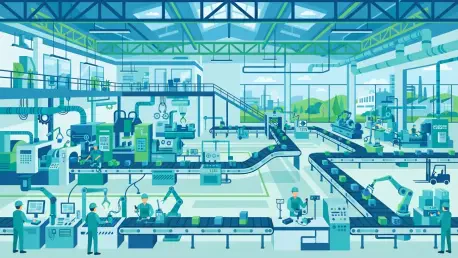

Specialized technology suppliers will receive strategic roadmaps and incentives to develop the tools and infrastructure required for the next generation of industrial intelligence. This cornerstone of the South Korean Ministry of SMEs and Startups (MSS) initiative marks a significant pivot toward a fully autonomous manufacturing sector. With a robust allocation of 5 trillion won aimed at completion by 2030, the government is facilitating a shift that goes beyond traditional automation. The goal is to ensure that small and mid-sized enterprises (SMEs) do not fall behind as global supply chains increasingly demand high-tech integration. Currently, the objective is to push the digital transformation rate to 50 percent and the artificial intelligence adoption rate to 10 percent. This massive investment serves as a catalyst for a broader economic evolution, moving away from labor-intensive processes and toward a model defined by precision, speed, and data-driven decision-making in every factory across the country.
Technical Framework: The 3X Strategy and Physical AI
Implementation: Converging Digital and Robotics Systems
The 3X Strategy represents a unified approach that links Digital Transformation (DX), AI Transformation (AX), and Robot Transformation (RX) into a single operational flow. This concept revolves around “physical AI,” which describes systems where artificial intelligence does not just process abstract data but actively perceives and interacts with the physical world through machinery. By securing real-time data through initial digital shifts, factories can create a feedback loop where production information fuels smarter AI-driven operations. For an SME, this means that a robotic arm is no longer just programmed for a repetitive task; instead, it uses sensors to adjust its movements based on the quality of raw materials or environmental changes. The integration of AX and RX ensures that hardware and software are no longer separate entities but parts of a cohesive, thinking machine. This synergy is intended to drastically reduce downtime and minimize the margin of error in complex production lines.
To facilitate this transition, the government provides tiered support for corporations based on their existing digital capabilities and specific industrial needs. Funding is directed toward demonstration projects that integrate AI and robots into live production environments, allowing companies to test these technologies without assuming total financial risk. While the initiative covers a broad range of manufacturing, it places a particular emphasis on high-growth and strategic sectors such as biotechnology, security, climate technology, and “K-consumer” goods. By focusing on these specific niches, the MSS aims to create flagship examples of automated excellence that can be replicated across other industries. These demonstration sites serve as blueprints for smaller firms, proving that advanced robotics can be successfully implemented even in specialized or smaller-scale operations. The strategy ensures that the leap to high-tech manufacturing is supported by empirical evidence and state-backed financial security for early adopters.
The Asset: Advanced Platforms and Workforce Training
Manufacturing data is treated as a core economic asset under this new policy, leading to the advancement of the Korea AI Manufacturing Platform into a more sophisticated system called Manufacturing AI 24. This platform is designed to handle everything from data collection and standardization to the development and reapplication of AI models on the shop floor. To encourage SMEs to share their operational data, the government introduced a model where data contributions are recognized as “in-kind” contributions. This effectively reduces the cash requirements for companies participating in state-supported programs, making high-level technology more accessible to cash-strapped startups. By standardizing how data is collected and utilized, the MSS ensures that even the smallest manufacturer can benefit from the collective intelligence of the entire network. This infrastructure creates a shared library of industrial logic that speeds up the deployment of AI across various manufacturing sub-sectors.
The initiative successfully addressed the need for regional infrastructure and human capital by establishing regional AI hubs and data centers. These centers provided the necessary computing power and localized support for manufacturers to scale their digital operations without needing to relocate to major urban centers. Specialized education programs at science and technology institutes produced a new generation of skilled workers who gained on-site experience through dedicated internships. Current employees also participated in upskilling programs to ensure the existing workforce could handle sophisticated AI tools and robotic systems. Moving forward, SMEs must focus on maintaining these data-driven ecosystems to ensure long-term industrial leadership. Continuous investment in human capital and the refinement of physical AI models remained the primary focus for sustaining the competitive edge gained through these state-led efforts. This transition effectively turned South Korea’s manufacturing base into a modern, data-driven engine of growth.