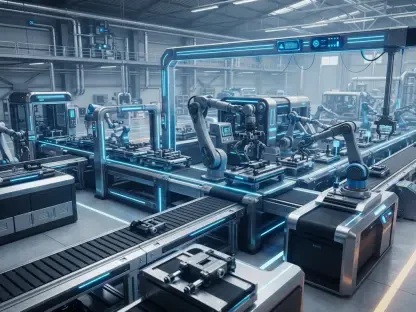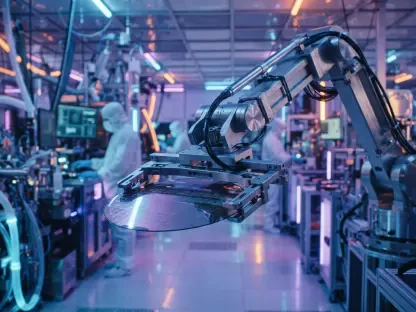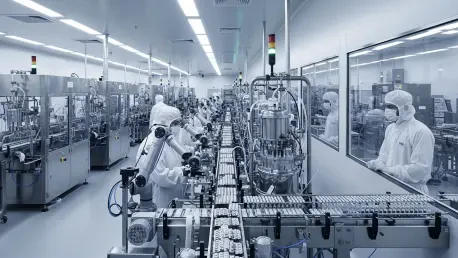

The global pharmaceutical manufacturing sector is currently navigating a profound structural shift that replaces traditional, siloed batch processing with an interconnected ecosystem of intelligent digital frameworks. This transition is not merely a cosmetic upgrade to existing machinery but a fundamental reimagining of how life-saving treatments are conceptualized, validated, and distributed across global markets. As of 2026, the industry is witnessing an unprecedented surge in capital allocation toward artificial intelligence, with market projections indicating a massive leap from a valuation of USD 1.26 billion in 2025 to nearly USD 13 billion by 2034. This aggressive expansion is underpinned by a compound annual growth rate of approximately 30 percent, reflecting a broad consensus among stakeholders that digital maturity is the only viable path forward in an increasingly complex therapeutic landscape. The emergence of highly specialized medicines, such as cell and gene therapies, has necessitated a level of precision that human-centric systems can no longer guarantee, forcing a move toward autonomous, data-driven manufacturing environments. This decade-long journey toward Pharma 4.0 aims to dissolve the barriers between physical production lines and cognitive computing, ensuring that the next generation of healthcare is defined by reliability, speed, and safety. By removing the traditional bottlenecks associated with manual oversight and fragmented data, the industry is effectively paving the way for a more resilient and responsive supply chain that can adapt to global health crises or sudden shifts in patient demand with unprecedented agility.
Revolutionizing Operational Standards: The Shift to Pharma 4.0
Virtual Simulations: Predicting Success in Complex Environments
Digital twins have emerged as a cornerstone of modern pharmaceutical facilities, providing a high-fidelity virtual replica of physical production lines that allows for risk-free experimentation. By utilizing these simulations, engineers can stress-test equipment configurations and chemical processes in a virtual space before any physical resources are committed to the floor. This capability is particularly critical for biologics and vaccines, where even minor fluctuations in temperature or pressure can result in the loss of an entire batch worth millions of dollars. The integration of digital twins ensures that every possible variable is accounted for, allowing manufacturers to optimize their yields and minimize the environmental footprint of their operations. This shift from reactive troubleshooting to proactive simulation represents a major milestone in the quest for operational excellence, as it significantly reduces the time required for facility startups and process transitions. The data generated through these virtual models also feeds back into the broader corporate intelligence network, creating a continuous loop of improvement that spans from initial drug design to final packaging and distribution.
The application of machine learning and deep learning algorithms has transformed the concept of equipment upkeep from a calendar-based chore into a predictive science. These analytical tools scan thousands of data points from sensors embedded in mixers, centrifuges, and filling machines to identify subtle patterns that precede mechanical failures. By predicting exactly when a component will reach its breaking point, manufacturers can schedule maintenance during planned downtime, thereby avoiding the catastrophic costs of unplanned production halts. This granular level of oversight extends the lifespan of expensive capital equipment and ensures that the manufacturing environment remains within strict tolerance levels at all times. Furthermore, the ability to monitor the “health” of a factory in real-time provides stakeholders with a level of transparency that was previously impossible, allowing for more accurate forecasting of production capacity and delivery timelines. As these algorithms become more sophisticated throughout the decade leading to 2034, the concept of a “zero-downtime” facility is moving from a theoretical ideal to a practical business objective for the world’s leading pharmaceutical firms.
Automating the technology transfer process has become a strategic priority for companies looking to move a drug from the laboratory to large-scale commercial production with minimal friction. Traditionally, this phase was fraught with manual documentation and trial-and-error adjustments that could delay a product launch by several months. AI-driven platforms now streamline this transition by using historical data and predictive modeling to suggest the most efficient scaling parameters for new therapeutic compounds. These systems analyze the unique chemical properties of a drug and correlate them with the capabilities of specific manufacturing sites, ensuring that the production process is “right-first-time” when it reaches the factory floor. This level of synchronization between R&D and manufacturing departments eliminates the traditional siloes that have historically slowed down the pace of innovation. By shortening the technology transfer window, pharmaceutical companies can recover their research investments faster and, more importantly, get essential medications into the hands of patients who need them. This advancement is particularly vital in the context of personalized medicine, where the ability to rapidly configure production for small, patient-specific batches is a competitive necessity.
Cloud Infrastructure: Building the Digital Foundation for Scalability
The migration toward cloud-based solutions has redefined the IT landscape of pharmaceutical manufacturing, offering the computational power and storage capacity required to manage massive industrial datasets. By leveraging cloud platforms, manufacturers can run complex AI models and simulations without the need for prohibitive on-site server investments, democratizing access to high-level analytics for smaller biotechnology firms. This transition allows for the seamless aggregation of data from global manufacturing sites, enabling corporate leaders to compare performance metrics and identify inefficiencies across their entire production network. The scalability of the cloud also ensures that as a company grows, its digital infrastructure can expand in tandem, supporting an increasing number of sensors, automated lines, and intelligent workflows. Furthermore, cloud-centric architectures facilitate better collaboration between pharmaceutical companies and their external partners, such as research organizations and suppliers, by creating a “single source of truth” for production data. This connectivity is essential for maintaining a high-performance supply chain that can react in real-time to changes in raw material quality or logistical disruptions.
Despite the obvious benefits of the cloud, many organizations are currently adopting hybrid deployment models to address specific concerns regarding data security and regulatory compliance. These hybrid setups allow sensitive intellectual property and patient data to remain on-site in private servers, while non-sensitive operational data is processed in the public cloud to take advantage of superior analytical tools. This balanced approach provides manufacturers with the flexibility to innovate while still adhering to the stringent data residency requirements imposed by various national health authorities. Hybrid models also offer a layer of redundancy, ensuring that manufacturing operations can continue even in the event of a temporary loss of external internet connectivity. As the industry moves closer to 2034, the refinement of these hybrid architectures will likely focus on enhancing the speed of data transfer between local and remote environments, further reducing latency in real-time monitoring applications. The ability to manage these complex digital environments is becoming a core competency for pharmaceutical executives, who must navigate the technical trade-offs between centralized efficiency and localized security.
The emergence of GMP-ready software platforms specifically designed for the pharmaceutical industry has accelerated the adoption of AI across the manufacturing lifecycle. These platforms are built from the ground up to comply with Good Manufacturing Practice standards, ensuring that every piece of data used by an AI model is traceable, secure, and verifiable for audit purposes. This focus on “compliance by design” allows manufacturers to bypass many of the validation hurdles that traditionally slowed down the implementation of new digital tools. These software ecosystems often feature pre-built modules for common tasks like deviation management, yield optimization, and batch release, allowing companies to deploy intelligent systems in a matter of weeks rather than years. By providing a unified interface for various plant functions, these platforms break down the data silos that have historically plagued large-scale manufacturing operations. This integration is crucial for the successful implementation of Pharma 4.0, as it ensures that the insights generated by AI are actionable and visible to decision-makers at every level of the organization. As these software solutions continue to evolve, they are expected to incorporate more advanced generative capabilities, further simplifying the way operators interact with complex industrial data.
Strengthening Integrity: Quality and Compliance in a Digital Age
Automated Inspections: The Power of Advanced Computer Vision
Computer vision technology has revolutionized the quality control process by providing a level of inspection accuracy and speed that far exceeds human capabilities. In modern high-speed filling lines, AI-driven cameras can inspect thousands of vials or syringes per minute, detecting microscopic cracks, foreign particulates, or incorrect fill levels with near-perfect consistency. Unlike human inspectors, these systems do not suffer from fatigue or cognitive bias, ensuring that the same rigorous standards are applied to every single unit that leaves the facility. This reduction in “false scrap” rates—where perfectly good products are accidentally discarded—directly improves the profitability of manufacturing operations while maintaining the highest levels of patient safety. Furthermore, the data collected by these vision systems can be analyzed over time to identify recurring issues in the production process, such as a specific nozzle that is prone to clogging or a conveyor belt that is causing cosmetic damage to packaging. This feedback loop allows for continuous improvement in the manufacturing environment, further lowering the risk of batch failures and regulatory recalls.
Generative AI is finding a niche within manufacturing execution systems to assist with the arduous task of documentation and batch record review. Every pharmaceutical batch produces a mountain of paperwork that must be meticulously checked for errors or deviations before the product can be released to the market. AI-powered documentation assistants can now scan these records in real-time, highlighting potential issues and suggesting corrective actions for human supervisors to review. This automation significantly reduces the administrative burden on quality assurance teams, allowing them to focus their expertise on more complex problem-solving rather than routine data entry. By ensuring that all records are complete and “audit-ready” at all times, these systems streamline the path to regulatory approval and reduce the risk of non-compliance findings during facility inspections. The ability to manage documentation with this level of speed and precision is a major advantage in the race to bring new therapies to market, as it minimizes the “dead time” between the completion of manufacturing and the actual release of the product to patients.
The shift toward real-time quality monitoring is fundamentally changing the relationship between manufacturers and regulatory agencies. Traditionally, quality was treated as a separate, reactive phase that occurred after the manufacturing process was finished, often leading to delays if problems were discovered late in the cycle. With the integration of AI, quality is now built directly into the production process through continuous monitoring of critical process parameters. These systems can detect subtle deviations from established norms as they happen, allowing operators to make immediate adjustments to keep the batch within specifications. This “quality-by-design” approach not only ensures a higher standard of product integrity but also provides a more transparent data trail for regulators to inspect. As health authorities like the FDA continue to modernize their oversight frameworks, the industry is moving toward a future where “real-time release testing” becomes the standard. This would allow products to be shipped almost immediately after they are made, dramatically reducing inventory costs and ensuring that life-saving drugs reach the market with minimal delay.
Strategic Obstacles: Balancing Costs and Regulatory Requirements
The financial commitment required to transition a legacy pharmaceutical facility into a fully integrated smart factory remains a significant hurdle for many organizations. Upgrading decades-old machinery with modern sensors, implementing robust cybersecurity protocols, and training the workforce to operate AI-driven systems require substantial capital expenditure that may not show an immediate return on investment. For mid-sized biotechnology companies, these upfront costs can be particularly daunting, often forcing them to prioritize digital investments in only the most critical areas of their operations. However, the long-term cost of inaction is increasingly clear, as companies that fail to modernize risk being priced out of the market by more efficient competitors. To mitigate these financial risks, many firms are opting for a phased implementation strategy, starting with pilot projects in high-impact areas like predictive maintenance or energy optimization. This allows them to demonstrate the value of AI in a controlled environment before scaling the technology across their entire global network.
Regulatory uncertainty continues to be a major factor in the pace of AI adoption, as health authorities work to keep up with the rapid evolution of digital technology. One of the primary challenges lies in the validation of “learning” models that change their behavior as they are exposed to more data. Traditional regulatory frameworks are designed for static processes, and proving that an AI model remains safe and effective after it has autonomously updated itself is a complex task that requires new methodologies. Agencies are currently developing “predetermined change control plans” that allow manufacturers to define how an AI model will be updated and validated without requiring a new submission for every minor change. While these efforts are moving in the right direction, the lack of a standardized global framework can create friction for companies operating in multiple international markets. Until there is a clear consensus on how to handle the validation of adaptive algorithms, many manufacturers may hesitate to deploy AI in high-stakes areas like real-time batch release, choosing instead to focus on lower-risk operational optimizations.
The human element of the digital transformation is just as critical as the technology itself, as the shift toward AI-driven manufacturing requires a fundamentally different set of skills. The current workforce must be upskilled to understand not only the biological and chemical aspects of drug production but also the basics of data science and digital systems management. This creates a significant challenge for HR departments, who must find ways to attract tech-savvy talent to an industry that has traditionally been seen as more conservative than the software sector. Many leading pharmaceutical firms are addressing this by establishing internal “academies” and partnering with universities to create specialized training programs that bridge the gap between life sciences and digital technology. Furthermore, the cultural shift toward data-driven decision-making can meet resistance from veteran employees who rely on years of intuition and manual expertise. Overcoming this cultural inertia requires strong leadership and a clear communication strategy that emphasizes how AI is intended to augment human expertise rather than replace it. Ensuring that the workforce feels empowered by these new tools is essential for the long-term success of any digital transformation initiative.
Navigating the Competitive Horizon: Global Trends and Alliances
Specialized Production: Accelerating the Rise of Biologics and CDMOs
While small-molecule drugs continue to account for the highest volume of pharmaceutical production, the biologics sector is driving the most intense demand for advanced AI integration. Biologics, which include complex therapies like monoclonal antibodies and mRNA vaccines, are incredibly sensitive to environmental conditions and require a level of process control that is nearly impossible to achieve manually. AI systems are uniquely suited to manage this complexity, using real-time data to maintain the precise conditions necessary for living cells to produce the desired therapeutic proteins. As the pharmaceutical pipeline shifts more heavily toward these large-molecule drugs, the ability to manufacture them reliably and at scale is becoming a primary differentiator for market leaders. This trend is also fueling the growth of personalized medicine, where AI is used to manage the logistics and production of patient-specific treatments that cannot be manufactured in traditional large-scale batches. The move toward “batch-of-one” manufacturing represents the ultimate challenge for the industry, requiring a total digital overhaul of the entire supply chain.
Contract Development and Manufacturing Organizations (CDMOs) are emerging as the fastest-growing segment of the market as they adopt AI to enhance their value proposition to pharmaceutical clients. By investing in smart factory technologies, CDMOs can offer their partners greater transparency, faster turnaround times, and a higher degree of confidence in product quality. This is particularly attractive for smaller biotech firms that have the intellectual property for a new drug but lack the capital to build their own state-of-the-art manufacturing facilities. The rise of the “digital CDMO” is creating a more competitive landscape where efficiency and data-sharing capabilities are just as important as chemical expertise. These organizations are also playing a key role in the global response to health emergencies, as their AI-powered facilities can be rapidly reconfigured to produce different types of vaccines or treatments. As the industry moves toward 2034, the relationship between pharmaceutical companies and their manufacturing partners will become increasingly collaborative, with shared digital platforms allowing for real-time oversight of outsourced production.
The primary goal for most manufacturers is achieving “right-first-time” production to minimize the waste of expensive raw materials and maximize the availability of treatments. In an industry where a single failed batch can result in millions of dollars in losses and potential drug shortages, the economic incentives for process optimization are immense. AI-driven systems achieve this by continuously analyzing the interaction between raw materials, equipment performance, and environmental factors to ensure the final product meets all quality standards. This focus on process control is also helping the industry meet its sustainability goals by reducing the energy and water consumption associated with inefficient manufacturing cycles. By perfecting the manufacturing process, companies can lower their operational costs, which in turn can lead to more affordable medications for the global population. This alignment between economic efficiency and public health outcomes is a powerful driver for the continued adoption of AI, ensuring that digital transformation remains a top priority for stakeholders across the entire healthcare ecosystem.
Regional Leadership: Forging Alliances in the Major Manufacturing Hubs
North America currently maintains a leading position in the global market, supported by a dense concentration of biopharmaceutical giants and a robust network of technology providers. The region’s dominance is further bolstered by government initiatives aimed at strengthening domestic manufacturing resilience and reducing reliance on foreign supply chains. Many U.S.-based companies have already moved past the pilot phase of their digital transformations, integrating AI into their core operations and establishing the first generation of fully autonomous “lights-out” factories. This early-mover advantage is coupled with a strong focus on cybersecurity and data integrity, ensuring that North American manufacturers remain the gold standard for high-tech drug production. The collaboration between the pharmaceutical sector and the tech industry in hubs like Boston and Silicon Valley is accelerating the development of specialized AI models tailored for the unique challenges of life sciences. This synergy is expected to keep the region at the forefront of manufacturing innovation for the remainder of the decade.
The Asia Pacific region is poised for the most explosive growth in the coming years, driven by the massive manufacturing sectors in China, India, and Japan. These nations have traditionally been the primary sources of active pharmaceutical ingredients and generic medications, but they are now rapidly pivoting toward more advanced biopharmaceutical production. To maintain their global competitiveness and meet international quality standards, manufacturers in this region are heavily investing in AI and automation to modernize their aging infrastructure. The push for digital transformation is also supported by national policies aimed at moving the region up the value chain from basic manufacturing to high-end innovation. In India and China, the sheer scale of production provides an ideal testing ground for AI models that can optimize high-volume manufacturing lines. As these countries continue to align their regulatory frameworks with global standards, they are becoming increasingly attractive destinations for international partnerships and foreign investment in smart manufacturing.
European manufacturers are distinguishing themselves through a deep commitment to operational excellence and stringent adherence to environmental and quality standards. Countries like Germany, Switzerland, and the United Kingdom have a long history of precision engineering, which they are now translating into the digital realm through the adoption of Pharma 4.0 principles. The European market is characterized by a high degree of automation and a focus on integrating AI into the production of high-value generic drugs and specialized biologics. Strategic alliances between industrial automation veterans like Siemens and pharmaceutical leaders like Bayer are creating a blueprint for the future of the industry, where data flows seamlessly from the factory floor to the boardroom. Europe’s focus on sustainable manufacturing is also driving the adoption of AI-powered energy management systems, positioning the region as a leader in green pharmaceutical production. This combination of quality, innovation, and sustainability ensures that Europe will remain a central hub for the global pharmaceutical industry as it evolves toward a more digital and automated future.
The transformation of pharmaceutical manufacturing through artificial intelligence finalized a new era of industrial resilience and technical precision. Stakeholders moved beyond the experimental phases of early digital adoption and successfully integrated cognitive systems into the very fabric of global production lines. This transition allowed for a more robust response to fluctuating market demands, as manufacturers utilized real-time data to minimize waste and ensure the continuous availability of essential medicines. By 2034, the industry had established a standardized framework for the validation of autonomous systems, effectively balancing the need for rapid innovation with the paramount importance of patient safety. Organizations that prioritized the upskilling of their workforce and the modernization of their digital infrastructure found themselves well-positioned to lead the next generation of healthcare delivery. These efforts ultimately contributed to a more sustainable and efficient global health ecosystem, proving that the synergy between human expertise and machine intelligence was the key to overcoming the complexities of modern drug production. Moving forward, the industry must remain vigilant in its commitment to data integrity and collaborative innovation to maintain the progress achieved during this decade of metamorphosis.