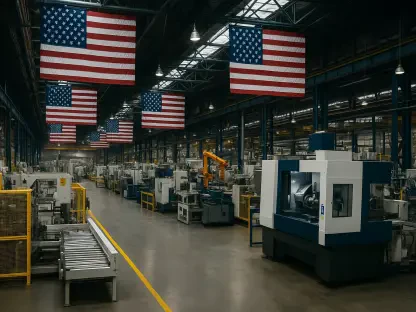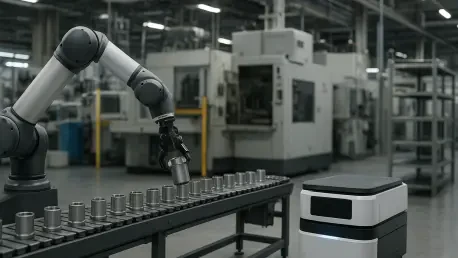

The rhythmic thud of a hydraulic press and the repetitive sweep of a robotic arm have long defined the factory floor, yet a profound quietude is settling over traditional automation as machines begin to think rather than just move. This evolution marks a departure from the “dumb” industrial robot, a machine confined to a pre-defined path, and signals the ascent of Physical AI. This technology permits hardware to not only perceive its surroundings but to make real-time decisions, effectively bridging the gap between digital intelligence and physical labor. The collaboration between Amazon Web Services (AWS) and NVIDIA represents more than a simple alliance; it is a concerted effort to dismantle “pilot purgatory,” a scenario where the vast majority of manufacturing builders find themselves unable to scale AI trials into full production environments.
This shift is crucial because the industrial sector has reached a tipping point where hardware alone no longer dictates productivity. While the sheer volume of robotic units on factory floors has increased, the software infrastructure to manage them has lagged behind, creating a bottleneck that hinders global competitiveness. By embedding cognitive capabilities directly into the steel and silicon of modern machinery, AWS and NVIDIA are transforming the factory from a place of rote repetition into an environment of true industrial autonomy. The current objective is to move beyond simple automation toward a future where a robot can adapt to a misplaced part or a changing floor layout without human intervention.
The Shift: From Pre-Programmed Scripts to Autonomous Reasoning
The era of strictly programmed industrial robots is rapidly coming to an end. For decades, automation relied on rigid scripts that required engineers to account for every possible variable before a robot ever moved. Physical AI changes this dynamic by allowing machines to process sensory data and adjust their actions based on real-time environmental shifts. This transition from reactive automation to proactive reasoning is what separates the current generation of smart factories from their predecessors. By leveraging deep learning and computer vision, robots are now capable of performing high-complexity tasks that previously required human dexterity and intuition.
The partnership between tech giants focuses on creating a seamless environment where the digital brain and the physical body of the robot work in unison. Instead of relying on a centralized, slow-moving command structure, machines are being equipped with the ability to interpret complex scenes. This reasoning allows a robotic arm to identify a damaged component on a moving conveyor belt and decide, in milliseconds, how to remove it without stopping the entire line. The result is a more resilient production cycle that prioritizes uptime and adaptability over the rigid adherence to a static code.
The Barrier: Why the Infrastructure Gap Is Stalling the Next Industrial Revolution
Despite a record five million industrial robots operating globally, the software required to manage them remains a massive bottleneck for most manufacturers. Currently, engineering teams spend a disproportionate amount of their budgets—often up to 80%—on building data pipelines and simulation environments rather than refining the AI models themselves. This discrepancy has created a significant readiness gap: while the majority of developers see Physical AI as the future, only a small fraction of companies possess the foundational infrastructure to deploy it effectively. The challenge is no longer whether a robot can perform a specific task, but whether a company can manage the massive data and latency requirements needed to run that robot across a global fleet.
Furthermore, the complexity of integrating diverse hardware platforms into a unified AI strategy has slowed progress. Manufacturers often operate with “siloed” systems where a robot from one brand cannot communicate with a vision system from another. This fragmentation prevents the collection of the high-quality, uniform data necessary to train advanced AI. Without a standardized way to move data from the factory floor to the cloud and back to the robot, scaling becomes an impossible task. This infrastructure gap is the primary reason why many AI initiatives fail to move past the initial experimental phase.
System Architecture: Deconstructing the AWS and NVIDIA Physical AI Toolchain
To address these systemic issues, a modular toolchain has been developed to handle the heavy lifting of AI development. Synthetic data generation serves as the foundation, allowing manufacturers to create millions of training scenarios in virtual environments. This approach is particularly valuable for training robots in dangerous or rare situations that are too expensive or risky to replicate on a live production line. By using virtual data, companies can ensure their AI is prepared for “edge cases” before the first physical prototype is even built.
The toolchain also integrates NVIDIA Isaac Sim, a high-fidelity simulation platform built on the Omniverse framework. This allows developers to create “digital twins” of their entire factory, where they can test safety protocols and efficiency in a risk-free space. Once the AI model is perfected in simulation, it is deployed via edge computing. This ensures the robot can process information locally and instantly, which is critical for safety in high-speed environments. The process is finalized through a continuous improvement loop, where data from the physical floor is fed back into the cloud to retrain and sharpen the model, creating a self-improving ecosystem.
Market Trends: Expert Perspectives on Speed and Market Democratization
Industry leaders emphasize that in the current manufacturing climate, speed of deployment is the ultimate competitive advantage. David Reger, CEO of NEURA Robotics, has pointed out that the ability to scale from a single unit to a massive fleet in weeks—rather than years—is what will define the leaders of this industrial shift. By making the Physical AI Toolchain open-source and modular, AWS and NVIDIA are effectively democratizing access to high-level robotics. This allows smaller manufacturers to utilize the same high-performance computing power previously reserved for global conglomerates, moving the industry toward a decentralized model of innovation.
This democratization also encourages a more collaborative approach to data sharing and model refinement. When more companies have access to the same foundational tools, the entire industry benefits from a faster iteration cycle. Developers can now focus on the unique business logic of their specific manufacturing processes rather than spending years building the underlying simulation and data capture frameworks. This shift has accelerated the timeline for Physical AI, moving it from a theoretical goal to a practical reality for a broader range of industrial players.
Execution Plan: Strategies for Transitioning from Pilot to Production Floor
For manufacturers looking to bridge the gap between testing and full-scale operation, adopting a modular infrastructure is the first critical step. Rather than building proprietary silos, companies should utilize open-source frameworks that allow for the easy swapping of AI models and hardware components. This flexibility ensures that as technology evolves from 2026 to 2028, the factory remains compatible with the latest advancements. Prioritizing a simulation-first development strategy is also essential, as it reduces physical wear and tear and minimizes the safety risks associated with testing unproven AI on the production floor.
Investing in localized edge computing capabilities is equally important for scaling. To ensure that robots can process sensor data in milliseconds, factories must move intelligence away from centralized servers and toward the machines themselves. Additionally, establishing a robust data feedback pipeline is mandatory for long-term success. Implementation is not a one-time event; it requires a systematic way to capture real-world obstacles and use them to update synthetic training sets. By focusing on innovation over foundation, engineering teams can dedicate their resources to the specialized tasks that provide a specific market edge.
The industrial world realized that the path to true autonomy required more than just faster processors; it demanded a systemic overhaul of the relationship between data and physical motion. Companies that successfully transitioned from 2026 onward were those that viewed their factories not as static assembly lines, but as dynamic, learning entities. The integration of high-fidelity simulation and edge deployment provided the necessary framework to move beyond the limitations of manual programming. This shift eventually established a new standard where the value of a factory was measured by its ability to iterate and improve its own cognitive functions. Manufacturers discovered that the most resilient strategy involved embracing modularity and prioritizing the continuous flow of data from the digital twin to the physical machine. This evolution ensured that the manufacturing sector remained adaptable in an era of rapid technological change.