
The industrial landscape currently stands at a critical juncture where the ambitious vision of a fully automated workforce clashes with the hard realities of hardware manufacturing and scalability. When the South Korean automotive titan finalized its acquisition of Boston Dynamics, the strategic objective remained clear: to forge a seamless robotics value chain that would revolutionize manufacturing hubs across the globe. However, this multi-billion dollar investment encountered a significant hurdle as the current output of humanoid systems remained stuck in low-volume prototyping phases. Internal reports suggested a growing tension between the parent company’s aggressive deployment schedule and the subsidiary’s engineering-centric culture, which prioritized technical perfection over mass-market availability. As industrial competitors accelerated their own vertical integration, the pressure to transition from high-tech demonstrations to high-volume assembly lines reached a breaking point, forcing a radical reassessment of operational workflows and leadership structures.
Bridging the Gap Between Engineering and Industrial Scale
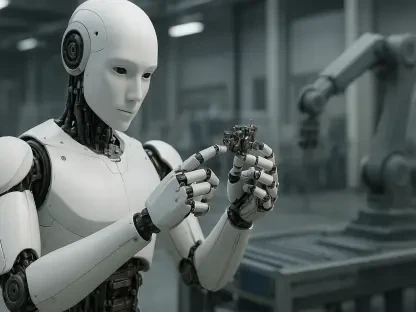
Central to this friction was the production rate of the Atlas humanoid robot, which historically functioned more as a research marvel than a commercial product. While engineering teams achieved unprecedented levels of mobility and balance, the actual delivery of these units hovered around just four per month, a figure incompatible with the mandate to deploy ten thousand robots across logistics centers. This disparity led to recent shifts in executive leadership, emphasizing a transition from experimental science to industrial pragmatism. Competitors like Tesla rapidly refined the Optimus platform for mass assembly, while Toyota leveraged partnerships to bypass internal development bottlenecks, leaving little room for error. To counter these challenges, the organization prioritized a dedicated manufacturing facility designed specifically for high-capacity output. This shift signaled a departure from laboratory-controlled testing toward the rigors of industrial performance, where the success of a robotic fleet was measured by uptime, reliability, and cost-effectiveness.
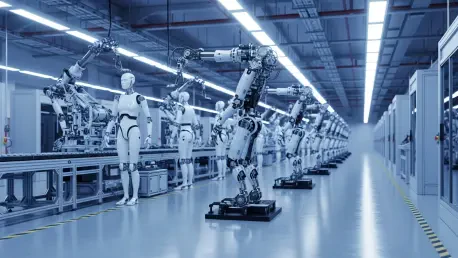
Moving forward, the primary objective shifted toward establishing a standardized hardware architecture that supported rapid iteration without compromising structural integrity. Engineers focused on modular components that simplified the assembly process, allowing for the integration of advanced sensors and actuators on a mass scale. To remain competitive, the enterprise streamlined its supply chain and adopted automated manufacturing techniques borrowed from the automotive sector. This evolution required a fundamental change in mindset, moving away from the pursuit of singular robotic breakthroughs toward the creation of a reliable, scalable labor force. By treating humanoid robots as industrial tools rather than laboratory experiments, the company paved the way for a new era of automated logistics. Future considerations necessitated a rigorous focus on field-testing data to refine maintenance protocols, ensuring that the hardware withstood the physical demands of high-volume environments while maintaining a lower total cost of ownership for global manufacturing partners.