
The traditional needle and thread are undergoing a radical transformation as the apparel industry pivots toward a future defined by software-controlled precision and autonomous robotic dexterity. This shift is most visible in the strategic alliance between Siemens and Jack Technology. They are replacing rigid mechanical systems with flexible, AI-driven architectures designed to meet the volatile demands of modern global fashion.
The Evolution of Intelligent Apparel Production
Unlike legacy factories reliant on manual labor, this collaboration leverages digital twins and integrated logic to oversee the entire garment lifecycle. By moving intelligence from hardware to a centralized software layer, manufacturers can now reconfigure lines in minutes rather than weeks. This evolution signifies a departure from mechanical machines toward interactive assets that communicate across a global network.
Core Architectural Components of AI-Driven Sewing
Intelligence Center X and AI Orchestration
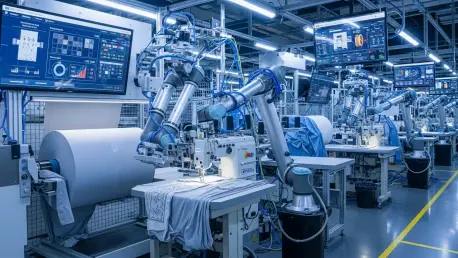
Intelligence Center X serves as the brain of the operation, coordinating every stitch through complex data flows. It does more than monitor performance; it analyzes sensor feedback in real-time to adjust tension and speed. This orchestration ensures that even delicate fabrics are handled with a consistency that human operators cannot replicate.
Agentic Low-Code Development and Digital Engineering
Through Mendix and Designcenter, the engineering process has been simplified, allowing designers to map workflows without deep programming knowledge. This low-code approach bridges the gap between a digital sketch and a physical prototype. It accelerates the development of specialized modules, making the production of custom batches as efficient as mass-produced goods.
Integration of Humanoid Robotics in the Workshop
The introduction of humanoid robots represents a peak in mechanical adaptability. These units mimic human motion to manipulate fabric—a task notoriously difficult for traditional robotics. By handling the alignment of soft goods, they free technicians to focus on higher-level quality control and system management.
Current Innovations and Software-Centric Trends
Simulation-based engineering is now the standard, where virtual models predict material behavior before a single needle moves. This trend toward digital twins allows for a “fail-fast” environment where designs are refined virtually. Creating a dedicated digital platform for sewing equipment fosters an ecosystem where software updates can improve hardware capabilities instantly.
Real-World Applications and Global Deployment
Jack Technology has deployed these systems across 160 countries to tackle the rising demand for fast fashion. Factories can now pivot between styles with minimal downtime, a capability that distinguishes this technology from competitors. This global footprint proves that localized, responsive manufacturing is finally a scalable reality for diverse markets.
Overcoming Technical and Market Challenges
Despite progress, handling pliable materials remains a technical hurdle requiring constant AI refinement. Furthermore, the high initial investment for digital transformation can be a barrier for smaller players. Addressing these issues involves specialized technical training and refining agentic workflows to reduce the complexity and cost of adoption for the wider market.
Future Outlook and the Path Toward Autonomy
Looking ahead, the goal is a 30% increase in total manufacturing efficiency by 2028. Continued breakthroughs in AI-driven robotics will likely lead to fully autonomous workshops that operate with zero-touch intervention. Such a shift will fundamentally reshape the global supply chain, making it more resilient to labor shortages.
Conclusion: Assessing the Impact of Industrial AI
The integration of Siemens’ technology into the textile sector proved that software-driven manufacturing was the only viable path for large-scale customization. This transition effectively bridged the gap between digital design and physical execution. Stakeholders determined that the next essential milestone involved the standardization of AI protocols to ensure cross-platform compatibility. Industry leaders shifted focus toward sustainable energy integration within these automated hubs to lower operational footprints. Ultimately, the successful deployment of these systems provided a definitive blueprint for other labor-intensive sectors seeking resilience.