
The pharmaceutical industry has funneled billions of dollars into high-performance computing and specialized artificial intelligence partnerships with the hope of accelerating drug discovery, yet these massive investments are meeting the stubborn reality of biological complexity. While industry leaders like Roche and AstraZeneca have consistently championed the potential of neural networks to identify novel compounds, the actual output from the laboratory tells a different story of persistent delays. Diogo Rau, the Chief Information and Digital Officer at Eli Lilly, recently observed that despite the hype, the revolutionary breakthrough in fundamental research remains elusive. The primary obstacle remains the inherent unpredictability of human biology, which does not always conform to the predictive models generated by even the most advanced silicon-based systems. This disconnect creates a significant gap between the speed of digital design and the mandatory, multi-year timelines required for clinical validation, leading many to question the immediate efficacy of research-focused AI.
Optimization: Realizing Value in Manufacturing
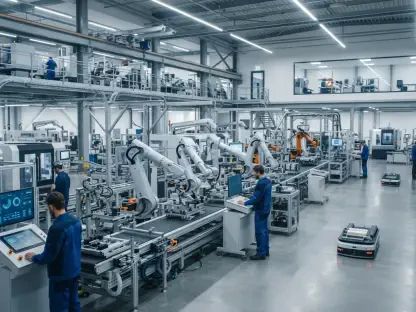
In contrast to the experimental uncertainty of drug discovery, the application of machine learning within pharmaceutical manufacturing and administrative operations has yielded immediate and measurable financial returns. Eli Lilly successfully utilized sophisticated digital twin technology to optimize the production of tirzepatide, the active ingredient found in high-demand metabolic treatments like Mounjaro and Zepbound. By simulating thousands of variables, engineers identified precise pressure and temperature configurations that significantly increased output while reducing overall production time. This shift toward operational AI allows companies to streamline complex supply chains and automate back-office functions that were previously labor-intensive. Analysts estimate that focusing on these logistical and mechanical optimizations could save the United States pharmaceutical sector roughly $90 billion over the next five years. This practical approach leverages data to solve tangible problems, proving that AI is currently a powerhouse for efficiency even if it struggles with the lab.
The Path Forward: Balancing Innovation and Infrastructure
Strategic leaders moved beyond the initial fascination with automated discovery to prioritize the integration of AI across the entire value chain, focusing on clinical trial design and logistical resilience. To bridge the gap between design and delivery, firms implemented advanced data architectures that unified disparate operational silos, allowing for more agile responses to manufacturing bottlenecks. It became clear that the most effective path involved using predictive analytics to better select patient cohorts for trials, thereby reducing the failure rates that plagued earlier digital initiatives. Organizations also modernized their regulatory compliance frameworks by deploying automated documentation systems, which cut months off the administrative approval process. These actions demonstrated that the true strength of technology lay in its ability to refine human processes rather than replacing biological experimentation. By investing in digital infrastructure, the industry secured a stable foundation for growth.