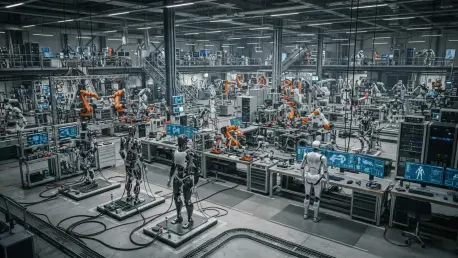

The collaboration with academic institutions in North Gyeongsang aims to customize robot hardware and software to meet specific local manufacturing requirements. This strategic move by Matrix Robotics, a firm founded by visionary engineers previously associated with the Tesla Optimus project, signifies a transformative shift in the global robotics landscape as the company establishes a dedicated research and development hub in South Korea. By positioning itself within one of the most technologically advanced manufacturing corridors in Asia, the organization intends to bridge the gap between theoretical artificial intelligence and practical robotic application. The initiative focuses on the creation of high-fidelity ‘physical artificial intelligence,’ allowing humanoid systems to interact naturally with their surroundings. This development comes as the firm transitions from its successful MATRIX-3 model toward the highly anticipated MATRIX-4 iteration, which is scheduled for debut in May 2026.
Innovation: Training Data and Physical AI
The primary mission of the new R&D center involves the systematic collection of high-quality training data from diverse, real-world environments across South Korea’s industrial and service sectors. Matrix Robotics maintains that for humanoid robots to achieve true commercial viability in unpredictable settings like luxury hotels or residences, they must evolve far beyond the constraints of pre-programmed tasks. This strategy emphasizes a self-learning architecture where robots are capable of autonomously correcting their own operational errors and maintaining safety standards without human intervention. By utilizing large-scale data sets harvested from Korean factory floors, the company seeks to refine the decision-making algorithms of its systems. This emphasis on field validation serves as a decisive factor for maintaining a competitive edge in a market where general-purpose capabilities are now the standard for next-generation robotic platforms.
Since its inception, Matrix Robotics has demonstrated an aggressive growth trajectory, already securing orders for approximately 1,000 humanoid units designed for various commercial applications. The technical evolution from the current MATRIX-3 to the upcoming MATRIX-4 platform represents a significant leap in motor efficiency and sensor integration. This progression is not merely about incremental improvements but rather about preparing for large-scale mass production that is specifically tailored to the unique demands of local markets. The South Korean initiative provides the necessary infrastructure to test these mass-production models in rigorous settings before they are deployed across the broader Asia-Pacific region. By focusing on localized hardware adjustments, such as specialized end-effectors for assembly lines, the company ensures that its humanoid robots provide immediate value. This approach minimizes the downtime associated with integrating new automation technologies into the workplace.
Expansion: Global Hub Strategy and Implementation
The cooperation framework established in South Korea is built upon three primary pillars: the co-development of robotic products with local industry experts, the creation of specialized training grounds to verify performance in actual working conditions, and the establishment of a robust domestic distribution network. Matrix Robotics views the Korean peninsula not just as a consumer market, but as a vital strategic hub for its international expansion plans. The company intends to leverage the favorable policy environment and the high density of technological expertise in the region to facilitate its entry into other major markets, including Hong Kong and Macao. This expansion strategy underscores a broader industry shift where localized research and real-world data integration are becoming essential for the commercial success of general-purpose robotics. By engaging directly with manufacturers, the firm aims to transition from a localized manufacturer into a dominant regional player.
Industry leaders recognized that the successful integration of humanoid systems required a shift from isolated laboratory testing to integrated field operations. To ensure long-term scalability, organizations prioritized the development of interoperable software frameworks that allowed humanoid robots to communicate seamlessly with existing warehouse management systems. Stakeholders invested heavily in localized R&D hubs to address the unique physical constraints of different regional infrastructures, which ultimately reduced the cost of implementation by significant margins. Professionals in the sector adopted a data-driven approach to safety, utilizing real-world feedback loops to refine the autonomous behaviors of their robotic fleets. These actions paved the way for a more resilient supply chain where general-purpose robots complemented the human workforce in high-precision tasks. Future considerations centered on the standardization of ethical AI protocols for the industry.