
Rigorous engineering workflows, including mathematical sizing and control architecture design, have paved the way for a new standard in automated furnace charging. For decades, the steel industry has grappled with the inherent dangers of manual scrap metal charging, where operators are forced to stand at the precipice of molten baths reaching thousands of degrees. This traditional approach is not only perilous but also limits the overall efficiency of electric induction furnaces, which are prized for their precision but hampered by the variability of human labor. A recent collaborative effort between mechanical engineers from Kyambogo University in Uganda and Aalborg University in Denmark has resulted in a sophisticated solution to this bottleneck. By integrating advanced robotics with a sliding mechanical base, the team has developed a system that removes the human element from the heat. This transition to automation addresses the urgent need for safer environments while pushing industrial throughput and modernization in an era where domestic manufacturing is seeing a significant resurgence.
Innovations in Robotic Mobility and Adaptability
The foundation of this technological leap lies in the development of a two-axis sliding base, which serves as the mounting platform for a specialized industrial manipulator. Unlike conventional fixed robots that require massive, expensive arms to reach disparate areas of a factory floor, this system utilizes perpendicular horizontal tracks to navigate between scrap stockpiles and the furnace mouth. This configuration creates an expansive rectangular working envelope, providing the necessary reach without compromising the structural integrity or precision of the robot. In high-temperature foundry environments, stability is paramount, and the sliding mechanism offers a much more robust alternative to fully mobile or wheeled units. These mobile platforms often encounter difficulties with floor debris and the significant recoil forces generated when handling heavy metal scrap. By opting for a fixed-track system, the design maintains pinpoint accuracy while ensuring the robot can operate continuously within the harsh constraints of a busy steel remelting facility.
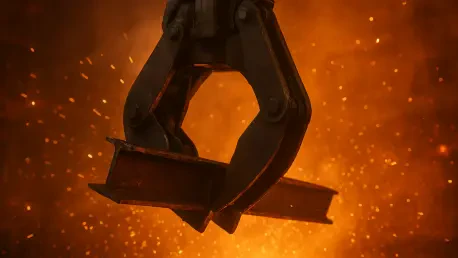
To address the unpredictable nature of scrap metal feedstock, the robotic system incorporates a set of interchangeable end effectors. Scrap materials in a typical foundry range from small, shredded fragments to large, bulky structural beams and engine blocks, making it impossible for a single universal gripper to maintain a secure hold. The inclusion of an automated tool-changing mechanism allows the robot to select the most appropriate attachment for each specific load, effectively preventing the mechanical fumbling that often plagues less sophisticated automated systems. This adaptability is critical for maintaining a steady charging rate, as it ensures that the furnace is fed with a consistent volume of material regardless of the scrap geometry. Furthermore, the ability to swap tools on the fly reduces downtime and minimizes the need for manual intervention when the feedstock characteristics change. This level of versatility transforms the robot from a simple repetitive machine into a dynamic industrial tool.
Data-Driven Engineering and Virtual Validation
A distinguishing feature of this research project was its reliance on empirical data harvested directly from the factory floor. The engineering team conducted extensive field observations at three active steel manufacturing plants to understand the real-world constraints of furnace operations. This data collection phase included measuring current charging rates, analyzing production cycle durations, and mapping the physical layout of the induction furnaces. By grounding their design in these practical parameters, the researchers were able to ensure that the robotic system was not just a theoretical concept but a viable industrial solution. This approach allowed for the precise calculation of necessary torque, speed, and load-bearing capacities required for the sliding base and the robotic arm to function effectively. The integration of actual operational data ensured that the resulting control architecture and software logic were perfectly synchronized with the existing rhythms of a high-capacity foundry.
Before any physical components were fabricated, the entire system underwent a comprehensive simulation-based evaluation and Finite Element Analysis. This process involved creating a high-fidelity digital twin of the charging system and subjecting it to extreme structural and thermal stresses. The simulation was vital for verifying that the chosen materials and mechanical joints could withstand the punishing radiant heat emitted by the molten bath, which can compromise the integrity of sensitive electronics and structural steel over time. By testing the virtual model against worst-case scenarios, the researchers were able to refine the cooling systems and structural reinforcements needed for long-term durability. This phase of virtual commissioning significantly de-risks the investment for steel manufacturers, as it provides a data-backed proof of concept before capital is committed to hardware production. The use of advanced modeling software also allowed for the optimization of the robot’s movement paths.
Measurable Gains in Productivity and Throughput
The most significant outcome of the performance evaluation was a measurable surge in industrial productivity. Comparative analysis revealed that traditional manual and semi-mechanized charging methods currently achieve a throughput of approximately 73 kilograms per minute. In contrast, the simulated two-axis robotic system reached a charging rate of 87 kilograms per minute, representing a 19 percent increase in efficiency. When this improvement is viewed through the lens of a standard two-and-a-half-hour production cycle, the impact becomes even more profound. The robotic system is capable of charging roughly 13 tons of scrap into the furnace within this timeframe, outperforming human crews by approximately two full tons per cycle. In the competitive landscape of steel manufacturing, where profitability is dictated by the volume of metal processed, these gains are transformative. This increased speed allows for more melting cycles per shift, effectively boosting the total annual output of a facility.
Beyond the raw volume of metal processed, the consistency provided by the robotic system offers significant secondary benefits. Because the robot can deliver scrap at a steady, predictable pace, the furnace is able to maintain a temperature closer to its optimal operating point. Manual charging often leads to fluctuations in the molten bath temperature, as human operators may add too much material at once or experience fatigue-induced delays. These temperature drops force the induction furnace to consume more electrical energy to recover, leading to higher operational costs and unnecessary wear on the heating elements. Furthermore, maintaining a stable temperature is crucial for the chemical integrity of the melt. Rapid and consistent charging prevents the drift of the alloy’s chemical composition, which can occur when the bath remains open and exposed to the atmosphere for extended periods. By optimizing the furnace interface, the robotic system ensures that every batch of steel produced meets the highest standards.
Prioritizing Worker Safety and Industrial Evolution
The introduction of automated charging systems serves as a critical intervention in one of the most hazardous work environments in heavy industry. Currently, foundry workers face a barrage of environmental threats, including the inhalation of toxic fumes released when coatings, oils, and impurities in the scrap metal are vaporized. The radiant heat from the furnace mouth can cause severe thermal exhaustion and long-term health complications for those required to work in close proximity to the melt. Moreover, the risk of molten metal splashes, often triggered by moisture or trapped air within the cold scrap, presents a constant danger of life-threatening injury. By delegating the task of charging to a robotic manipulator, these risks are eliminated at the source. The system creates a physical barrier between the workforce and the dangers of the furnace, allowing operators to monitor the process from a safe distance or a climate-controlled booth. This shift protects the health of the employees.
This research initiative provides a strategic roadmap for the integration of Industry 4.0 principles within markets that have historically had lower digital maturity. Many previous studies in industrial robotics have focused on high-precision sectors like automotive assembly, often overlooking the needs of the heavy remelting and foundry industries. The collaboration between Kyambogo and Aalborg Universities demonstrates that advanced automation can be successfully adapted to the gritty, high-heat reality of steel manufacturing in developing regions. By focusing on a design that is both technologically sophisticated and practically attainable, the team has created a blueprint that can be replicated across various industrial sectors. This movement toward digital transformation is essential for enhancing the global competitiveness of local steel producers, as it allows them to adopt modern manufacturing standards without the need for prohibitively expensive, imported turnkey solutions. The project highlights how targeted engineering can solve local challenges.
Strategic Implementation: Beyond the Laboratory
The successful completion of the design and simulation phase marked a pivotal moment in the modernization of foundry operations. The research team proved that a two-axis sliding robotic system could effectively bridge the gap between human labor and full industrial automation. By validating the productivity gains and safety enhancements through a high-fidelity digital twin, the engineers provided the necessary evidence to justify the transition toward physical prototyping. It was observed that the system’s ability to handle irregular scrap was the primary factor in its superior performance over stationary robotic units. These findings demonstrated that the integration of adaptable end effectors was not merely a convenience but a structural necessity for the automation of secondary steelmaking. The study successfully identified the precise mechanical and thermal thresholds required for components to operate reliably in the vicinity of an induction furnace. This groundwork established a clear path forward for manufacturers.
Following the validation of the simulated model, the focus shifted toward the practical considerations of site-specific installation and operator training. The research underscored the importance of developing a modular control interface that could be easily integrated with current furnace monitoring systems. This allowed for a more seamless transition, as plant managers were able to visualize the impact on their daily production schedules before committing to a full-scale rollout. The collaborative effort also emphasized the need for a comprehensive maintenance framework to ensure the longevity of the sliding tracks and robotic joints in the dusty, high-heat environment of the melt shop. By prioritizing a design that was robust yet easy to maintain, the team ensured that the technology remained accessible to facilities with varying levels of technical expertise. Ultimately, the project provided a definitive answer to the chronic challenges of furnace charging, offering a solution that enhanced the well-being of the workforce.