
The comfortable myth of the industrial air-gap has officially shattered under the weight of interconnected systems that bridge corporate office spaces with high-stakes production floors. This erosion of isolation has left critical infrastructure vulnerable to a new breed of lateral threats that move effortlessly between administrative networks and physical machinery. Operational Technology (OT) attack mapping has emerged as the essential countermeasure, providing a comprehensive way to visualize and secure these previously invisible pathways. This review examines how modern discovery and analysis tools are transforming the way industrial organizations manage their security posture in an era where the boundary between IT and OT has all but vanished.
Defining OT Attack Mapping and the Shift in Industrial Security
Modern industrial security relies on dismantling the “segmentation illusion,” a pervasive but false belief that Programmable Logic Controllers (PLCs) and SCADA systems remain isolated from the outside world. Research indicates that approximately 30 percent of OT assets are only one network hop away from an internet-exposed device, and 90 percent are within two hops. This reality renders traditional perimeter-based defenses insufficient, as a single compromised laptop in a corporate office can lead an attacker directly to a factory floor.
The emergence of attack mapping technology represents a fundamental shift toward a zero-trust mindset within industrial environments. By identifying the specific routes an adversary might take, organizations can move away from reactive monitoring toward proactive defense. This approach focuses on understanding the context of every connection, ensuring that visibility into internal lateral movement is treated with the same urgency as firewall logs. It provides the necessary clarity to manage the complex, often undocumented pathways that modern attackers exploit to disrupt essential operations.
Core Components of Modern OT Discovery and Path Analysis
Active Scanning Engines and Industrial Protocol Fingerprinting
A major hurdle in OT security has been the fragility of legacy equipment, which often crashes when subjected to standard IT scanning techniques. To address this, modern discovery engines utilize proprietary active scanning that has been validated by national laboratories to ensure non-disruptive operation. These engines query devices in their native tongues, allowing for deep fingerprinting without overwhelming the limited processing buffers of older hardware. This level of detail is crucial for identifying the specific firmware versions and hardware models that may harbor known vulnerabilities.
Sub-Asset Enumeration and Gateway Visibility
The most significant blind spot in manufacturing and energy sectors exists behind industrial protocol gateways. When a Modbus or BACnet gateway aggregates data from dozens of field sensors, those downstream devices usually remain invisible to standard network management tools. Advanced mapping technology now “tunnels” through these gateways to enumerate every sub-asset, providing an exhaustive look at the field-level devices governing physical operations. By uncovering these unmappable assets, security teams can finally account for the entire breadth of their hardware footprint.
Multi-Homed Device Detection and Bridge Identification
Dual-homed workstations and multi-interface servers serve as the primary bridges that bypass intended network segmentation. Modern mapping tools automatically detect these multi-homed devices, pinpointing exactly where a machine is connected to two or more disparate subnets simultaneously. This automated identification eliminates the manual labor of correlating MAC addresses and IP tables, highlighting physical bridges that would otherwise remain hidden. Identifying these “choke points” is vital, as they represent the most efficient path for an attacker to jump between secure zones.
Innovations in Visualizing the Industrial Attack Surface
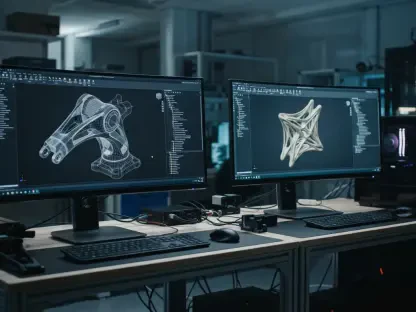
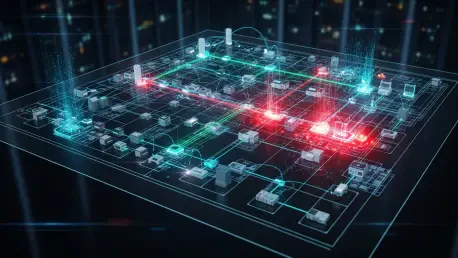
The transition from static asset spreadsheets to interactive 2D and 3D topology maps has fundamentally changed how engineers perceive and manage risk. These visualizations offer a dynamic look at the network, allowing teams to spot “misplaced” items—such as a personal laptop or an unauthorized wireless access point in a production zone—that violate security policies. Unlike traditional maps that only show connectivity, these modern interfaces model relationship hierarchies, making it easier to understand which systems are dependent on specific gateways or controllers.
Practical Applications in Critical Infrastructure and Manufacturing
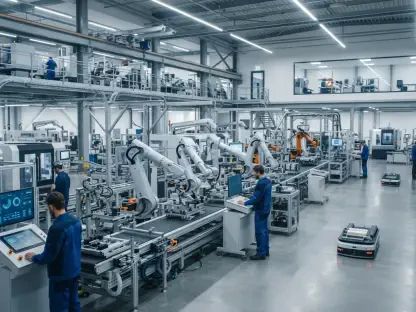
In the energy sector, these tools are being deployed to trace potential lateral movement from a compromised administrative portal down to a high-value turbine controller. By identifying the specific trajectory an attacker might take, operators can prioritize hardening efforts on the assets that serve as the most likely transit points. In manufacturing, this technology helps verify that a newly commissioned production line actually adheres to the organization’s segmentation standards. This context-driven approach prevents the alert fatigue common in traditional monitoring by focusing on the risks that directly impact physical safety and uptime.
Overcoming the Challenges of Fragile Industrial Environments
Many industrial protocols were built decades ago without security in mind, making them “insecure by design” and difficult to monitor. While expanded protocol libraries for systems like Siemens S7comm and Triconex have improved visibility, the technical hurdle of scanning 30-year-old hardware remains. Developers are mitigating these limitations through validated, low-bandwidth scanning techniques that respect the strict timing requirements of real-time industrial processes. This ongoing refinement of discovery methods ensures that even the most sensitive equipment can be mapped without risking a production halt.
The Evolution of OT Security Posture Management
The future of the field involves a shift from passive observation to the active verification of security posture. Instead of assuming a firewall is working as intended, organizations are moving toward automated risk prioritization that simulates breach scenarios. This evolution will likely see the integration of more sophisticated automated responses that can isolate compromised segments the moment a breach is detected. As global infrastructure becomes more interconnected, the ability to rapidly verify and adjust security configurations will be the cornerstone of industrial resilience.
Securing the Modern Industrial Landscape
The review of modern OT attack mapping revealed a technology that has finally outpaced the rapid convergence of industrial and corporate networks. It demonstrated that the air-gap was often a mental construct rather than a physical reality. Organizations were shown that visibility must extend beyond the gateway to the very edge of the field-level environment. Moving forward, the priority must shift toward the continuous validation of network segmentation and the elimination of unauthorized bridges. By treating industrial networks with the same rigor as cloud environments, critical infrastructure providers can build a proactive defense that anticipates threats before they reach the physical kill chain. This comprehensive mapping approach ensures that the complex pathways of modern industry are no longer left in the dark.