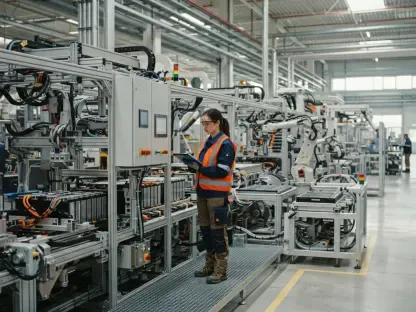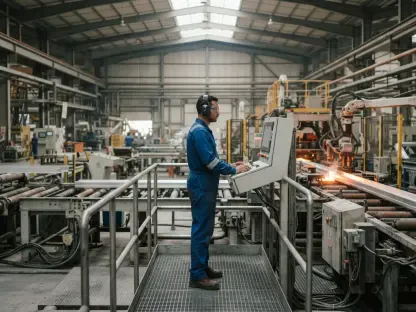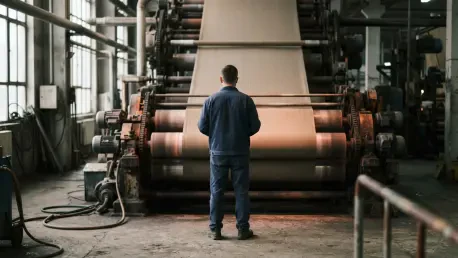

Integrating seven feed rollers for tension and three heated cylinders for drying creates a complex mechanical environment where thermal history determines the final product quality. Within the textile industry of 2026, the demand for high-efficiency manufacturing has pushed researchers to reconsider traditional drying methods that historically consumed massive amounts of energy and water. By employing advanced mathematical modeling, engineering teams from institutions like the University of Florence have begun to move beyond the antiquated trial-and-error approach that characterized previous decades. The focus of this modern research involves a specialized vacuum chamber configuration operating at sub-atmospheric pressures. By maintaining a pressure of 0.1 bar, the thermodynamic properties of the moisture within the fabric are fundamentally altered, significantly reducing the vaporization temperature. This shift allows for a more controlled and energy-efficient removal of water, preventing the fiber degradation often caused by excessive heat. The objective is to create a digital framework that predicts exactly how heat and mass move through the porous layers of fabric as it travels over heated cylinders, providing a reliable roadmap for optimizing throughput without sacrificing material integrity.
The integration of these computational strategies is particularly vital as the industry transitions toward more sustainable processing fluids. While water has been the primary solvent for centuries, the move toward pressurized carbon dioxide systems requires a precise understanding of contact drying mechanics. The current research uses low-pressure water evaporation as a critical baseline, proving that numerical simulations can accurately replicate the intense thermal gradients found in industrial dryers. In this specific setup, three primary cylinders are heated to 150 degrees Celsius, creating a temperature difference of over 100 degrees above the boiling point at 0.1 bar. This extreme gradient facilitates near-instantaneous evaporation at the contact surface, yet it also presents a challenge in maintaining uniform dryness throughout the fabric’s thickness. By simulating these dynamics, manufacturers can fine-tune roller speeds and cylinder temperatures to achieve the perfect balance between speed and quality, ensuring that every yard of fabric meets stringent industrial standards for residual moisture content.
The Mathematical Framework
Model Assumptions and Spatial Geometry
To describe the intricate physics occurring within a drying fabric, researchers developed a one-dimensional spatial model that focuses primarily on the material’s thickness. Although textiles are inherently three-dimensional porous structures composed of interlaced yarns, a one-dimensional approach is highly effective for industrial simulations where cross-sectional uniformity is assumed. By treating the fabric as a periodic weave of warp and weft yarns, the model analyzes the heat and moisture transfer along the axis normal to the cylinder surface, denoted as the interval from the contact point to the outer ambient surface. This simplification is not merely a convenience; it allows for high computational efficiency, enabling the simulation to run in real-time or near-real-time environments. Such efficiency is crucial for adaptive control systems that must respond to fluctuations in fabric weight or initial moisture levels during a high-speed production run.
Beyond the spatial simplification, several physical assumptions were implemented to streamline the simulation without losing essential accuracy. The model neglects the resistance to vapor transport through the internal pores of the fabric, a decision justified by the massive expansion ratio of water when it transitions into steam at low pressure. As liquid turns to vapor, it creates an internal pressure gradient that rapidly drives the steam out of the material, making pore resistance a secondary factor compared to the rate of vaporization. Additionally, the simulation assumes perfect mechanical contact between the fabric and the heated rollers, which aligns with experimental observations where no macroscopic bubbling or detachment was detected. Finally, internal liquid movements such as capillary action were omitted because the fabric is extremely thin and the contact time with each cylinder is too brief for significant moisture migration to occur independently of the drying front.
Governing Equations for Energy and Mass
The core of the predictive capability lies in two coupled partial differential equations that track the simultaneous evolution of temperature and moisture concentration. The thermal component of the model is represented by a non-homogeneous heat equation that accounts for the dynamic change in the fabric’s material properties. Unlike static materials, the density and specific heat capacity of a wet textile evolve as the moisture is removed. To handle this, researchers employed an effective composite property approach, where the specific heat is calculated as a mass-weighted average of the dry fiber and the remaining liquid water. Furthermore, the effective thermal conductivity was modeled to increase linearly with moisture content until reaching a saturation threshold. This ensures that the simulation accurately reflects how a wet fabric conducts heat more readily than a dry one, a critical factor in predicting how quickly the core of the material will reach the required evaporation temperature.
Tracking moisture depletion required a dedicated mass balance equation governed by a first-order rate of evaporation. A sophisticated temperature-activation logic was integrated into this equation to ensure that moisture is only removed once the local temperature exceeds the boiling point associated with the 0.1 bar pressure. To maintain the numerical stability of the finite element solvers, researchers avoided sharp mathematical step functions, which often cause arithmetic errors or “chatter” in the results. Instead, they utilized smooth logistic approximations to transition between the non-evaporative and active drying states. This differentiable approach allows the solver to handle the rapid onset of boiling at the contact surface without crashing, providing a realistic representation of the intense phase change occurring at the interface where the fabric touches the 150-degree cylinder.
Implementation and Results
Boundary Conditions and Sequential Drying
The physical reality of an industrial dryer involves asymmetrical heating, where one side of the fabric is pinned against a hot surface while the other is exposed to a low-pressure environment. The mathematical model reflects this through distinct boundary conditions for each interface. At the contact side, a Dirichlet boundary condition fixes the fabric temperature to that of the cylinder, while the moisture is assumed to vanish instantly due to the surface heat. On the opposite side, a Robin-type boundary condition accounts for heat loss through both convection into the low-pressure vapor and radiation to the surrounding chamber walls. By calculating radiative heat transfer using the Stefan-Boltzmann constant, the model provides a comprehensive view of the energy balance, ensuring that the cooling effect of the ambient environment is factored into the final dryness calculations.
Implementing the model for a multistage drying process required unique handling of the fabric’s path through the machinery. In a standard three-cylinder setup, the fabric is routed such that it flips between each roller, meaning the side that was touching the first cylinder becomes the side exposed to the air on the second. To simulate this accurately, researchers developed a spatial inversion logic that mathematically flips the temperature and moisture fields across the domain between each drying stage. The entire system was coded using the FEniCS library in Python, which utilized a finite element method to discretize the fabric thickness into 100 distinct segments. To ensure the model matched real-world behavior, the Trust Region Reflective algorithm was employed to optimize unknown parameters, such as the evaporation rate coefficient, by minimizing the difference between the simulation and experimental data collected from industrial samples.
Insights into Internal Fabric Dynamics
The validation of the model against independent fabric samples yielded a Mean Squared Error of only 0.000289, demonstrating that the mathematical framework is exceptionally reliable for industrial applications. Most tested samples showed an absolute error of less than 0.015 in residual moisture, proving that the model can be generalized across different fabric types and initial moisture conditions. However, the true value of the simulation lay in its ability to reveal the internal state of the textile, which is physically impossible to measure during a high-speed production run. The data revealed the formation of “bell-shaped” moisture profiles, where the outer surfaces of the fabric reached a dry state almost immediately, while the central core retained a higher concentration of liquid. This insight allowed engineers to understand that for thicker materials, the speed of the line must be carefully modulated to allow enough time for heat to penetrate the central layers and drive out the remaining moisture.
The researchers concluded that while the one-dimensional model successfully captured the primary dynamics of contact drying, future developments would benefit from incorporating inter-roller cooling effects. The current study confirmed that the intense heat of the cylinders dominated the drying process, yet the brief transit times between rollers still introduced subtle thermal shifts. As the textile industry moved toward the implementation of waterless finishing systems using pressurized carbon dioxide, this validated framework served as a critical foundation. By substituting the thermodynamic constants of water with those of CO2, the industry was able to adapt these models for next-generation, eco-friendly machinery. The success of this computational approach demonstrated that mathematical modeling was not just a theoretical exercise but a practical necessity for the transition to high-precision, sustainable manufacturing. This path forward provided the actionable data needed to design machines that operate at peak efficiency while maintaining the highest possible quality for modern textile products.