
Global electronic waste has reached staggering proportions, forcing industry leaders to rethink how they manage the lifecycle of consumer goods to prevent a complete depletion of finite resources. Panasonic is currently spearheading this transformation by shifting from a linear “take-make-dispose” model toward a sophisticated circular economy that prioritizes resource recovery through cutting-edge technology. By implementing automated disassembly lines near existing production hubs, the company has created a closed-loop system where recovered materials are instantly reintegrated into the manufacturing stream. This strategic pivot is not merely a response to environmental pressures but a calculated move to secure supply chains against the rising costs of critical metals like copper and cobalt. As these materials become harder to extract through traditional mining, the ability to harvest them from old appliances provides a competitive edge that ensures long-term operational resilience and stability in an increasingly volatile global market.
Virtual Planning and System Simulation
Utilizing Digital Twins: Virtual Blueprinting
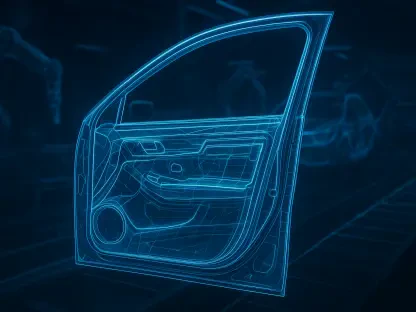
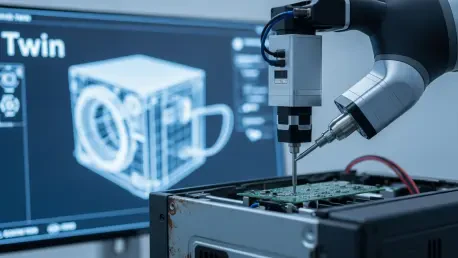
The operational framework of this automated recycling process begins with a robust Cyber-Physical System that constructs a detailed digital twin of every disassembly line. Engineers utilize advanced 3D design software to model the intricate internal components of appliances such as air conditioners and washing machines, simulating the exact sequence of actions required to take them apart. This virtual environment allows for the testing of various robotic movements and tool paths without risking damage to physical equipment or wasting valuable resources on the factory floor. By analyzing these simulations, the company identifies the most efficient ways to isolate and separate high-value materials, ensuring that the process is optimized before the first screw is even turned. This data-driven approach significantly reduces the development time for new recycling lines, enabling a faster response to the influx of diverse product models that enter the waste stream annually.
Beyond simple modeling, these digital twins allow for a level of precision that was previously unattainable in manual recycling operations. By analyzing the structural integrity of virtual components, the system predicts potential failure points during the disassembly phase, allowing for the pre-emptive adjustment of robotic torque and speed. This meticulous planning ensures that brittle plastics or sensitive electronic boards are removed without breakage, which is essential for maintaining the purity of recovered materials. High-purity recycling is the cornerstone of the circular model, as it allows materials to be used in high-grade manufacturing rather than being downcycled into lower-quality products. The integration of virtual planning into the corporate workflow represents a fundamental shift in how manufacturing assets are managed, treating the end-of-life phase with the same level of engineering rigor typically reserved for the assembly of brand-new products.
Generative AI and IoT: Enhancing Workflow Standards
The integration of the Internet of Things and generative artificial intelligence has further refined these simulations by digitally reconstructing dynamic physical workspaces in real-time. This sophisticated technology helps the company standardize complex workflows across multiple global facilities, ensuring that every recycling center operates with the same high level of efficiency. By feeding real-world operational data back into the generative AI models, the system can autonomously suggest improvements to the disassembly sequence, identifying bottlenecks that may not be apparent to human observers. This continuous feedback loop is a central component of the broader “Green Impact” initiative, which seeks to harmonize environmental sustainability with industrial productivity. The intelligence gathered from these virtual simulations also informs future product design, creating a direct link between the recycling facility and the design studio to ensure ease of disassembly.
Achieving high-quality resource recovery depends heavily on the ability to maintain material purity throughout the automated process. Generative AI plays a critical role here by simulating the degradation of various materials over time, allowing the system to anticipate how aged plastics or corroded metals will react to mechanical stress. This foresight prevents the contamination of recycled batches, as the robots can be instructed to isolate degraded parts that might otherwise lower the value of a larger material stream. By planning for the end of a product’s life during the initial design phase, the company ensures that recovered metals and plastics remain high in purity and market value. This strategy not only supports internal manufacturing needs but also contributes to a more stable global supply of recycled materials. The systematic application of these digital tools underscores a commitment to a future where waste is no longer a byproduct but a source of raw materials.
Precision Robotics and Adaptive Automation
Overcoming Material Degradation: AI-Enhanced Vision
Real-world appliances present a unique challenge for automation because they rarely arrive at recycling centers in pristine condition. Most units are covered in years of accumulated dirt or rust, which can obscure essential fasteners and make it difficult for standard robotic systems to function. To solve this, Panasonic utilizes autonomous robots equipped with AI-powered machine vision systems that can accurately identify parts regardless of their external state. These cameras use advanced image recognition algorithms to locate screws, clips, and joints even when they are partially obstructed or heavily worn. Unlike traditional industrial robots that rely on rigid, pre-set instructions, these adaptive systems use real-time visual data to adjust their approach for every individual unit. This flexibility is vital for processing millions of varied appliances that have been subjected to diverse environmental conditions, transforming unpredictable waste into a predictable and manageable material input.
The sophistication of these vision systems allows for the detection of subtle differences between product versions that might have been manufactured in different years or regions. By cross-referencing visual data with a comprehensive database of product designs, the AI can instantly determine the internal layout of an appliance, even if the exterior casing is damaged. This capability eliminates the need for manual pre-sorting, as the robotic system can identify the specific requirements of an air conditioner or microwave as soon as it enters the workcell. Furthermore, the machine vision technology is capable of detecting hazardous components, such as leaking capacitors or damaged batteries, which require special handling. By identifying these risks before the disassembly begins, the system protects the physical hardware and ensures that the recovery process remains safe and efficient. This adaptive automation is the key to scaling the circular economy, allowing for high-volume processing without sacrificing precision.
Robotic Hardware Integration: Precision and Scale
Once the AI vision system has identified the necessary components, a six-axis robotic arm takes over to perform the physical extraction with high-precision tools. These robotic arms are capable of handling a wide variety of tasks, from the delicate removal of small screws to the forceful separation of heavy metal frames. The integration of specialized sensors in the robotic grippers allows the system to feel the amount of resistance encountered, enabling it to apply just enough pressure to remove a part without causing unnecessary damage. This level of dexterity is essential for harvesting valuable internal components, such as copper coils and high-grade circuit boards, which must remain intact to be effectively recycled. By automating these repetitive and physically demanding tasks, the company can process millions of units that would be impossible to handle through manual labor alone, significantly increasing the throughput and economic viability of the recycling centers.
These robotic workcells serve as a critical bridge between the messy reality of consumer waste and the sterile requirements of modern manufacturing facilities. By converting discarded appliances into clean, categorized, and reusable materials, the automated system ensures that the manufacturing loop remains truly closed. The efficiency of these robots also reduces the energy consumption associated with material recovery, as the precise movements require less power than traditional shredding and sorting methods. Additionally, the ability to recover materials on-site or near production plants minimizes the carbon footprint associated with transporting bulky waste or raw materials over long distances. As the technology continues to evolve, these robotic systems will become even more integrated into the global supply chain, providing a reliable and sustainable source of metals and plastics. This transition to robotic disassembly represents a major milestone in industrial history, proving that large-scale recycling can be profitable.
Moving forward, the industry must embrace these automated strategies to ensure that resource recovery becomes a standard component of the global manufacturing ecosystem. The success of robotic disassembly demonstrated that circularity was no longer a theoretical goal but a practical reality that was achieved through the integration of artificial intelligence and modular design. Companies were encouraged to invest in digital twin technology and adaptive robotics to secure their own material supplies and remain compliant with evolving environmental regulations. This transition required a fundamental shift in corporate mindset, moving from short-term production goals to a long-term vision of resource stewardship. By prioritizing repairability and worker safety, organizations were able to create a more resilient business model that protected both the environment and the workforce. The lessons learned from this implementation provided a clear roadmap for other sectors to follow, proving that industrial growth and sustainability could coexist.