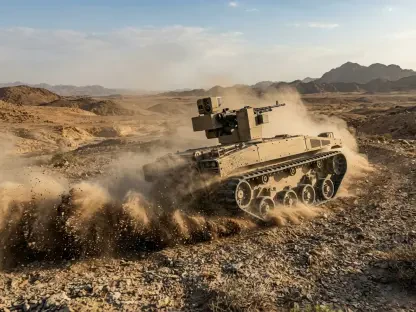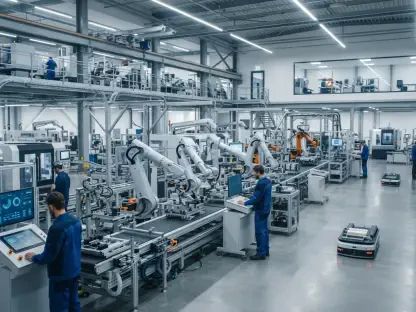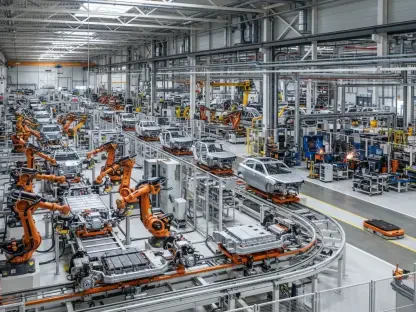

Global industrial production is currently undergoing a radical transformation as advanced physical artificial intelligence merges seamlessly with high-fidelity digital twins to create fully autonomous factory environments that require minimal human intervention. This convergence represents a departure from traditional automation, where pre-programmed machines operated in rigid cycles. Today, the focus has shifted toward systems that can perceive, reason about, and interact with the physical world in real-time. By utilizing massive datasets and neural networks, manufacturers are no longer just monitoring their assembly lines; they are teaching them to adapt to unforeseen circumstances. This evolution is driven by the necessity for extreme precision and the ability to pivot production cycles in a matter of hours rather than weeks. As global competition intensifies, the adoption of these technologies has become the baseline for operational survival. The synergy between software and hardware creates a feedback loop where physical robots learn from their digital counterparts, ensuring that every movement is optimized for speed.
Bridging the Gap: Real-Time Simulation and Physical Intelligence
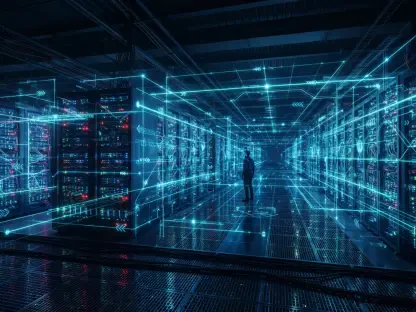
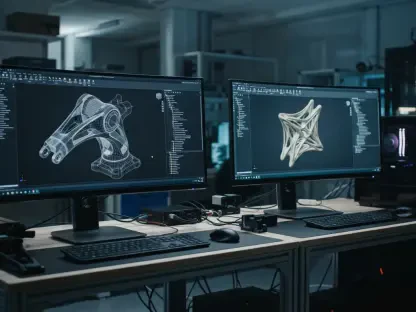
Digital twins have evolved from mere visual representations into complex, physics-based simulations that mirror every nuance of a factory floor with millimeter-level accuracy. These environments now leverage real-time ray tracing and high-fidelity physics engines to predict how materials will behave under various stressors or temperatures. By running millions of scenarios in the virtual space simultaneously, engineers can identify potential failures long before they manifest in the physical world. This predictive capability is no longer an optional luxury but a core component of lifecycle management for expensive machinery. The transition to this level of fidelity allows for the creation of synthetic data, which is used to train AI models in a risk-free environment. Consequently, the time required to calibrate new robotic arms or autonomous mobile robots has plummeted. Instead of weeks of physical testing, these systems are born with thousands of hours of virtual experience, allowing them to perform complex tasks on day one without any damage.
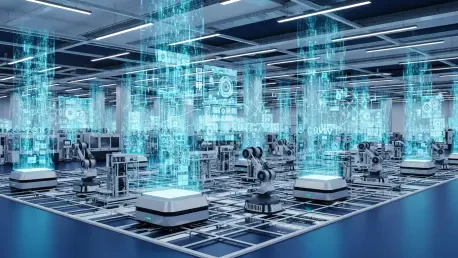
Platforms such as NVIDIA Omniverse and Siemens Industrial Copilot have become the standard for this orchestration, enabling diverse software tools to communicate through the Universal Scene Description framework. This interoperability ensures that CAD data, environmental sensors, and AI logic are all synchronized in a single truth source. Physical AI takes this a step further by embedding these trained models directly into the hardware, allowing edge devices to make split-second decisions without relying on distant cloud servers. For instance, a robotic sorter can now identify a defective component by its weight and texture, adjusting its grip strength instantly based on visual feedback. This level of responsiveness was previously impossible due to latency issues and limited processing power. In 2026, the distinction between the digital blueprint and the physical object is blurring. This leads to a self-healing environment where sensors detect signs of wear and the digital twin automatically schedules a robotic maintenance unit to replace parts during a planned break.
Strategic Implementation: Building the Autonomous Ecosystem
One of the most significant hurdles in modernizing global manufacturing was the fragmentation of data across various proprietary systems that could not communicate with one another. Historically, the design department used one set of tools, while the production floor used another, and the supply chain was managed through a third, disconnected interface. Today, unified data architectures have dismantled these silos, creating a continuous flow of information from the initial concept to the final delivery. This integration allows for a level of agility that was previously unattainable. When a designer makes a change to a product in the digital twin environment, the impact of that change is immediately calculated across the entire supply chain and manufacturing floor. Material requirements are updated, robotic paths are recalculated, and delivery timelines are adjusted automatically. This holistic view enables companies to be more resilient against global market shocks or shortages by providing a transparent view of the entire plant.
The integration of physical AI and digital twins necessitated a complete overhaul of corporate strategy and technical infrastructure within the most successful manufacturing firms. Organizations that prioritized the creation of a robust digital backbone found that they were able to scale their operations with unprecedented speed. To succeed in this environment, leaders moved beyond pilot projects and invested in comprehensive workforce retraining programs that focused on human-AI collaboration. They established strict protocols for data governance and cybersecurity to protect the integrity of their digital twins from external threats. These companies also adopted an iterative approach to implementation, starting with high-impact areas like quality control and predictive maintenance before expanding to full-scale autonomous operations. By the time these technologies reached maturity, the competitive landscape had shifted entirely toward those who could manage complexity through simulation. Moving forward, the focus turned toward creating networks where digital twins communicate to optimize global production.