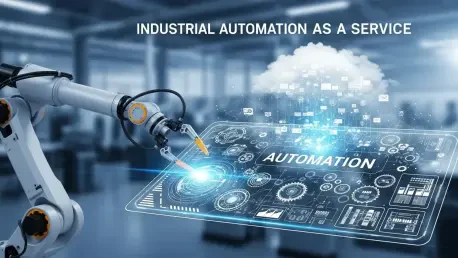

The industrial landscape is undergoing a monumental shift as facilities move away from rigid, hardware-centric architectures toward flexible, software-defined environments that prioritize operational agility. Schneider Electric, in a strategic collaboration with Hewlett Packard Enterprise, has recently unveiled a transformative model known as Industrial Automation Modernization as a Service. This initiative addresses the long-standing challenge of managing the lifecycle of complex control systems by integrating software-defined automation with hybrid cloud infrastructure. By leveraging Schneider’s EcoStruxure Automation Expert alongside HPE SimpliVity technology, the service effectively decouples industrial software from its underlying proprietary hardware. This innovation allows manufacturing enterprises to perform continuous updates without the risks of extended downtime or the prohibitive costs typically associated with full-scale system replacements. The result is a dynamic production environment that responds to market demands.
The Driving Forces Behind Industrial Modernization
Overcoming Legacy Technical Debt: The Cost of Rigidity
Many industrial sectors currently find themselves restricted by massive technical debt stemming from legacy control systems designed long before the integration of modern cybersecurity or artificial intelligence. These outdated frameworks create a state of vendor lock-in, where a facility remains tethered to a specific hardware manufacturer for decades, often leading to staggering financial losses. Current research highlights that industrial firms lose an average of eleven million dollars annually due to these rigid architectures, while for large-scale enterprises, those figures frequently exceed forty-five million dollars. The inability to pivot during supply chain disruptions or to integrate new software tools because of hardware limitations has become a primary bottleneck for global growth. Schneider Electric’s new model directly addresses these pressures by offering an alternative to traditional strategies that require total system overhauls in favor of a modernization-based evolution.
Instead of the disruptive and expensive “rip-and-replace” methodology that has plagued the sector for years, this service-based evolution allows for a modular and strategic transition. This approach acknowledges that while the hardware might be aging, the logic and processes within the system are still valuable and can be modernized incrementally through virtualization. By virtualizing the control layer, companies can maintain their operational continuity while slowly phasing out obsolete components that no longer meet performance standards. This method reduces the psychological and financial barriers to entry for digital transformation, enabling smaller plants to compete effectively on a global scale. Furthermore, it provides a predictable path for technology adoption, ensuring that even the most conservative industrial operators can modernize without jeopardizing their core production schedules. The focus remains on the longevity of the process logic rather than physical equipment.
Bridging the IT and OT Divide: A Layered Approach
The service structure is meticulously organized into three integrated layers designed to bridge the historical chasm between Information Technology and Operational Technology. It begins with a resilient infrastructure foundation powered by HPE, which provides the necessary computing power and data storage to handle high-velocity industrial workloads. This hardware layer is designed to support the demanding requirements of edge computing, ensuring that data is processed close to the source for minimal latency. Above this sits the software-defined control layer, which serves as the brain of the operation, allowing automation tasks to be managed and updated centrally across multiple geographic sites. This centralized management is a significant departure from the traditional model where each individual machine or production line required manual updates. By consolidating control, organizations can ensure that a single security patch or logic update is deployed simultaneously across the entire enterprise.
Beyond the hardware and software components, the model incorporates expert-led lifecycle services that provide the human expertise necessary for complex migration and cybersecurity optimization. As the global labor market continues to tighten, finding and retaining specialized OT personnel has become an uphill battle for many industrial organizations. This service-based approach alleviates that burden by providing access to a pool of experts who understand both legacy systems and new virtualized environments. These professionals assist in the transition, ensuring that cybersecurity protocols are deeply embedded into the architecture from the start rather than being added as an afterthought. This holistic approach ensures that modernization is not just a technical upgrade but a sustainable operational shift. By outsourcing the management of the automation stack, companies can refocus their internal talent on higher-value activities such as process innovation and strategic planning.
Strategic Benefits and Operational Efficiency
Redefining Financial and Operational Velocity: Capex to Opex
One of the most compelling advantages of transitioning to a managed service model is the fundamental shift in how modernization is financed within the organization. By converting unpredictable capital expenditures into predictable and stable operating expenses, companies can preserve their cash flow while ensuring their technology remains at the cutting edge. This financial flexibility is particularly crucial in a fluctuating economy where large upfront investments for equipment might be delayed or canceled due to budget constraints. Instead of waiting for a multi-year budget cycle to approve a major upgrade, plant managers can now subscribe to the latest automation capabilities as needed. This shift allows the cost of technology to scale directly with the production volume, creating a more direct link between investment and output. It also eliminates the sudden financial shocks associated with equipment failure or emergency replacements, as the service provider assumes responsibility.
In addition to financial predictability, the model significantly enhances operational velocity through the use of repeatable deployment templates. These standardized templates can reduce commissioning times for new lines or facilities by as much as sixty percent, allowing companies to reach full production capacity much faster than traditional methods allowed. This speed is a critical differentiator in industries where being first to market with a new product can determine long-term success. By streamlining the engineering and testing phases of automation projects, the platform allows for rapid prototyping and deployment of new process ideas. Furthermore, the ability to replicate a successful configuration from one site to another across a global network ensures that best practices are implemented universally without the need for redundant engineering efforts. This standardized approach not only saves time but also reduces the likelihood of configuration errors during the startup phase.
Sustainability and Global Governance: Efficiency at Scale
The platform also contributes significantly to corporate sustainability goals by utilizing AI-driven optimization to monitor and manage energy usage in real-time. Implementation of this technology has already demonstrated a measurable reduction in energy consumption by up to forty percent in energy-intensive sectors like chemical processing and data center operations. By analyzing data from the control layer, the system can identify inefficiencies and suggest adjustments that reduce waste without compromising production quality. This capability is essential for companies facing stricter environmental regulations and rising energy costs, as it provides the granular data needed to track and report on carbon footprints accurately. Moreover, the move toward a virtualized infrastructure reduces the physical footprint of the control room, requiring less hardware and lower cooling requirements. This reduction in equipment naturally leads to a lower total cost of ownership while aligning with social responsibility.
Simultaneously, the hybrid cloud foundation ensures that cybersecurity policies are applied consistently across all global facilities, closing the security gaps often found in localized, aging systems. In the past, each plant often operated as an island, making it difficult for corporate security teams to maintain a unified defense against cyber threats. This new model centralizes governance, allowing for real-time monitoring and threat detection across the entire industrial network. Because the system utilizes advanced virtualization technology, it can effortlessly scale to manage an entire corporate portfolio from a single, unified platform. This scalability is perfectly aligned with the broader industry trend of moving toward fully virtualized environments by the end of this decade. By centralizing the management of security and operational data, organizations can gain deeper insights into global performance, identifying trends and vulnerabilities that would be impossible to see in isolation.
Innovation and Strategic Implementation
Embracing Open Standards for Flexibility: Application Portability
A critical component of this initiative is the unwavering commitment to open standards, specifically the IEC 61499 standard for distributed automation. By advocating for software-defined automation that is fully decoupled from the underlying hardware, Schneider Electric and HPE are fostering a new era of application portability. This means that the control logic created for one specific system can be seamlessly moved to another without the need for the exhaustive and expensive re-engineering that was once mandatory. This approach effectively breaks the cycle of vendor lock-in, empowering operators to choose the best hardware for the job or to upgrade to newer hardware generations as they become available. It preserves the long-term investment in process logic, which is often far more valuable than the physical controllers themselves. This flexibility allows for a more competitive marketplace where hardware providers must innovate to keep their customers.
Furthermore, the adoption of open standards facilitates a more collaborative ecosystem where third-party developers can create specialized applications that plug directly into the automation framework. This mimics the evolution of the smartphone industry, where an open platform led to an explosion of innovation and functionality. In the industrial world, this could mean specialized AI modules for predictive maintenance or advanced analytics tools for quality control that can be deployed as easily as an app. By removing the barriers between different vendors and platforms, companies can build a “best-of-breed” technology stack that is tailored to their specific operational needs. This shift not only future-proofs the investment but also ensures that the organization can quickly adopt emerging technologies as they mature. The focus moves from maintaining a closed system to optimizing a flexible and growing ecosystem of tools that drive efficiency and competitive advantage.
Structured Rollout and Risk Mitigation: Pilot to Production
To assist organizations in adopting this revolutionary model, Schneider Electric offers a highly structured entry path that begins with specialized advisory workshops. These sessions are designed to identify high-impact pilot sites where the benefits of modernization can be demonstrated quickly and clearly. Often, these early projects focus on specific high-value areas such as data center cooling or critical production lines where the risk of downtime is highest. By validating the financial and operational outcomes in a controlled environment, companies can build the necessary internal consensus for a broader rollout. This pragmatic approach mitigates the risk of large-scale project failure and ensures that each step of the journey is backed by data and proven results. Recently showcased at the Automate 2026 event, the solution has already provided a clear roadmap for the future of production, proving that modernization can occur alongside existing infrastructure.
The successful implementation of this service-based model provided a clear path for manufacturing plants to evolve into highly efficient, software-driven facilities. By focusing on the convergence of IT and OT, the partnership between Schneider Electric and HPE offered a pragmatic solution to the persistent problems of technical debt and rigid hardware constraints. Companies that embraced this approach found themselves better positioned to integrate artificial intelligence and advanced analytics into their daily operations. The transition to an “as-a-service” framework not only stabilized operational costs but also improved global security postures and sustainability metrics. Ultimately, the move toward decoupled, standards-based automation represented a significant milestone in the journey toward the next generation of industrial efficiency. Organizations were encouraged to begin their transformation by auditing their current legacy assets and identifying where virtualization could provide the most immediate relief.