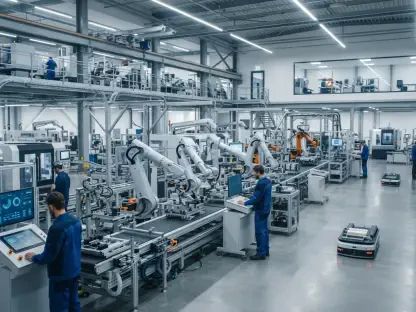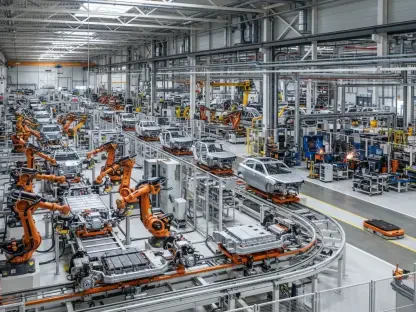

The relentless pace of modern manufacturing environments creates a scenario where every millisecond of delay in data processing translates directly into lost revenue and compromised product quality. As the industry prepares for the upcoming Automate exhibition, the limitations of traditional centralized computing have become glaringly obvious, forcing a rapid shift toward more agile and localized intelligence. SINTRONES Technology Corp. is currently positioning itself at the forefront of this evolution by delivering high-performance Edge AI solutions that bridge the gap between raw industrial data and actionable operational insights. By deploying ruggedized hardware directly onto the factory floor, the company enables a sophisticated ecosystem where machines can perceive, analyze, and react to their surroundings with near-human precision. This approach does more than just speed up operations; it fundamentally redefines the relationship between digital logic and physical production, ensuring that manufacturers remain competitive.
Eliminating Latency Through Localized Intelligence
The move toward edge computing is driven by the realization that sending massive volumes of visual data to a distant cloud server is no longer a viable strategy for high-speed production lines. In contemporary manufacturing, where systems must identify microscopic defects in real-time, the latency inherent in cloud-based processing creates bottlenecks that significantly hinder overall throughput. By shifting the computational load to the network edge, SINTRONES allows for instantaneous decision-making that occurs directly at the source of data generation. This transition ensures that mission-critical tasks, such as robotic guidance and safety monitoring, are performed with minimal delay, regardless of external network stability. Furthermore, localized processing enhances data privacy and reduces bandwidth costs, as only the most relevant insights need to be transmitted to higher-level management systems. This localized approach is becoming the standard for facilities that prioritize speed.
Beyond the technical benefits of reduced latency, the implementation of localized AI significantly impacts the bottom line by minimizing material waste and optimizing resource allocation. When defect detection happens at the edge, faulty components can be identified and removed from the assembly line immediately, preventing further value from being added to a defective product. This granular level of control is especially vital in high-precision industries where raw materials are expensive and quality tolerances are exceptionally tight. Moreover, the integration of these intelligent systems allows for a more flexible manufacturing environment where production parameters can be adjusted on the fly to account for variations in material quality or environmental conditions. By empowering local hardware to handle complex analysis, manufacturers gain a deeper level of visibility into their internal processes, which facilitates a more proactive approach to quality management.
Technical Specifications For Diverse Industrial Needs
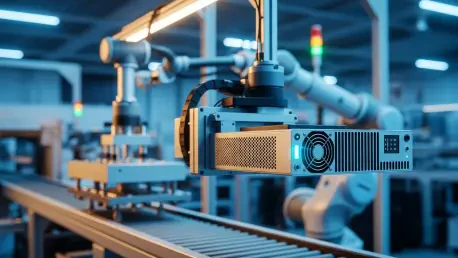
At the core of this technological shift lies the need for specialized hardware that can balance high-performance computing with the physical constraints of a factory environment. The SBOX-2625 represents a significant advancement in this area, functioning as an ultra-compact embedded computer tailored for intelligent control applications. Powered by the Intel Processor N-series, this device offers a unique combination of energy efficiency and robust processing power, making it ideal for tasks that require constant uptime in confined spaces. Its fanless design is a critical feature, as it eliminates a common point of mechanical failure and prevents the intake of harmful dust or debris that is prevalent in industrial settings. High-speed connectivity options further enhance its utility, allowing it to serve as a reliable gateway that connects various sensors and actuators into a unified digital framework. This hardware provides the necessary foundation for organizations looking to modernize systems.
For applications that demand even higher levels of computational throughput, such as advanced machine vision or complex neural network inference, the ABOX-5221 offers a more powerful alternative. This platform utilizes the capabilities of 14th Gen Intel Core processors paired with NVIDIA RTX GPUs to deliver the kind of performance once reserved for dedicated server rooms. In a manufacturing context, this allows for the deployment of sophisticated automated optical inspection systems that can replace or augment manual quality checks with superior consistency. The ability to process multiple high-resolution video streams simultaneously means that every stage of production can be monitored in vivid detail, ensuring that nothing escapes the watchful eye of the AI. This level of hardware-accelerated intelligence is particularly transformative for the semiconductor and electronics industries, where the complexity of components requires an uncompromising approach to precision and speed.
Sustaining Reliability In Challenging Factory Environments
Industrial environments are notoriously unforgiving, characterized by extreme temperatures, heavy vibrations, and electromagnetic interference that would quickly destroy standard office hardware. To ensure that AI solutions can operate 24/7 without interruption, SINTRONES “ruggedizes” its systems by utilizing specialized thermal management and reinforced chassis designs. This engineering focus ensures that high-performance components, like GPUs and multi-core processors, maintain optimal operating temperatures even in poorly ventilated or high-heat areas of a plant. Furthermore, the inclusion of wide-range power inputs and surge protection safeguards the equipment against the inconsistent electrical conditions often found in older facilities. By providing a stable platform that survives these harsh realities, the company allows manufacturers to deploy advanced intelligence in locations that were previously inaccessible to sophisticated digital tools, effectively extending the reach of the smart factory.
The longevity of these rugged systems also plays a pivotal role in predictive maintenance strategies, where the hardware itself monitors the health of the machinery it controls. By analyzing vibration patterns and thermal signatures in real-time, these edge devices can predict when a motor or bearing is likely to fail, allowing maintenance teams to intervene before a costly breakdown occurs. This constant loop of data collection and analysis ensures that the entire manufacturing process remains optimized and visible to stakeholders at all times. Instead of relying on rigid maintenance schedules that may lead to unnecessary downtime or unexpected failures, factory managers can now use data-driven insights to schedule repairs during natural production lulls. This shift toward a more intelligent maintenance model is a direct result of having reliable, high-performance computing assets stationed directly on the floor, transforming how factories manage their physical assets.
Security Frameworks And International Compliance Standards
As manufacturing facilities become increasingly interconnected through the Industrial Internet of Things, the surface area for potential cyber threats expands significantly. Recognizing this vulnerability, the development of industrial hardware must prioritize security as a fundamental design principle rather than an afterthought. Adhering to the IEC 62443-4-1 Secure Product Development Lifecycle ensures that every stage of a product’s creation, from initial concept to final deployment, is scrutinized for potential security gaps. This “secure-by-design” methodology protects sensitive intellectual property and maintains the integrity of production processes against unauthorized access or malicious interference. In an era where digital disruptions can have physical consequences, having a secure hardware foundation is non-negotiable for any enterprise looking to safeguard its operations. This commitment to security provides the peace of mind necessary for manufacturers to embrace digital transformation.
Building on this secure foundation, the transition toward intelligent manufacturing required a holistic alignment with international quality and safety standards. Organizations that successfully integrated these Edge AI solutions discovered that adherence to ISO 9001 and ISO/IEC 27001 was essential for creating transparent and reliable operational technology environments. Looking ahead, the focus shifted toward the seamless bridging of legacy systems with modern AI capabilities, ensuring that older equipment could still participate in the data-driven ecosystem. Leaders in the field prioritized the training of their workforce to interact with these autonomous systems, recognizing that human expertise remained a vital component of the automated factory. By investing in scalable, ruggedized platforms that supported standardized communication protocols, businesses established a future-proof infrastructure capable of evolving with technological trends. This strategic focus on interoperability and security ultimately provided a clear roadmap for achieving sustained operational excellence.