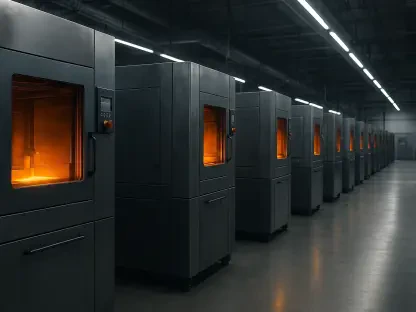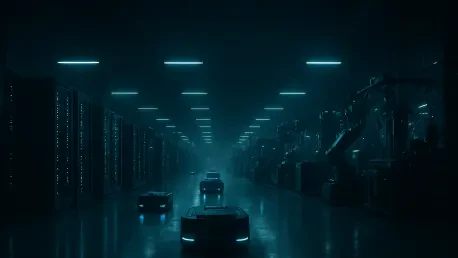

The strategic intent to capture market share in the global smart factory sector is driving firms to maintain individual expertise while delivering massive, integrated industrial systems. This trend has materialized through a significant alliance between Yeoui Systems and Telstar Agentic Robotics, two South Korean leaders aiming to redefine the manufacturing landscape. By combining their specialized capabilities, these organizations are focusing on the burgeoning “dark factory” market, where human presence is minimal or entirely absent. This initiative specifically targets small and medium-sized enterprises that have historically struggled with the high capital and technical hurdles of complete automation. The partnership provides a turnkey ecosystem that simplifies the transition, offering a modular approach to industrial transformation. Instead of purchasing fragmented equipment, clients receive a unified system designed to manage entire production cycles autonomously, ensuring that local manufacturers remain competitive against larger global conglomerates.
The Technological Foundation: Physical AI and Digital Twin Models
A dark factory represents the absolute pinnacle of industrial evolution, integrating advanced robotics, the Internet of Things, and artificial intelligence into a cohesive unit that functions without illumination or human intervention. At the heart of this technological shift is the concept of physical AI, which transcends traditional automation by enabling machines to interpret their surroundings and make real-time decisions. This marks a departure from the rigid, pre-programmed routines of the past, as modern systems now utilize sensory data to adjust workflows dynamically. By leveraging these intelligent frameworks, manufacturers can achieve unprecedented levels of efficiency and safety, as the machines themselves mitigate risks and optimize energy consumption. The transition to this level of autonomy requires a departure from legacy thinking, focusing instead on how software and hardware can interact to simulate cognitive reasoning within a physical production environment, thereby reducing the margin for error and operational downtime.
The roadmap for establishing these sophisticated facilities typically begins with the creation of digital twins, which are high-fidelity virtual replicas of the physical manufacturing floor. These digital models allow operators to simulate various production scenarios and identify potential bottlenecks before a single piece of equipment is installed. As the system matures from 2026 to 2028, these replicas become deeply integrated with actual hardware, leading to self-optimizing production lines that handle complex logistics and assembly tasks. This holistic development cycle ensures that every component, from a simple sensor to a complex robotic arm, communicates within a centralized data architecture. Consequently, the factory becomes a living entity capable of predictive maintenance and self-repair, ensuring that the production flow remains uninterrupted even during part failures. This progressive integration of virtual and physical realms creates a resilient manufacturing infrastructure that can pivot to new product lines with minimal reconfiguration.
Synergistic Implementation: Hardware Reliability and Global Expansion
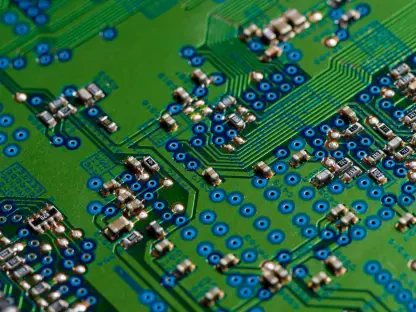
The collaboration between Yeoui Systems and Telstar Agentic Robotics is built upon a synergy that separates the automation “brain” from the “body” while ensuring they operate in perfect unison. Yeoui Systems provides the essential hardware infrastructure, focusing on high-performance industrial computers and custom controllers that serve as the central nervous system for the facility. These components are designed to withstand the harsh environments of industrial settings while processing the massive streams of data generated by thousands of connected sensors. Simultaneously, Telstar Agentic Robotics handles the operational integration, connecting disparate machinery into a unified robotic network. This integration process is vital for ensuring that the technology functions reliably under real-world conditions, where unexpected physical variables can disrupt digital plans. Through this dual-pronged strategy, the alliance eliminates the friction often associated with multi-vendor automation projects, providing a streamlined path to full factory autonomy.
Leadership for this initiative was spearheaded by CEOs Seong Je-hyeon and Lim Dong-kyun, who established a project-oriented framework that prioritized long-term joint development over short-term sales. The alliance successfully leveraged its domestic success within the InnoBiz Association to target international markets, aiming to export South Korean automation expertise to a global audience. These organizations demonstrated that the path to widespread adoption of dark factories required a move away from fragmented technology stacks toward integrated, autonomous ecosystems. Moving forward, industrial leaders should prioritize the implementation of modular physical AI modules that can be retrofitted into existing brownfield sites, rather than focusing solely on new developments. The next phase of industrial growth will likely involve the standardization of communication protocols between competing robotic platforms. By focusing on cross-platform interoperability, the industry reached a point where autonomous manufacturing became accessible to a broader range of economic sectors.