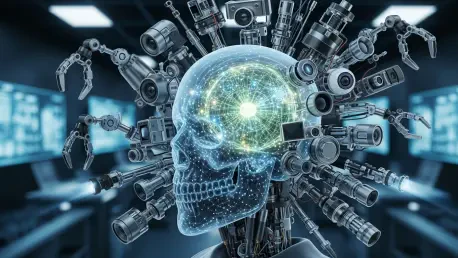

While the modern industrial landscape relies heavily on the surgical precision of robotic arms, these machines frequently struggle when confronted with the unpredictable reality of physical imperfections or irregular surface geometries that appear during the life cycle of high-value machinery. Farhad Imani from the University of Connecticut has received a prestigious National Science Foundation CAREER Award to lead a transformation in how industrial robots perceive and interact with complex environments. Current manufacturing setups are designed for repetitive excellence in highly controlled settings, but they lack the cognitive flexibility to handle deviations like structural wear or manufacturing defects. This research initiative seeks to bridge the gap between rigid, pre-programmed automation and a new era of cognitive systems capable of sensing and reasoning through variability. By focusing on the concept of cognitive automation, the project moves beyond static routines to create robots that can evolve alongside the tasks they perform. This shift is essential for industries where standard production models fail to account for the unique history and physical condition of every individual part that enters the assembly line for maintenance or repair.
Advancing Intelligent Systems in High-Value Remanufacturing
The primary focus of this investigation lies in the critical sector of remanufacturing, where high-stakes components for the aerospace, energy, and defense sectors are restored to their original specifications. Unlike traditional manufacturing, which starts with uniform raw materials, remanufacturing deals with parts that have endured years of operational stress, leading to unique patterns of damage that no two components share. This inherent unpredictability renders conventional robotic programming obsolete, as a machine cannot simply follow a fixed path when the surface it is treating is uneven or distorted. By integrating intelligent sensing, the research enables robots to evaluate the specific state of a turbine blade or a structural airframe component before deciding on a course of action. This level of adaptability ensures that the restoration process is both precise and efficient, reducing the need for human intervention in tasks that were previously deemed too complex for automated systems to handle safely or effectively.
To address these complexities, the project introduces a unified framework known as the Integrated Digital Thread for Self-Evolving Cooperative Robotics Remanufacturing. Central to this approach is the implementation of hyperdimensional computing, a brain-inspired architectural framework that allows for more sophisticated decision-making compared to traditional binary logic. This technology integrates established engineering knowledge and physical constraints directly into the robot’s cognitive loop, providing an interpretable roadmap for how a machine should respond to various physical stimuli. Unlike many modern artificial intelligence models that operate as black boxes with little transparency, this framework ensures that every robotic action is grounded in the laws of physics and engineering principles. This integration allows for a cooperative environment where multiple robotic units can work in tandem, sharing data and refining their strategies in real time to overcome the challenges posed by irregular geometries and evolving defects found in aged industrial assets.
Digital Twins and the Evolution of Autonomous Decision Making
A significant breakthrough in this research involves the deployment of adaptive digital twins that serve as virtual mirrors for physical robotic operations. These digital replicas are not merely static models; they are dynamic environments where the system can simulate thousands of hypothetical scenarios in a fraction of a second. By running these rapid simulations, the robotic controller identifies the most effective strategy for a specific repair task before the physical arm ever begins to move. This capability closes the loop between digital prediction and physical execution, allowing for a level of precision that was once thought unattainable in the field of remanufacturing. The digital twin continuously updates itself based on real-time sensory feedback from the physical world, ensuring that the virtual model remains an accurate representation of the evolving repair process. This methodology effectively minimizes errors and material waste, as the system can anticipate potential failures or collisions and adjust its movements proactively to avoid them throughout the entire operation.
This research highlights a strategic departure from data-hungry, fragile artificial intelligence systems that often fail when encountering scenarios outside their training datasets. By focusing on robust, physics-informed models, the project creates a system that understands the underlying mechanics of the materials it is manipulating. This is particularly vital in heavy industry, where the consequences of a robotic error can result in millions of dollars in damages or safety risks for human technicians. The self-evolving nature of these cooperative robotics means that they become more proficient as they encounter a wider variety of defects from 2026 to 2028 and beyond. As these machines gain experience, they refine their internal algorithms, building a repository of localized knowledge that allows them to tackle increasingly difficult remanufacturing problems. This approach emphasizes resilience and reliability, moving away from the “one-size-fits-all” mentality of traditional automation and toward a future where machines possess the situational awareness necessary to function in truly diverse and unpredictable industrial environments.
Strategic Implementation and Workforce Development Pathways
The overarching impact of this research extended far beyond the immediate technical successes in the laboratory to address the broader needs of the global manufacturing sector. By enabling robots to intelligently restore and upgrade damaged assets, the project provided a clear pathway for reducing industrial waste and lowering the carbon footprint associated with producing new heavy machinery. Significant efforts were also directed toward the educational landscape at the University of Connecticut, where these findings were integrated into a modern curriculum designed to prepare the next generation of engineers. This initiative ensured that students gained hands-on experience with cognitive robotics and digital twin technologies, effectively bridging the gap between academic theory and industrial practice. Looking forward, industries must prioritize the adoption of these self-evolving systems to maintain a competitive edge in a resource-constrained world. Organizations should invest in retraining programs that focus on human-robot collaboration and the management of intelligent digital threads to maximize the long-term benefits of these autonomous systems.