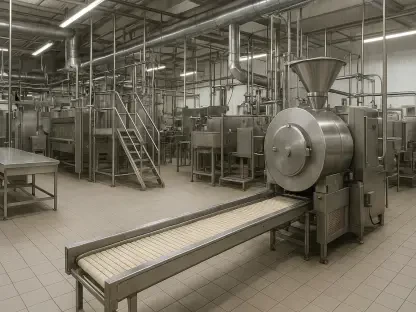

The industrial landscape of the Philippines has witnessed a transformative shift as the Jollibee Group successfully secured the prestigious LEED Gold certification for its state-of-the-art Danao Commissary. This distinction represents the first time a manufacturing plant in the country has attained such a high standard for environmental performance under the rigorous Leadership in Energy and Environmental Design framework. By aligning this achievement with its “Joy for Tomorrow” global sustainability agenda, the company has illustrated that massive industrial throughput does not have to come at the expense of ecological responsibility. Located in Cebu, the facility serves as the largest manufacturing hub for the group in the Visayas region, playing a pivotal role in the supply chain that supports both the Visayas and Mindanao markets. Earning Gold status under the LEED v4.1 criteria required a comprehensive overhaul of traditional manufacturing philosophies, favoring data-driven efficiency.
Superior Resource Management and Energy Efficiency
Energy conservation at the Danao facility is anchored by a sophisticated array of technologies that have led to an eighty-two percent reduction in projected annual energy consumption and greenhouse gas emissions. Central to this achievement is the implementation of high-efficiency Variable Refrigerant Flow systems and automated smart building controls that optimize climate and lighting conditions based on real-time occupancy and demand. Unlike traditional factories that rely heavily on the national grid, this commissary generates eighty-two percent of its core energy requirements through on-site renewable systems. This level of energy independence was a critical factor in the facility’s ability to secure extra innovation points during the certification process. Furthermore, the systematic use of LED lighting throughout the complex ensures that illumination remains consistent while drawing only a fraction of the power required by conventional industrial fixtures.
Beyond energy metrics, the facility has set a new benchmark for resource circularity through aggressive water conservation and waste management protocols. By integrating high-efficiency plumbing fixtures and intelligent monitoring equipment, the plant successfully reduced its indoor water usage by seventy-seven percent compared to standard industrial baselines. This focus on preservation was equally evident during the construction phase, where the project team maintained a ninety-nine percent waste diversion rate. This meant that almost all construction debris was meticulously sorted and redirected to recycling or recovery centers rather than being discarded in local landfills. Such disciplined on-site segregation demonstrates a commitment to the entire lifecycle of the building, from the first brick laid to daily operations. These measures underscore a broader strategy of mitigating the environmental footprint of heavy industry while ensuring that essential resources are used with maximum precision.
Integrating Sustainability into Long-Term Business Strategy
The success of the Danao plant is not an isolated event but rather the result of a systematic scaling of green technologies that were initially refined in the company’s Luzon-based facilities. By utilizing proven strategies such as variable frequency drives for large-scale refrigeration and advanced wastewater treatment systems, the organization has created a repeatable blueprint for sustainable expansion. This method of re-application ensures that environmental stewardship becomes a standardized component of the manufacturing and logistics infrastructure rather than a series of one-off projects. Transitioning to a smart industrial model allows the organization to incorporate geothermal power and solar lighting into its broader operational framework, effectively reducing a long-standing dependency on fossil fuels. This strategic shift has repositioned green initiatives as vital sources of innovation that help manage operational costs while simultaneously enhancing the resilience of the supply chain.
The certification of the Danao facility established a clear precedent for how the Philippine manufacturing sector could evolve to meet modern ecological demands. By prioritizing energy independence and waste diversion, the leadership team demonstrated that sustainable practices provided a viable path toward long-term business value. Investors and stakeholders viewed this transition as a significant step in derisking operations against volatile energy prices and tightening environmental regulations. Looking forward from 2026 to 2028, the company planned to expand these green protocols to additional regional hubs, ensuring that every link in the supply chain reflected these high standards. This approach encouraged other industrial players to adopt similar LEED frameworks to remain competitive in a market that increasingly favored environmental transparency. The integration of renewable energy and resource efficiency thus became the standard for industrial excellence across the region.