
The global agricultural landscape is currently undergoing a seismic shift as traditional farming techniques struggle to keep pace with mounting labor shortages and the escalating demands of food security. The University of Lincoln has secured a substantial $6 million investment to establish HARVEST, a specialized robotics hub designed to fundamentally transform the United Kingdom’s agri-food sector through advanced automation. This strategic initiative constitutes a major portion of a larger $8.9 million investment strategy intended to bridge the critical gap between theoretical laboratory research and the tangible implementation of technology on active farms. As one of eight national hubs selected by Innovate UK, the HARVEST project aims to systematically dismantle the persistent barriers that have historically prevented agricultural businesses from adopting high-tech solutions. These obstacles, which include prohibitive initial costs, technical uncertainty, and a noticeable lack of specialized workforce skills, have often relegated promising innovations to the periphery of the industry. By creating a centralized point of expertise, the university is positioning itself as a leader in the next generation of food production.
Strengthening the Collaborative Ecosystem
Central to the success of this initiative is the creation of a robust and collaborative ecosystem where robotics developers and food producers can converge to validate emerging systems. Industry leaders such as Dyson Farming Research and Saga Robotics are already engaged in this process, providing the real-world context necessary to ensure that new technologies are not just technically sound but also commercially viable. This synergy between academic researchers and commercial stakeholders is essential for translating complex algorithms into practical tools that can handle the unpredictability of outdoor environments. The project fosters an environment where feedback loops are shortened, allowing for rapid iteration and refinement of autonomous machinery. By integrating these diverse perspectives, the hub ensures that the resulting innovations are tailored to the specific operational needs of modern growers. This collective approach significantly reduces the financial and operational risk for early adopters, as they can rely on proven data gathered from these high-level partnerships.
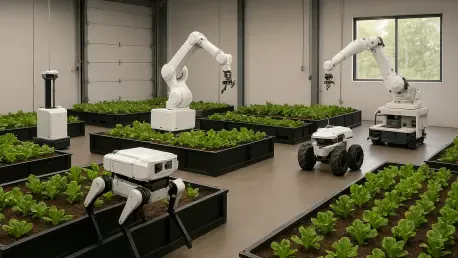
To facilitate this high level of testing, the university is developing a dedicated $630,000 robotics test track at its Riseholme Park Campus, which serves as a controlled yet realistic setting for performance evaluation. This facility is complemented by the establishment of Living Labs, where robotic systems are demonstrated in active agricultural settings to showcase their efficacy under varying weather and soil conditions. These physical assets are crucial because they provide a bridge between simulated environments and the chaotic nature of a working farm. Farmers and stakeholders can witness firsthand how autonomous vehicles navigate rows of crops or how robotic arms handle delicate produce without damage. Such transparency is vital for building trust in automation, moving beyond the skepticism that often accompanies disruptive technology. The test track and laboratories function as a high-stakes proving ground where every sensor and motor is pushed to its limit. This rigorous validation process ensures that when these systems reach the market, they are reliable enough to sustain continuous operations.
Empowering the Startup Landscape: Direct Financial Support
Beyond the physical infrastructure, the project includes a $1.25 million Acceleration Fund specifically designed to provide direct financial support to UK-based robotics startups. This capital is intended to help small and medium-sized enterprises navigate the complex commercial and regulatory hurdles that frequently stall innovation during its most vulnerable stages. Startups often face a valley of death where initial funding runs dry before a product is fully ready for mass-market adoption. By offering this targeted financial cushion, the HARVEST hub enables these companies to focus on perfecting their engineering and scaling their manufacturing capabilities. This fund represents a shift in how academic institutions interact with the private sector, moving from simple knowledge transfer to active financial partnership. The goal is to cultivate a pipeline of home-grown technology companies that can compete on a global scale while addressing local labor challenges. Providing this runway allows for a more diverse array of solutions to emerge, from small weeding robots to autonomous harvesters.
The launch of this robotics hub established a clear blueprint for how academic institutions integrated with private industry to solve systemic food production issues. Stakeholders realized that the long-term success of such initiatives depended on the continuous upskilling of the agricultural workforce to manage these sophisticated systems. Future investments moved toward creating standardized certifications for robotics operators, ensuring that the transition to automation was supported by a capable human element. Decision-makers prioritized the development of interoperable software platforms that allowed different robotic brands to communicate seamlessly across a single farm management system. This approach mitigated the risk of vendor lock-in and encouraged a more competitive marketplace for agricultural technology. Furthermore, the focus shifted toward sustainable energy sources to power these autonomous fleets, aligning food security goals with environmental targets. By providing a clear path from innovation to implementation, the program offered a scalable model for other sectors to follow.