
Kwame Zaire has spent his career at the intersection of manufacturing rigor and high-stakes performance, moving from aerospace and defense propulsion into the fast-turn world of motorsport. For the 2026 IMSA Michelin Pilot Challenge, he helped shape a program that put metal Additive Manufacturing in the cockpit, not just on a slide deck. The conversation below explores how a sponsor relationship became a proving ground, why Constellium’s Aheadd CP1 alloy mattered, and how generative design plus disciplined process control yielded a “smart, but aggressive” radio control mounting bracket for the No. 43 Porsche at WeatherTech Raceway Laguna Seca and Indianapolis Motor Speedway. Themes include fit-for-purpose material choices, validation under heat and vibration, race-ready documentation, and the business outcomes that justify doing it again.
What made the 2026 IMSA Michelin Pilot Challenge the right entry point for your partnership, and how did you evaluate the fit with the No. 43 Porsche program at Laguna Seca and Indianapolis? What goals and success metrics did you align on from day one?
The two-round commitment was perfect for proving value without diluting focus. Laguna Seca and Indianapolis offer contrasting load cases and vibration profiles, which let us validate across very different tracks. We aligned on three outcomes: reliability of cockpit comms, manufacturability that could scale, and storytelling that ties cleanly to Velo3D branding on the No. 43. Success meant clean weekend execution, documented design-to-track discipline, and evidence that the bracket improved system rigidity.
A radio control mounting bracket often seems simple. What specific rigidity, vibration, and packaging problems did you face in the cockpit, and how did those constraints translate into design targets, validation tests, and acceptance criteria?
The cockpit is a chorus of micro-shocks, cable tugging, and temperature swings that loosen fasteners and detune radios. We had tight envelopes behind dash elements and needed hard stops to control cable bend radii. That pushed us to set stiffness targets around connector retention, clamp-induced fretting limits, and bracket-foot compliance. We accepted only builds that held alignment through thermal cycling and sustained vibration profiles without connector chatter.
You chose Constellium’s Aheadd CP1 aluminum alloy. What property trade-offs—strength, thermal stability, corrosion, or printability—drove that decision, and how did it compare against 6061, 7075, or titanium in FEA results, fatigue testing, and real track data?
CP1 balanced printability with elevated-temperature performance in a way 6061 simply doesn’t when heat-soaked. It offered a corrosion posture that suited sweaty, gritty cockpits without overburdening us on coatings. Versus 7075, the win was more about thermal stability in the AM microstructure and reduced crack sensitivity in thin webs. Titanium was overkill for this duty cycle and would have penalized build time and downstream machining.
Generative design guided the bracket geometry. Can you walk us through the load cases, boundary conditions, and safety factors you used, and how you balanced lattice density, wall thickness, and support strategies to meet stiffness and weight goals?
We defined load paths from connector interfaces through mounting feet to the dash structure under combined inputs. Boundary conditions captured cable pulls, push-to-talk actuation, and steering-column proximity constraints. Safety margins were conservative around fastener interfaces and more aggressive in interior ribs. We tuned lattice density only where it improved modal spacing, kept walls uniform for machining predictability, and oriented supports to clear heat and avoid shadowing.
How did you quantify performance gains from the new bracket—signal clarity, reduced communication dropouts, or improved driver ergonomics—and what telemetry, lap-time deltas, or failure-rate reductions did you observe in shakedowns and race simulations?
We looked for fewer high-frequency noise spikes in the radio logs and steadier signal floor during kerb strikes. Driver feedback pointed to more consistent button feel and less glove snag. Shakedowns showed cleaner audio segments where chatter had previously bloomed, especially in long stints. We also tracked zero unplanned reseats of connectors across race simulations.
What was your end-to-end build process for the bracket—from parameter selection and scan strategies to in-situ monitoring—and how did you manage porosity, residual stress, and surface roughness before and after heat treatment and machining?
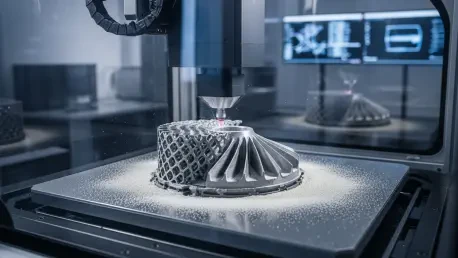
We used a stripe-and-hatch scan blend with rotated layers to smooth thermal gradients. In-situ melt pool sensing flagged any outliers before they became rework. Stress was managed with build orientation, tailored supports, and a post-build stress relief before finish cuts. We controlled roughness via as-printed skin strategies, localized polishing near interfaces, and a light machining pass after heat treatment.
Racing timelines are unforgiving. What was your design-to-track lead time, how many prototype iterations did you need, and where did you save the most time—DFAM, build prep, or post-processing?
We built around the event cadence tied to those two rounds and avoided calendar risk by front-loading validation. Iterations were minimal because DFAM closed most traps before we cut powder. Build prep saved us the most time through parameter lock and standardized supports. Post-processing was predictable once we froze datum strategies.
Cockpit electronics can be heat-soaked and vibration-prone. How did you validate thermal performance and modal behavior, and what test rigs, duty cycles, or on-car sensor setups gave you confidence for endurance events?
We cooked assemblies in a thermal box while running radio duty cycles that mimic race chatter. Shaker-table sweeps bracketed the car’s measured vibration bands to hunt for resonance. On-car, we taped accelerometers near the bracket and logged connector displacement. The overlap of lab and track signatures told us we had modal spacing where we needed it.
You come from aerospace and defense propulsion work. Which lessons—process control, NDI methods, or documentation—translated directly to motorsports, and where did you have to adapt for pit-lane realities, rapid turnaround, and budget constraints?
Process control and traveler discipline came straight across; it is the backbone of repeatability. We applied NDI selectively, leaning on CT when geometry demanded it and dye checks where it didn’t. Documentation was trimmed to essentials that crew chiefs can act on. The big adaptation was designing for pit survivability and quick swap with simple tools.
Race series have strict technical and safety rules. How did you navigate homologation, materials disclosure, and inspection requirements, and what evidence—material certs, CT scans, or track tests—proved compliance?
We led with material certs that speak to CP1 pedigree and batch traceability. CT scans supported wall-thickness claims and verified internal features. Track test reports closed the loop by proving function under real conditions. That stack satisfied disclosure without giving away IP-heavy parameters.
The “smart, but aggressive” mindset shaped your optimization. Where did you push the envelope on topology or tolerances, and where did you intentionally leave margin for damage tolerance, manufacturability, and pit repairability?
We pushed internal topology to channel load cleanly while trimming non-contributing mass. Tolerances were tight at mating faces to prevent drift in alignment. We left generous fillets and sacrificial edges where pit tools might bite. Fasteners are accessible and tolerant of quick re-torques.
Sponsorship also needs business outcomes. Beyond lap time, what KPIs—brand reach, B2B leads, or technology adoption by other teams—are you tracking, and how will you attribute results to this program?
We track inbound technical queries tied to the No. 43 weekends and content impressions around the 2026 rounds. Qualified B2B leads are tagged to event touchpoints and post-race case studies. We also watch for RFQs from adjacent components after the bracket story lands. Adoption by other teams is the clearest signal that the message resonated.
What other components in the car—ducting, brackets, or thermal shields—are ripe for metal AM next, and how would you prioritize them based on mass savings per dollar, reliability impact, or serviceability?
Cable guides and sensor brackets are low-hanging fruit with big serviceability wins. Thermal shields near exhaust paths benefit from tailored thickness and integrated mounts. Ducting that blends flow and stiffness is ideal for AM’s geometry freedom. We prioritize parts that touch reliability first, then chase cost-normalized mass savings.
How are you handling spares, digital inventory, and trackside production? What’s your plan for version control, serial traceability, and parameter lock to ensure each print performs identically throughout the season?
We run a digital thread with locked parameter sets and a controlled build card per revision. Each bracket gets a unique serial tied to its melt pool data and CT record when used. Spares are staged with pre-approved travelers so crews can pull them without drama. Any change triggers a new revision and a quick re-validation loop.
Do you have any driver or crew anecdotes from testing that revealed unexpected benefits or failure modes, and how did those insights change your design rules or operating procedures?
A driver mentioned that the push-to-talk felt “calmer” after long stints, which matched the vibration logs. A crew member liked that cabling no longer crept during hot pit stops. We did spot tool scarring on a corner, so we added a protective chamfer and clearer install marks. That fed straight into our pit SOPs and torque notes.
What is your forecast for metal Additive Manufacturing in motorsports over the next five years, and where will the biggest breakthroughs—and bottlenecks—emerge in materials, qualification, and cost per part?
Expect AM to move from hero parts to system-level assemblies with integrated features that simplify pit life. Materials like CP1 that balance printability and heat resistance will become default choices. Qualification will pivot to data-rich, in-situ evidence that shortens approval cycles without cutting corners. The bottleneck will be consistent cost per part unless teams embrace parameter lock, disciplined DFAM, and shared qualification artifacts across programs.