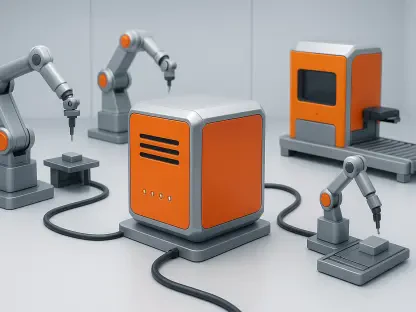

The industrial landscape of Eastern Europe is undergoing a profound transformation as manufacturing facilities transition from traditional assembly lines to fully autonomous, data-driven ecosystems. Siemens is currently initiating a significant industrial expansion in Romania, marked by the construction of a ground-up digital factory located in the western industrial zone of Sibiu. This strategic investment, valued at several tens of millions of euros, underscores a dedicated commitment to a specialized business unit focused on low-voltage electrical components. Developed in partnership with WDP, the project is scheduled to break ground in August 2026, aiming for full operational status by 2028. Spanning approximately 14,500 square meters, the facility will serve as a critical hub for the production of the SENTRON product line, which includes miniature circuit breakers and various electronic protection devices essential for residential and industrial safety. This initiative positions Romania as a pivotal node.
Digital Twin Architecture and Autonomous Systems
The development of the Sibiu facility represents a fundamental shift toward a data-driven manufacturing paradigm that prioritizes virtual planning over traditional trial-and-error methods. By utilizing proprietary Digital Twin technology, engineers are planning to virtually simulate and optimize every distinct aspect of the production floor, from complex workflow logistics to specific equipment placement, long before physical construction begins. This virtual mirror allows for the identification of potential bottlenecks and inefficiencies in a risk-free digital environment, ensuring that the physical layout is optimized for maximum throughput from day one. Once operational, the factory will integrate advanced artificial intelligence and high-precision robotics to create a highly flexible manufacturing environment. This digital-first approach ensures that the facility can adapt to design changes almost instantaneously, significantly reducing the lead time for new product introductions.
In contrast to conventional factories where material handling is often manual and segmented, the new Romanian site will utilize a fleet of automated guided vehicles to handle transport autonomously. These AGVs will be synchronized with intelligent control systems that manage the entire product lifecycle, spanning from raw material procurement to final quality testing and packaging. Such a high level of automation is specifically intended to allow for rapid adjustments to shifting market demands and specific customer requirements without requiring extensive downtime for retooling. By removing human error from logistics and repetitive assembly tasks, the facility aims to achieve unprecedented levels of precision in the manufacturing of miniature circuit breakers. The integration of these autonomous systems creates a seamless flow of data and materials, effectively turning the factory into a living, breathing organism that responds in real-time to the constraints of the supply chain.
Environmental Responsibility and Workforce Evolution
Environmental sustainability serves as a non-negotiable cornerstone of the factory’s design, reflecting a broader industry push toward greener industrial practices. The facility is engineered to achieve carbon-neutral operations through a combination of high energy efficiency standards and the integration of renewable energy sources. Architectural features such as tubular daylighting devices will be installed to maximize the use of natural sunlight, thereby drastically reducing the reliance on artificial lighting during daytime hours. Additionally, a comprehensive rooftop photovoltaic system will generate significant on-site solar power, which will be supplemented by electricity sourced exclusively from certified sustainable suppliers. These measures are complemented by advanced climate control systems that minimize heat loss and optimize energy consumption based on occupancy and machine activity. By prioritizing these green technologies, the project establishes a new benchmark for sustainable production.
The project design established a human-centric workspace that balanced technical efficiency with the necessity of workforce empowerment and continuous education. The layout purposefully included modern, accessible offices and dedicated training centers where employees learned to refine their skills in data analysis and automation. This focus on professional development ensured that the local labor force was prepared to transition from manual labor to high-value roles involving the management of sophisticated digital systems. To maintain this momentum, stakeholders prioritized the establishment of collaborative partnerships with local technical universities to create a steady pipeline of specialized talent. Furthermore, the implementation of scalable digital frameworks allowed for future upgrades as newer AI modules became available. This unified approach demonstrated how the convergence of advanced digital technologies and environmental responsibility fostered a resilient industrial ecosystem in Romania.