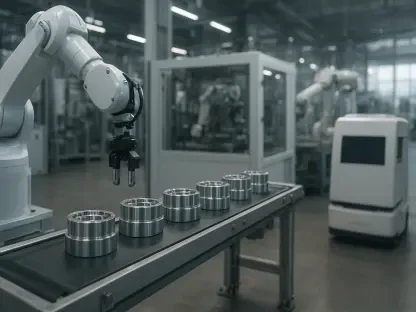

The success of industrial automation is often defined by a surprising paradox where projects that move slowly at the start yield the most reliable long-term results across various industrial sectors. While many stakeholders are understandably eager to see rapid installation and immediate returns on their investment, rushing into the deployment phase often leads to significant operational failures that could have been avoided with a more deliberate strategy. A strategic methodology that prioritizes a deliberate, analytical pace over initial speed is absolutely essential for navigating the complexities of modern manufacturing and ensuring that a robotic system can survive the transition from a concept to a high-volume production tool. By focusing on the structural integrity of the process rather than just the speed of the hardware, engineers can create a resilient foundation that handles the variances of 2026 manufacturing. This approach shifts the focus from simple mechanical movement toward a holistic understanding of how systems interact within a larger ecosystem of parts and software. It is about building a robust architecture that thrives.
The Deceptive Security: Risks of Controlled Environments
Sales-focused environments often utilize parts and conditions that are meticulously optimized for success, which creates a significant hurdle for companies looking to implement serious automation. In these high-gloss demonstrations, spacing is precise and lighting is perfect, allowing a robot to hit its targets with ease and creating a false sense of confidence among potential buyers who see only the ideal scenario. However, this perfection is rarely mirrored in day-to-day production, where small inconsistencies in raw materials or ambient conditions can lead to frequent system stops and reliability issues that were never visible during the initial testing phase. The gap between a controlled laboratory setting and a dusty, vibrating factory floor is often where ambitious projects go to die. Professional integrators must look past the polished surface of a sales pitch to identify the potential points of failure that arise when components are no longer pristine. Failure to account for these environmental variables results in a system that performs beautifully during a walkthrough but fails under pressure.
Physical manufacturing floors are subject to a phenomenon known as drift, where minor variations in product spacing or orientation occur over the course of a long shift as machines settle or temperatures fluctuate. While these dimensional changes might be nearly invisible to a human eye, a robotic system operates on rigid deterministic logic and cannot easily adjust to such variances without sophisticated sensor feedback loops. Integrators who overlook these real-world fluctuations during the onboarding process often find themselves trapped in a frustrating cycle of troubleshooting, as the system struggles to handle the inherent unpredictability of the assembly line. A methodical onboarding approach addresses this by intentionally introducing variance during the testing phase to see how the system reacts to non-ideal inputs. Instead of assuming the input will be perfect, engineers must design for the reality of imperfection, ensuring that the robot can identify and reject outliers or adjust its pathing dynamically. This foresight prevents the catastrophic downtime that occurs when a machine encounters a situation for which it was never programmed.
Peripheral Complexity: Managing Infrastructure and Upstream Flow
A common misconception in modern automation is that the robot itself is the most difficult component to master, when in reality, the surrounding infrastructure is often far more complex and prone to failure. The engineering challenges of singulation, orientation, and general material handling often far outweigh the difficulty of programming the robot’s specific motion paths or cycle times. Successful installations require a deep focus on how parts are fed into the system and how they are handled at every transition point, as even a minor inconsistency in packaging or part weight can render a standard robotic tool ineffective. If the peripheral equipment—such as conveyors, vibratory bowls, or sensors—is not tuned to the same level of precision as the robot, the entire cell will underperform despite having the latest mechanical technology. Methodical onboarding treats the robot as just one piece of a larger puzzle, placing equal weight on the mechanical feeding systems that provide the necessary inputs. Without stable material handling, even the fastest robot becomes a bottleneck rather than a solution for the production facility.
Furthermore, a robotic cell is only as productive as the upstream systems that supply it with work, making the analysis of the entire production line a prerequisite for any meaningful success. Installing a high-speed robot into a process characterized by outdated conveyance or inconsistent supply lines rarely yields the desired output because the robot cannot fix a fundamentally broken flow. Methodical onboarding requires a comprehensive analysis of the entire production line to ensure that every dependency—from case erecting to material transport—is stabilized before the automation is ever introduced to the floor. If a machine three steps back in the process is prone to jamming, the robot will sit idle, negating the return on investment regardless of how fast it operates. Engineers must work to synchronize the cadence of the entire facility to match the capabilities of the new automation. This end-to-end perspective ensures that the robotic system serves as an enhancer of an efficient process rather than a band-aid for systemic inefficiencies.
Machine Determinism: Identifying Process Instability
Human operators often play an invisible but vital role in masking factory inefficiencies by subconsciously correcting for misaligned parts or clearing minor jams before they can escalate into a full stop. Because humans are naturally adaptive and possess intuitive spatial reasoning, they can smooth over process instabilities that would otherwise halt production in an automated environment. When a robot replaces a human, these hidden flaws are suddenly exposed because the machine lacks the intuition to improvise or adjust to unexpected stimuli without specific programming. Consequently, the introduction of a robot often serves as a harsh indicator of how unstable a manufacturing process truly is, revealing flaws that were previously hidden by manual labor. Methodical onboarding uses this transition period to document these instabilities and engineer permanent solutions. By identifying where the process relies on human flexibility, designers can build that flexibility into the system logic or eliminate the source of the variance altogether to create a predictable environment.
To combat these issues, sophisticated integrators adopt a tortoise approach that emphasizes extended scoping and aggressive testing over low upfront costs and fast deployment timelines. This methodology involves an obsession with edge cases, such as what happens during a sudden power flicker, a loss of air pressure, or when a specific part is missing a label or arrives upside down. By focusing on these potential failures during the Factory Acceptance Testing phase, engineers can build a system that is robust enough to handle the harsh reality of the floor rather than just the ideal conditions of a laboratory. This phase of the project is often the most time-consuming, yet it is where the true value of the automation is secured through rigorous validation of every error state. A system that can recover gracefully from an error is more valuable than a faster system that requires a technician every time a part is slightly out of place. Investing time in these negative test scenarios pays dividends in uptime and reduces the total cost of ownership.
Strategic Advantage: Transforming Automation into Leverage
The ultimate objective of a methodical onboarding process is to create business leverage rather than just reducing labor costs through simple substitution. High-quality automation should provide a company with entirely new capabilities, such as the ability to handle tighter tolerances, perform more complex inspections, or achieve higher throughput with greater flexibility for future product lines. When automation is treated as a significant operational shift rather than a simple equipment purchase, the business can align its technological investments with its long-term strategic goals for 2026. This requires a shift from viewing a robot as a standalone tool to seeing it as a platform for continuous improvement and operational excellence. A well-integrated system allows for data collection that can inform better decision-making across the entire enterprise. By leveraging precision, companies can reduce waste and improve quality in ways that were once impossible, turning the automation project into a competitive advantage that scales.
Ensuring a successful outcome requires rigorous process validation to prove that the underlying manufacturing environment is stable enough to be automated before the first piece of hardware is bolted to the floor. While slowing down the initial phases of a project may seem counterintuitive in a fast-paced market, it is a necessary investment in the system’s lifetime uptime and overall reliability. Companies that take the time to account for the unpredictable nature of reality ensure that their robotic installations deliver the promised operational excellence and return on investment. This validation process should involve all stakeholders, from the floor operators to the executive team, to ensure that everyone understands the limitations and the strengths of the new technology. A system that is rushed into production without this validation often becomes a source of frustration. By prioritizing stability over speed during the onboarding phase, organizations protect their capital and set the stage for a successful transformation that provides lasting benefits.
Deliberate Integration: Actionable Steps for Long-Term Success
Organizations that successfully transitioned to this methodical approach found that the internal culture around technology shifted from skepticism to proactive innovation. By documenting every failure during the onboarding process, they created a knowledge base that allowed for faster scaling of similar systems in different facilities across the globe. This disciplined strategy also empowered the workforce, as employees transitioned from manual laborers to system monitors who understood the logic behind the machine’s movements. In the competitive landscape of 2026, the ability to deploy reliable automation quickly became the primary differentiator between market leaders and those struggling with downtime. The lessons learned during the deliberate onboarding phase were applied to future procurement strategies, ensuring that every new asset was evaluated based on its ability to integrate into an existing ecosystem rather than just its performance. This holistic view of the factory floor ensured that technology served the business.
The successful deployment of automation required a transition from reactive troubleshooting to proactive engineering that accounted for the inherent variability of the industrial environment. Leaders who prioritized methodical onboarding identified that the true value of robotics lay in the preparation of the surrounding processes rather than the speed of the arm itself. To achieve these results, teams established clear benchmarks for material consistency and implemented rigorous testing protocols that simulated real-world failures before the equipment ever reached the production floor. They discovered that investing in high-quality peripheral systems and upstream stability was the most effective way to guarantee performance. These organizations moved away from the allure of the quick fix and instead embraced a culture of validation that protected their operational integrity. By following these steps, they transformed automation from a risky gamble into a reliable cornerstone of their overall strategy.